
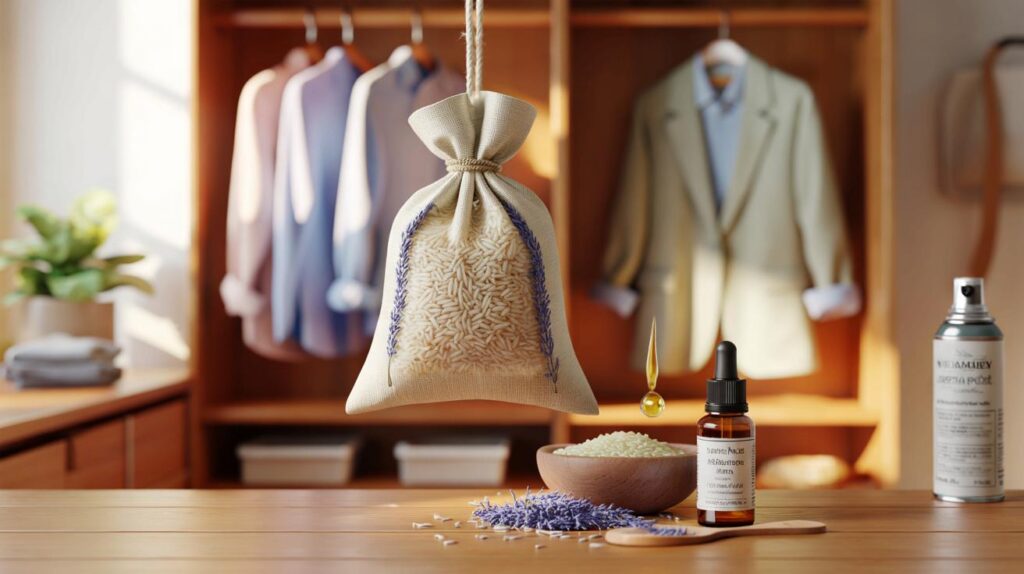
From musty drawers to damp bedding, many British homes face a quiet nuisance hiding behind closed wardrobe and cupboard doors.
A centuries-old trick using rice, dried botanicals and a few drops of oil is back in fashion, offering quick, low-cost freshness without aerosols or harsh chemicals.
What sits behind the 24-hour turnaround
The method leans on three workhorses: plain white rice, dried herbs, and essential oils. Rice pulls moisture from the air and holds scent. Dried lavender or rose add a clean top note. A measured dose of oil keeps fragrance releasing in small bursts. Together they dry the air inside a cupboard and mask stale compounds that cling to fabrics.
Add a pinch of bicarbonate of soda and you strengthen the effect. Bicarbonate binds acidic and sulphurous odour molecules. Rice reduces humidity, which slows the growth of musty microbes. Oils lift a pleasant aroma so the space smells fresher when you open the door the next morning.
Reported results from home trials: up to 95% of stale odours reduced within 24 hours in a closed wardrobe.
The blend also lasts. Rice behaves like a slow-release capsule. As the air warms and cools with daily use, the sachet emits small pulses of fragrance rather than a single burst that fades by lunchtime.
How to make scented rice sachets
What you need
- Breathable fabric squares (cotton, linen or muslin), roughly 20 cm x 20 cm
- White rice: 60 g per sachet (about 4 level tablespoons)
- Dried botanicals: 15 g (lavender buds or rose petals work well)
- Essential oil: 10–15 drops (lavender, lemon, or eucalyptus are reliable choices)
- String or narrow ribbon: 15 cm per sachet
- Optional: a small pinch of bicarbonate of soda per sachet
Step-by-step method
For consistent performance, stick to 60 g of rice per sachet and refresh with 5 drops of oil when the scent fades.
Tip for thrift: cut old cotton pillowcases into squares. The weave breathes well and costs nothing.
Where to place them and how long they last
Spread sachets so air can circulate around them. Avoid burying them at the back of piled clothes. Use one pouch per section, plus one by the trimmings you open most often.
| Space | Sachets needed | Notes |
|---|---|---|
| Double wardrobe | 2–3 | One by hanging rail, one on the floor shelf, one in the door pocket if fitted |
| Linen cupboard | 2 | Place between towel stacks for airflow |
| Chest of drawers | 1 per drawer | Tuck at the back corner to avoid direct fabric contact |
| Shoe rack | 1–2 | Add a bicarbonate pinch for trainers and boots |
Expect a noticeable difference the next day. Give sachets a gentle shake every two weeks to wake the fragrance. Most blends keep working for two to three months, depending on how damp the room feels. When the scent drops, drip 5 fresh drops of oil onto the rice and leave the sachet to absorb for an hour before returning it to service.
Safety and sensible use
- Keep sachets out of reach of children and pets; rice and oils are not for ingestion.
- Avoid neat essential oils on skin. Wash hands after handling.
- Some oils (tea tree, eucalyptus) do not suit cats. Choose cat-safe oils if you share your home with them.
- Pregnant people and those with asthma or fragrance sensitivity should select milder oils or skip oils entirely.
- Do not place sachets against damp patches; address leaks and mould first.
Why rice works: the simple science
Rice grains have a starchy surface that holds onto water vapour. In a confined space such as a wardrobe, that light drying action drops relative humidity a little, which reduces the musty edge you notice on fabrics. Adding bicarbonate gives you a chemical trap for acidic and sulphurous smells. Essential oils deliver volatile compounds that reach your nose first and signal “clean” before trace mustiness can register.
If the cupboard measures above 60% relative humidity, you may need more than sachets. Crack the door for airflow, run a small dehumidifier nearby, and let washed items dry fully before storage. The sachets keep the balance once you have dealt with the main moisture source.
Seasonal blends and handy pairings
- Summer: lavender with lemon (10 drops lavender, 3 drops lemon) for light, linen-friendly freshness.
- Winter: orange with cinnamon leaf (10 drops orange, 2 drops cinnamon leaf) for warmth without heaviness.
- Sports kit: eucalyptus with peppermint (8 drops eucalyptus, 4 drops peppermint) and an extra bicarbonate pinch.
- Moth deterrent: cedarwood with lavender (8 drops cedarwood, 6 drops lavender); still store wool in sealed bags.
One pouch per compartment, a fortnightly shake, and a 5-drop top-up can keep cupboards fresh for months.
What it costs compared with sprays
A single sachet uses around 60 g of rice (pennies), a small handful of dried botanicals, and roughly 15 drops of oil. Even with decent-quality oil, the cost lands well under the price of a branded aerosol, and you reuse the fabric for several cycles. You also cut plastic waste and avoid propellants and synthetic masking agents that linger in the air.
Troubleshooting musty wardrobes fast
- Smell persists? Remove everything and wipe hard surfaces with a mild vinegar solution, then dry fully.
- Visible mould? Treat the source and improve ventilation before reintroducing sachets.
- Damp clothes? Dry to the touch before folding; a single damp towel can overwhelm two or three sachets.
- Old suitcases or boxes stored inside? Air them outdoors; place a sachet in each before returning.
Extra ideas to boost results
Pair sachets with a small open jar of bicarbonate on a shelf for heavy-duty shoe cupboards. For very damp homes, a bag of activated charcoal on the floor level adds deeper adsorption without fragrance. Rotate scents with the seasons so your nose does not “tune out” familiar notes.
For a quick test, set a sachet in a lidded plastic box with a musty tea towel overnight. Open the box the next morning and compare it to an untreated towel. This simple trial shows how much odour the rice blend can curb in a confined space before you deploy several sachets across a full wardrobe.



Sold. 60g rice > sprays 🙂