
Cold cycles, shut doors and slow indoor drying collide in autumn. Fresh sheets suffer. Your machine and your nose know it.
The switch to shorter, cooler programmes cuts bills, yet it also lets grime and soap cling to hidden parts. Odours grow. A simple habit, timed right, brings the drum back to neutral and keeps bedding smelling clean week after week.
Why the machine stinks after every wash
Modern washing leans on 20–40°C cycles and quick runs. Detergent residues do not fully dissolve at these temperatures. Fibres shed and collect in gaskets. Fabric softener sticks to plastic. A biofilm forms where water lingers. That film feeds bacteria and mould, and the smell transfers to your sheets the moment the door opens.
Autumn makes this worse. Indoor humidity rises. Windows stay closed. Sheets dry slowly, so damp odours hang around, even when the wash itself finishes on time. Hard water adds to the problem by coating surfaces with limescale, which traps dirt and microbes.
The simple reflex: a 90°C empty cycle with white vinegar
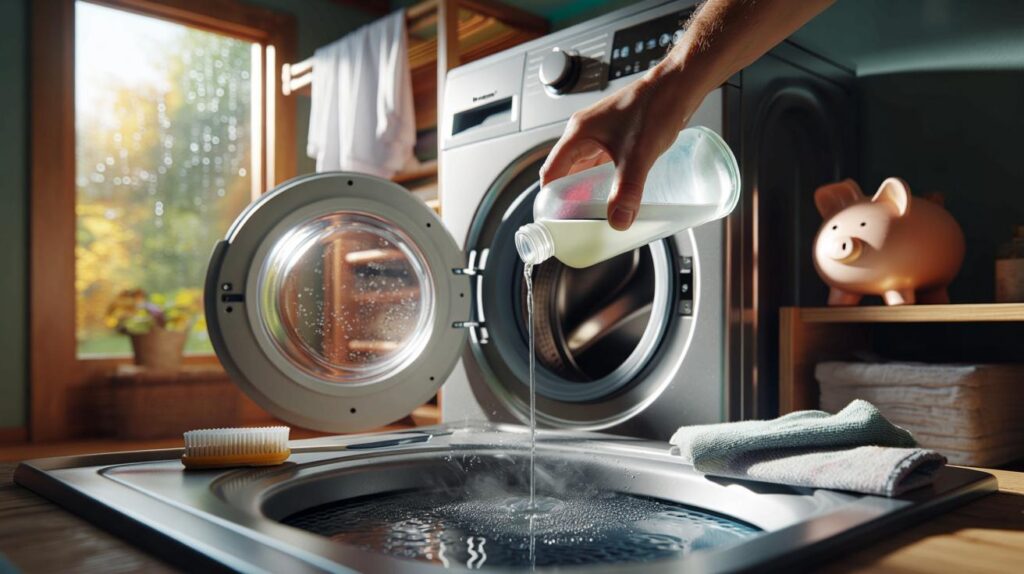
Once a month, run an empty 90°C maintenance wash with 1 litre of white vinegar poured straight into the drum.
White vinegar cuts limescale, loosens residue and helps suppress the musty note. The high temperature flushes the biofilm. The drum, hoses and sump get a reset without buying a specialist cleaner. Done regularly, this habit keeps the odour from returning and can extend the machine’s life.
How to do it, step by step
- Check the drain filter is clear before you begin. Remove coins, fluff and hair.
- Pour 1 litre of plain white vinegar into the empty drum. Do not add detergent.
- Select a 90°C cottons programme with a long rinse. Start the cycle.
- When finished, wipe the door seal and glass with a microfibre cloth.
- Leave the door and detergent drawer open for a few hours to dry.
Leave the door and the detergent drawer ajar between washes. Airflow stops damp odours before they take hold.
Three places you must clean
A monthly hot maintenance wash helps, but stubborn smells often persist in tight corners. Give these zones five focused minutes.
- Door seal (gasket): Pull back the rubber lip. Remove lint, grit and hair. Wipe with a cloth dipped in warm soapy water, then dry.
- Detergent drawer: Slide it out. Rinse with hot water. Scrub the siphon and rails with an old toothbrush.
- Drum and paddles: Inspect for stuck tissues, lipstick or fabric softener film. Wipe with a vinegar-damp cloth.
Keep sheets fresher between washes
Sheets collect sweat and skin cells, especially when windows stay shut. Small tweaks reduce the odour load before the drum starts.
- Wash bedlinen every 7–10 days in autumn and winter. Go to 60°C if the care label allows.
- Use the right dose of detergent for your water hardness. Too much leaves a film that smells.
- Avoid heavy softener on cotton sheets. It coats fibres and slows drying.
- Use the highest spin your fabric allows. Faster extraction means faster, fresher drying.
- Dry in a ventilated room or with a dehumidifier set to 50–55% relative humidity.
Your at‑a‑glance routine
| Task | What to use | Frequency | Time | Approx. cost |
|---|---|---|---|---|
| Empty 90°C maintenance wash | 1 litre white vinegar | Monthly, or at each season change | 1–2 hours (machine time) | £0.40–£0.60 for vinegar + energy |
| Wipe door seal and glass | Warm soapy water, microfibre cloth | Weekly | 5 minutes | Negligible |
| Clean detergent drawer | Hot water, old toothbrush | Monthly | 10 minutes | Negligible |
| Check drain filter | Towel, shallow tray | Every 4–6 weeks | 10 minutes | Negligible |
Does vinegar damage parts?
Manufacturers differ. Occasional use at the dose above is widely used in British homes without drama. Daily vinegar is not wise. Rubber can harden if soaked in strong acid for long periods. Keep it monthly, rinse well, and dry the seal afterwards. If your manual forbids acids, use an alternative maintenance wash.
Alternatives if you avoid vinegar
- Oxygen bleach at 60°C: Sodium percarbonate in the drum on an empty hot wash breaks down organic films.
- Citric acid: 100–150 g in the drum on a hot cycle targets limescale in hard‑water areas.
- Biological powder maintenance wash: A scoop of bio powder on a 60–90°C empty cycle cleans well because enzymes and builders resist residue.
- Manufacturer cleaner: Use as directed if your warranty guidance prefers branded products.
Hard water, soft water and dosing
Water hardness changes how your machine ages. In hard‑water postcodes, scale forms faster and traps odours. Increase the frequency of your maintenance wash to every three weeks. Match detergent dose to hardness. Under‑dosing leaves body soils in the fabric. Over‑dosing leaves a film that smells stale when it dries indoors.
Drying choices that make or break freshness
Radiator rails feel convenient, but slow drying at high room humidity creates a sour note. Space items by a palm’s width. Open a window for cross‑ventilation for 10 minutes. A small condenser dryer or a dehumidifier on laundry mode can cut drying time by half. Fewer hours damp equals fewer smells.
Costs, energy and why the habit pays
A 90°C cottons programme typically uses 1.5–2.0 kWh. At £0.28 per kWh, that is roughly 42–56p in electricity. A supermarket litre of white vinegar costs about 40–60p. Your monthly prevention spend sits under £1.20. That outlay compares well to the price of enzyme cleaners or a call‑out to deal with pump odour blockages.
Extra care that often gets missed
Empty the sump and filter before the first cold spell. Stray socks, hairpins and lint lodge there and turn sour. Wipe the grey door‑seal channel dry after the final wash of the day. Remove wet laundry promptly. Leaving sheets overnight in the drum locks in a musty note that even hot drying cannot fully remove.
Sheets, hygiene and temperature choices
For allergy‑prone households, a 60°C wash on cotton bedlinen controls dust mites better than low‑temperature cycles. Use colour‑safe oxygen bleach when labels allow. Rotate two sets of sheets to avoid late‑night damp bedding. If you rely on 30–40°C programmes for energy reasons, schedule your monthly hot maintenance wash on the same weekend you change the duvet cover. The habit sticks, and the odour does not.



Tried the 90°C empty cycle with 1L white vinegar today—machine smells neutral again and towels no longer come out “wet-dog”. I’d ignored the gasket and drain filter; pulling back the seal was gross but oddly satisfying. This routine is definately going on my calendar. Thanks for the step‑by‑step!