
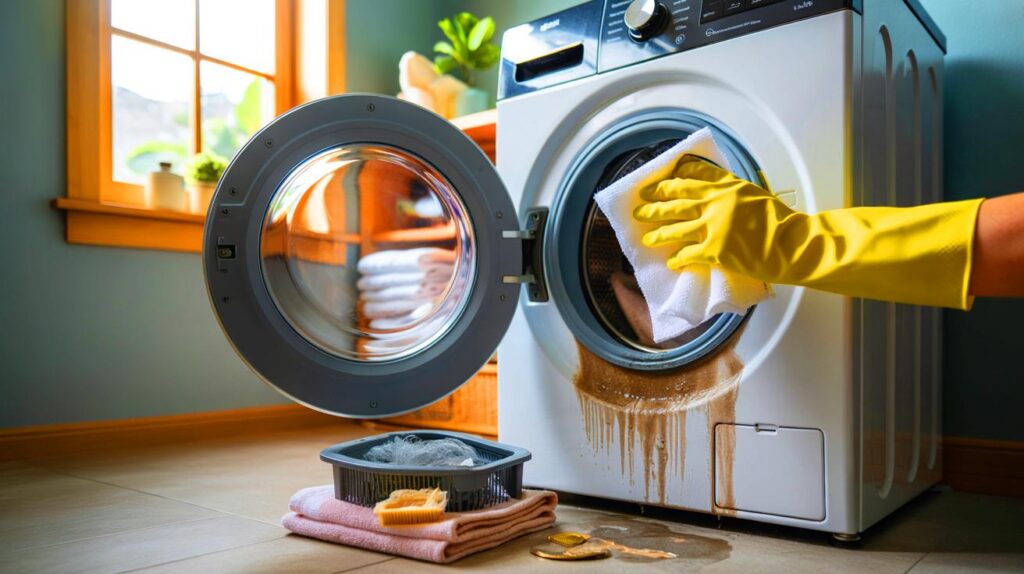
Behind those “clean” loads lurks a damp, grimy hotspot that pushes odours into fabrics and quietly ages your appliance.
Many households assume a washing machine cleans itself with every spin. It doesn’t. A Spanish cleaning pro has set out a simple routine that tackles the biofilm, sludge and mould most people never touch, and it takes minutes rather than hours.
The grubbiest place in your home might be the washing machine
Constant moisture, leftover detergent and softened fibres make a perfect broth for bacteria and mould. The smell you notice on “clean” towels often starts in the machine, not in the laundry basket. Residues settle in corners you rarely see, then ride the next cycle back into your clothes.
That musty whiff comes from the machine’s innards. Stop it there, and your laundry smells fresh again.
Forgotten zones that make laundry smell
- Door seal: the rubber folds trap lint, water and skin cells that turn black and slimy.
- Detergent drawer: thickened softener and powder paste the rails and feed channels.
- Filter and pump: hair and coins collect, slowing drainage and leaving stale water.
- Drain hose: a gentle slope can hold a puddle that spoils between washes.
- Inlet mesh: grit restricts flow, elongating cycles and raising energy use.
The pro method you can do today
Begoña Pérez, better known online as “La Ordenatriz”, champions a straightforward deep-clean using household bleach (sodium hypochlorite). Used cold and followed by a rinse, it strips biofilm from the drum and internal channels.
Step 1: make it safe and ready
Switch off the machine at the socket and empty the drum. Wear washing-up gloves. Ventilate the room. Check your manual; a few models advise against bleach, and some rubbers are sensitive.
Step 2: dose and run a cold long cycle
Pour a measured amount of bleach into the detergent compartment and add a little directly into the drum. Use cold water only. A long cold programme circulates the solution through the drum, pipes and sump, lifting detergent film, limescale trace and early mould.
Step 3: work on seals and filter
While the machine runs, wipe the door seal’s folds with a cloth dampened in diluted bleach. Lift out the detergent drawer and scrub its rails and channels. Remove the filter, clear debris and rinse it under hot water with a small brush.
Step 4: rinse thoroughly
Run a second cold programme with water only. This clears any lingering disinfectant so the next load won’t be affected. Leave the door and drawer ajar to dry.
Cold bleach cycle first, cold water rinse second, door and drawer left open: that trio stops odours at the source.
No-bleach options that still get results
If you prefer a greener cupboard, white vinegar and bicarbonate of soda work well together. The mild fizz helps break down soap scum while deodorising the drum and hoses.
Vinegar and bicarbonate: how to use them
Shake half a cup of bicarbonate of soda into the empty drum. Pour one litre of white vinegar into the detergent drawer. Run a medium-temperature long cycle. The reaction loosens grease, softener jelly and light limescale, and it freshens the machine without harsh chemicals.
Which method when?
| Method | What it targets | Best for | Do not |
|---|---|---|---|
| Bleach (cold) | Biofilm, mould staining, odours | Heavy smells, black marks on seals | Mix with acids or hot water; leave on metal for long periods |
| Vinegar + bicarbonate | Soap scum, light limescale, stale smells | Monthly upkeep, chemical‑sensitive homes | Combine with bleach; use on natural stone surfaces |
How often to clean, and the quick habits that keep smells away
Give the machine a deep clean monthly. Between those, adopt small routines that take less than a minute after each wash. These steps reduce moisture, cut residue and keep bacteria in check.
Daily and weekly moves that make a difference
- After every cycle, open the door and pull out the drawer to let moisture escape.
- Wipe the seal with a dry cloth and lift the folds to remove lint.
- Measure detergent carefully. Too much creates sticky film and clogs the drawer.
- Once a week, slide out the drawer and rinse it under hot water.
- Every fortnight, check the filter for fluff, hair and small objects.
- Run an empty 60°C maintenance wash periodically if your manual permits; heat helps when loads are mostly cold.
Safety notes you should not skip
- Never mix bleach with vinegar, descalers or ammonia; the fumes are dangerous.
- Keep products away from children and pets; store caps on and bottles upright.
- Bleach can pit stainless steel if left sitting; wipe any splashes immediately.
- Hard water areas may need an occasional descaler; follow the machine maker’s advice.
Why this matters for your clothes, bills and the planet
Residues stop detergents working properly, so you pay more for worse results. Clean internals help water flow, shorten cycles and reduce re-washing. Fabrics keep their softness because softener can rinse cleanly. A clear filter saves the pump from strain and lowers the chance of breakdowns that end up as costly call-outs and wasted machines.
If you live in a hard-water postcode, limescale coats heaters and hoses faster. Pair your monthly clean with a suitable water softener or a product designed for limescale. If you mostly use short cold cycles, add a hot maintenance wash every few weeks to balance hygiene with energy savings.
A simple 15‑minute plan you can stick to
Week 1: two minutes after each wash to dry the seal and open the drawer. Week 2: pull and rinse the drawer; wipe channels. Week 3: clear the filter and check the hose for kinks. Week 4: do the full deep clean — bleach and rinse or vinegar and bicarbonate — then reset the tally. Set a recurring phone reminder and it becomes automatic.
Spotting trouble early
Grey streaks on light laundry, slow draining, a gurgling pump or a sour smell after opening the door point to a dirty machine. Act then, not after the odour settles into towels. If you see black specks on the seal that don’t lift with cleaning, the rubber may be perished; replacements are inexpensive and restore hygiene quickly.


Just tried the cold bleach + cold rinse combo and my towels finally smell like nothing again—aka clean. Props to La Ordenatriz for the clear steps; wiping the seal folds was… eye-opening. I’ll set a monthly reminder.
Isn’t bleach going to wreck the door seal over time? My manual warns against it. Any data on diluted hypochlorite monthly versus a 60°C maintenance wash? Also curious about stainless pitting if a splash sits too long.