
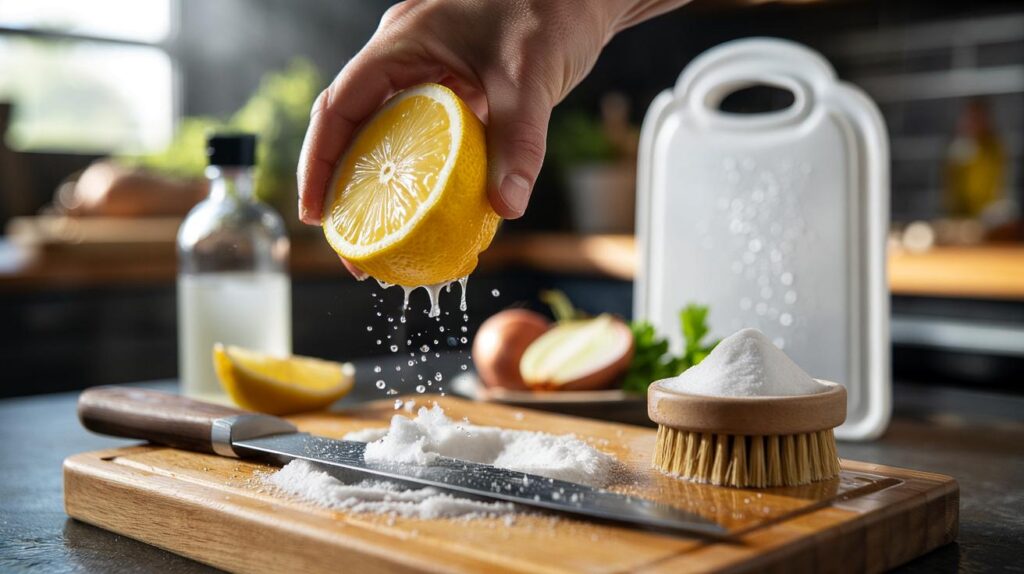
Cooler evenings bring hearty cooking and busier chopping. Yet something lingers in many kitchens: stubborn smells and hidden grime.
As stews simmer and roasts return, chopping boards work harder and stay wetter. Soap helps, but odours stick and microbes slip into tiny cuts. The result is a board that looks clean, yet still hums of onion or fish and risks cross-contamination. Here is a smarter way to keep pace with the season without harsh chemicals or wasted effort.
Why your board still smells after washing
Wood is porous. Plastic scars. Both hold juices and oils in micro-grooves. When moisture lingers, bacteria multiply, and odours set. Detergent lifts grease, but it rarely reaches trapped residues in fine cuts. Soaking a wooden board swells fibres and opens more hiding spots. A hot dishwasher cycle can warp wood and lock in protein films. A quick wipe masks the smell; it does not solve it.
Water and detergent lift soil; they seldom neutralise odour molecules lodged in cuts, or touch bacteria protected by dried residue.
Time matters. A damp board, stacked flat, stays humid for hours. Air cannot move through it. That humidity feeds unwanted growth and keeps smells alive. The fix starts with better drying, then targeted, natural treatments that break bonds between the board and the grime.
Common missteps you can stop today
- Soaking wooden boards in the sink, which swells and cracks the surface.
- Running wood through a dishwasher, which warps and splits fibres.
- Using the same board for raw meat and salad, which drives cross-contamination.
- Storing boards flat while damp, which traps moisture and odours.
- Relying on scented cleaners that perfume the board instead of removing the cause.
- Keeping deep cuts for months, which shelters residues whatever you use.
The three natural moves that actually work
Salt, lemon, bicarbonate of soda, and white vinegar attack odour compounds, loosen films, and change the surface pH. They need the right order and contact time. You already own them. Use them with purpose and you will cut smells and reduce microbial load without harsh chemicals.
| Method | What you need | Contact time | Best for | Why it works |
|---|---|---|---|---|
| Salt + lemon scrub | 1 tbsp coarse salt; 1 lemon half | 3–5 minutes | Fresh odours, greasy films | Salt abrades; lemon acid cuts fat and neutralises smells. |
| Bicarbonate paste | 2 tbsp bicarbonate; splash of water | 10 minutes | Persistent odours, stained areas | Alkaline paste lifts residues and deodorises. |
| White vinegar rinse | 2 tbsp white vinegar, undiluted | 5 minutes, then air dry | Final step after cleaning | Acidic environment disrupts many microbes and disperses films. |
How to apply them, step by step
Start with a board scraped free of food. Wipe with hot water and a drop of washing-up liquid. Rinse. Pat dry with kitchen towel.
- Scatter coarse salt over the surface. Scrub with the cut side of a lemon. Work with the grain on wood. Squeeze as you go to refresh the juice.
- Rinse. For stubborn smells, spread a thick bicarbonate paste. Leave for ten minutes. Scrub lightly and rinse again.
- Finish with white vinegar. Pour a thin film across the board. Leave for five minutes. Rinse briefly or simply wipe and allow to air dry upright.
Contact time is the quiet hero. Give each step minutes, not seconds. Then dry the board on its edge so air reaches every surface.
These moves reduce odours and cut microbial counts, especially in the shallow marks that normal washing misses. They also avoid harsh scents that can taint food. Use them weekly in heavy cooking periods, or immediately after cutting fish, alliums, or strong spices.
Wood versus plastic: adjust your tactics
Different boards need different care. Wood rewards gentle abrasion and careful drying. Plastic tolerates hotter water and firmer scrubbing, but deep knife scars fill quickly. A quick match of method to material improves results and prolongs life.
For wooden boards
- Do not soak. Waterlogged fibres twist and crack as they dry.
- Scrub with salt and lemon. Wipe away pulp before it dries.
- Use bicarbonate for garlic, onion, and fish odours. Keep paste out of large splits.
- Finish with white vinegar, then stand upright to dry fully.
- Oil monthly with food-grade mineral oil. Warm the oil slightly. Apply a thin coat with a lint-free cloth. Leave 20 minutes. Wipe off excess. This seals pores and slows odour absorption.
For plastic boards
- Use a stiffer brush with the bicarbonate paste to reach grooves.
- Vinegar helps break slick biofilm that holds odours in place.
- Retire a board once cuts are deep and widespread, as residues cling in trenches.
Smart routines that save time and reduce risk
Adopt a pattern you can keep. After raw meat or fish, use salt and lemon straight away. After vegetables and fruit, a hot wash and fast dry may suffice; add vinegar if the board smells. Reserve the bicarbonate step for end-of-week deep cleans.
- Colour-code or dedicate boards: one for raw meat, one for fish, one for bread and produce.
- Dry boards vertically on a rack. Avoid laying flat on counters or tea towels.
- Refresh dishcloths and brushes daily. Smelly tools transfer odours back to clean boards.
- Keep boards out of direct heat while drying. Fast heat drives warping and cracks.
Separation beats correction. A fresh salad stays safer when it never meets the grooves where raw juices once sat.
When to retire or rescue a tired board
Run a fingertip across the surface. If the blade tracks feel like channels, odours will return fast. A wooden board with shallow scars can be revived. Sand lightly with fine paper, wipe off dust, then oil. A plastic board with trenches will not sand clean; replace it. As a rule of thumb, if a deep cut catches your nail, plan for a change.
Extra tips that make the difference
Neutralise fishy traces with a second pass of lemon after vinegar. Rinse quickly and dry. For onion, bicarbonate performs best. For smoky barbecue rubs, add a pinch of ground coffee to the bicarbonate paste; it helps bind aroma compounds and lifts colour transfer. Do not use fragranced oils on wood, as they oxidise and leave a taste.
If you prepare high-risk foods often, keep a small rotating set of boards. Use the natural clean immediately after prep. Let each board dry for several hours before returning it to the stack. This simple rotation shrinks the window where moisture and odour compounds persist and keeps your cooking rhythm steady.



Just tried the salt + lemon scrub—my board smells like nothing now 😅 Contact time really is the hero. Quick q: for wood, is white vinegar okay undiluted, or should I dilute if the board is oiled? Also, safe to use baking soda on end‑grain, or better avoid it? Thx!