
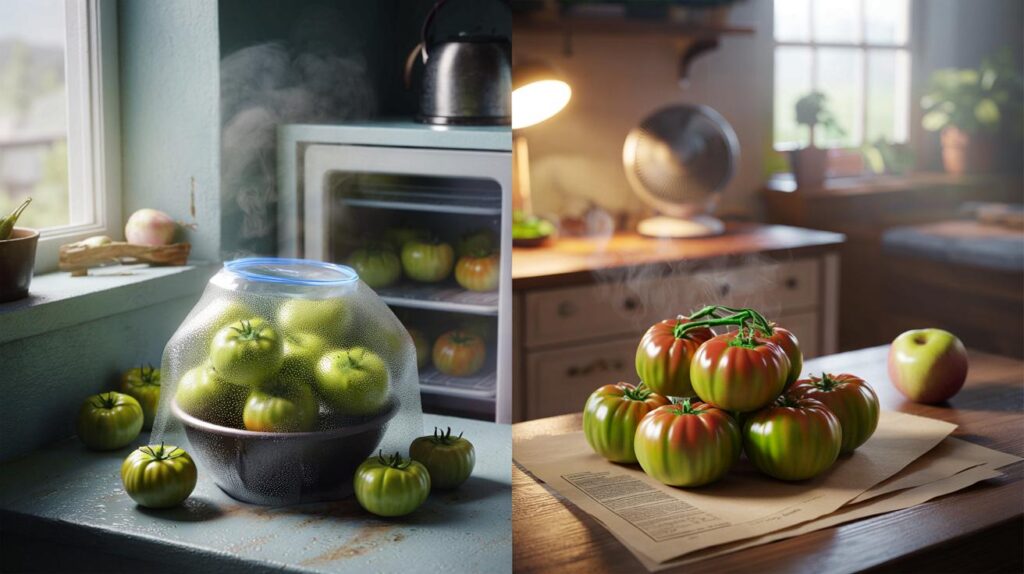
Cold nights creep in, kitchens fill with unripe fruit, and hopeful gardeners hatch plans that quietly backfire, then wonder what changed.
Across the country this week, allotment holders carried trugs of stubborn green tomatoes indoors. Many tried quick fixes. Most met disappointment. A few simple numbers decide the outcome, and they sit on your thermometer and hygrometer, not in a mystery hack.
Cold truth: why green tomatoes refuse to turn
Tomatoes ripen when their own ethylene kicks biochemical switches that change colour, aroma and texture. That switch hates chill and clammy air. When nights slip beneath 13°C, ethylene production slows sharply. The fruit pauses. Prolong the chill, and the pause becomes a standstill.
Once nights sit below 13°C, ripening drags or stops. Warmth and gentle airflow turn the switch back on.
Heat swings cause trouble as well. A windowsill that peaks above 27°C softens flesh before sugars build. A sealed corner traps humidity, and spores thrive. The goal stays simple: steady warmth, no condensation, and space between fruits.
The numbers that actually matter
- Best ripening range indoors: 18–22°C with mild air movement.
- Risk zone: below 13°C at night or in damp rooms above 70% relative humidity.
- Shut bags cause mould within days when beads of moisture form.
- Fridges stop ethylene action and flatten flavour for good.
Seven errors costing you half your crop
Leaving fruit under cover overnight
A polytunnel or glass porch cools fast before dawn. Condensation gathers on skins. The fruit sits wet and cold. Bring green tomatoes inside before dusk when forecasts hint at a 13°C night.
Sealing tomatoes in a plastic bag
Moisture trapped inside a bag turns into droplets on the skin. That film feeds mould. The fruit slackens, then collapses. Use breathable paper instead, and check daily.
Chilling in the fridge “just for a day”
The cold locks the fruit in place. Texture shifts to mealy. Aroma compounds fade. Even after you warm it back up, the change stays.
Clumping fruit together in a bowl
Pressed shoulders bruise. A single hidden soft spot spreads quickly. Space each tomato so air moves and problems stay local.
Cooking sun on the windowsill
Glass can rocket temperatures. Warm afternoons feel helpful, but scorching pulp at 30°C leaves you with softness without sweetness. Choose a shaded counter instead.
Ignoring room humidity
Cellars, utility rooms and busy kitchens hold steam. High humidity slows evaporation on the skin and invites fungal growth. Run a dehumidifier for a couple of hours if the room feels clammy.
Forgetting daily checks
Ripening works like bread dough: it rewards a look each day. Turn fruits. Remove any that spot or soften. One damaged tomato can undermine the lot.
Warm, dry, airy, separate: four words rescue more late-season tomatoes than any “miracle” trick online.
How to set up a successful indoor ripening station
Layout, materials and placement
Lay two sheets of newspaper on a shelf or worktop away from the cooker. Set tomatoes stem-side down with 2–3 cm gaps. Add a single ripe apple nearby to nudge ethylene gently. Ventilate the room for a few minutes morning and evening.
Keep them out of direct sun. Aim for a room that sits close to 20°C through the day. If nights drop in your home, pop the fruit in a cupboard where temperatures stay steadier.
| Temperature band | Ethylene response | Best action |
|---|---|---|
| Below 13°C | Ripening stalls | Harvest, bring inside, dry skins, warm to 18–22°C |
| 18–22°C | Steady, even ripening | Space on paper, check daily, ventilate lightly |
| Above 27°C | Softening outpaces flavour | Move off windowsill, add shade, lower heat |
When to pick and what to watch
Spot the turning point
Choose fruit that shows a hint of yellowing or a paler shoulder. The skin should lose its glassy sheen and feel slightly springy. Harvest before a cold snap, not after it.
Give each tomato its own space and its own verdict. Some varieties hold firm longer. Plum types often redden before beefsteaks. Cherry tomatoes can colour in a cluster if you hang the whole truss in a warm pantry.
Practical checks that prevent losses
- Wipe off any dew or condensation with a clean tea towel.
- Rotate fruits daily to avoid soft spots where they touch the paper.
- Remove any with black specks or a fuzzy bloom immediately.
- Log temperature and humidity once in the morning and once at night.
Peak flavour arrives two to four days after full colour in a stable 20°C room with fresh air.
What to do with stubborn greens
Cook them with confidence
Some fruit will never turn once the plant shuts down. Keep them out of the bin. Green tomatoes shine in the kitchen. Fry slices in a light cornmeal crust. Roast wedges with a spoon of honey and a splash of vinegar for a sharp-sweet side. Simmer a chutney with onion, ginger and raisins for jars that brighten winter lunches.
Raw green tomatoes contain tomatine, which drops during cooking. Most people tolerate moderate portions well. If you have a sensitive stomach, cook them thoroughly and serve smaller amounts.
Extra guidance for the next cold snap
Plan by numbers, not by habits
Set alerts on your phone for local lows at or below 13°C. Harvest with time to spare. Aim for a two-week indoor window at 18–22°C. That timetable suits most mid-size varieties and keeps flavour on track.
If your kitchen runs humid, place fruit in a spare bedroom with the radiator on low and the window cracked for five minutes twice a day. A cardboard tray plus newspaper absorbs stray moisture. One ripe apple is plenty; more raises humidity without meaningful gains.
Quick scenario planning
- No dehumidifier, damp flat: move to the driest room, add a small desk fan on the gentlest setting.
- Sunny but hot windowsill: tape up a sheet of baking parchment to diffuse light and cut heat spikes.
- Only very hard fruit left: cook into chutney within a week and save the rest for frying.



Is 20°C still ideal for cherry varieties?
So the windowsill is a tomato sauna and my fridge is a flavor graveyard. Got it 🙂 Any tips for small flats without a dehumidifier beyond a desk fan?