
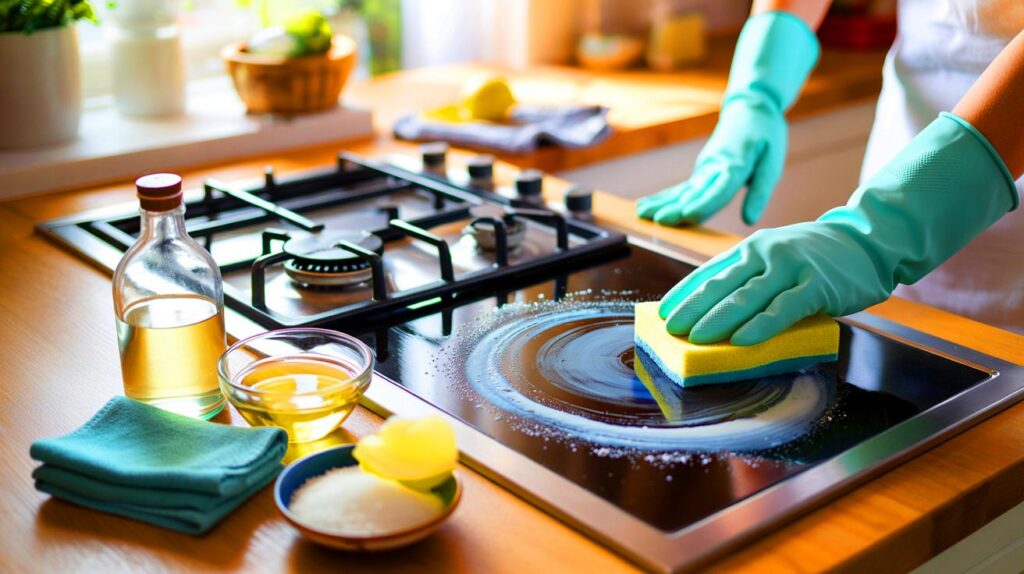
Grease builds up fast, time runs short, and budgets feel tight. Britons want quick wins that protect fragile hobs and wallets.
This week’s kitchen talk centres on a two-part fix that raids the cupboard, speeds up cleaning, and spares delicate surfaces. It targets the oily film that clings around burners and across glass or steel, and it does the job in minutes, not an afternoon.
What 2 cupboard staples do in 10 minutes
White vinegar brings mild acidity that softens and loosens greasy residue. Fine table salt adds a gentle mechanical lift without shredding finishes. Together, they break up cooked-on splatters so a damp, non-scratch sponge can carry the mess away. On most hobs, five to ten minutes is all the contact time you need before you wipe.
Mix equal parts white vinegar and fine salt into a loose paste, spread thinly, wait 5–10 minutes, then wipe with a damp, non‑abrasive sponge.
You keep the effort low because the chemistry does most of the work. Vinegar disrupts the fatty bonds in oils; salt rubs in just enough to lift the particles. Go light on pressure, especially on glass or induction. The method suits daily maintenance and the slightly older splatters that never seem to budge with soap alone.
Step-by-step: from splatters to shine
- Switch off gas, remove pan supports, and let the surface cool fully.
- Stir a 1:1 blend of white vinegar and fine salt into a spreadable paste.
- Apply a thin coat to marked areas using a soft cloth or sponge.
- Wait 5–10 minutes so the acid can loosen residue.
- Wipe with a damp, non-abrasive sponge; rinse with warm water.
- Buff dry with a microfibre cloth to avoid streaks and water spots.
- If patches remain, reapply to those spots rather than scrubbing harder.
Safety first
Work on a cold surface. Ventilate the kitchen. Wear gloves if your skin reacts to acidic products. Keep children and pets out of the area while you clean.
Never mix bleach and vinegar. The combination releases a dangerous gas.
How to tailor it for gas, steel, glass and induction
Not every hob behaves the same. Surface type dictates how much abrasion you can safely use and how wet the paste should be.
| Surface | How to use the mix | Contact time | What to avoid |
|---|---|---|---|
| Gas burners and pan supports | Use the 1:1 paste on rings and around knobs; lift parts off to reach crevices. | 8–10 minutes | Metal scourers; harsh scraping that can remove protective coatings. |
| Stainless steel tops | Spread a thin layer; wipe along the grain; rinse and dry to prevent water marks. | 5–8 minutes | Coarse salt; circular scrubbing that leaves swirls. |
| Glass, ceramic or induction | Keep salt fully damp; use a very wet, fine paste or switch to diluted vinegar on microfibre. | 3–5 minutes | Undissolved salt crystals; abrasive pads; pressing hard near indicators. |
| Cast-iron trivets | Coat with paste; use a soft brush; dry thoroughly to prevent rust. | 10 minutes | Soaking for hours; storing damp. |
On glass and induction, let the liquid do the work. If you can feel grit, you can make a hairline mark.
Costs, time saved and when to pick plan B
One clean costs pennies. A supermarket bottle of white vinegar often sits between £0.50 and £1.00, and a kilo of fine salt costs around £0.60–£1.20. A tablespoon of each covers a standard hob, so you spend well under 20p per clean. Branded degreasers usually land between £3 and £5 and need more rinsing.
Time matters as well. While the paste sits, you can wash pan supports or wipe tiles. The total hands-on time drops to a few minutes because you avoid heavy scrubbing. Most households report clear improvement after the first pass, with a second targeted dab for stubborn rings around burners.
If build-up is baked on
Hard, caramelised spills from sugar, sauces or cheese can cling. Start with the vinegar–salt paste, but repeat on the precise spot rather than pushing harder. On metal parts, a soft nylon brush helps. On glass, use a manufacturer-approved hob scraper at a shallow angle only after softening the stain with warm vinegar or soapy water.
Prefer a citrus option? A cut lemon with a pinch of fine salt works similarly, thanks to citric acid. For a thicker layer of grime on removable grates, soak in hot water with a spoon of black soap or mild washing-up liquid, then finish with the paste. Keep abrasives away from enamelled parts.
Why this works without scratching
Fine salt behaves like a micro-polish when fully wet, while vinegar lowers the surface tension of greasy films. That combination loosens dirt with light pressure. The risk of scratches rises only when dry crystals drag over glass or when a scouring pad adds grit. Use microfibre and keep the paste moist, and you preserve the factory sheen.
Maintenance that keeps hobs clean longer
A quick habit saves longer clean-ups. Wipe the hob once it cools after dinner with a microfibre cloth and a splash of diluted vinegar (one part vinegar to three parts water). Lift pan supports weekly and clear the rings, where hidden grease collects and bakes on the next day.
- Cover pans to reduce splatter and moisture that sets residue.
- Deal with sugary spills as soon as the surface cools; these harden fastest.
- Keep a dedicated soft cloth for glass tops to avoid grit transfer.
- Rinse and dry stainless steel to stop mineral streaks from hard water.
Small checks that make a big difference
Test on a discreet corner if your hob has special coatings. If you live in a hard-water area, finish with a distilled-water wipe to prevent limescale spots. Replace worn sponges before they fray and trap grit. Store salt in a dry pot near the sink so you can mix a paste in seconds when splashes happen.
Use less pressure, more contact time. The paste should lift dirt; your arm shouldn’t do the heavy lifting.
When to call a specialist
Deep chips, loose burner caps, or cracked glass need professional attention. If any control resists or you smell gas, stop, ventilate the room, and seek help. For routine grime, though, the cupboard duo keeps you away from harsh solvents and cuts the weekly clean down to a short, predictable task.
Want to gauge the payoff? Time your next clean: five minutes to apply, ten minutes to wait while you do the washing-up, two minutes to rinse and buff. Track it for a week. Most families find they save at least 30 minutes and a few pounds on sprays, while their hobs stay brighter between meals.



I tried the 1:1 white vinegar and fine salt paste on my steel hob and wiped along the grain—five minutes was enough. The greasy halo round the burners lifted without me scrubbing like mad. Rinsed, then buffed with a microfibre cloth and there were zero swirls. Costs pennies and beats the £4 degreaser I usually buy. Nice tip about reapplying on stubborn spots instead of pressing harder—I nearly always over-scrub. Consider me converted.
Will this scratch a brand‑new induction top if a few salt grains don’t fully dissolve? I’m paranoid about hairline marks and the indicator area.