
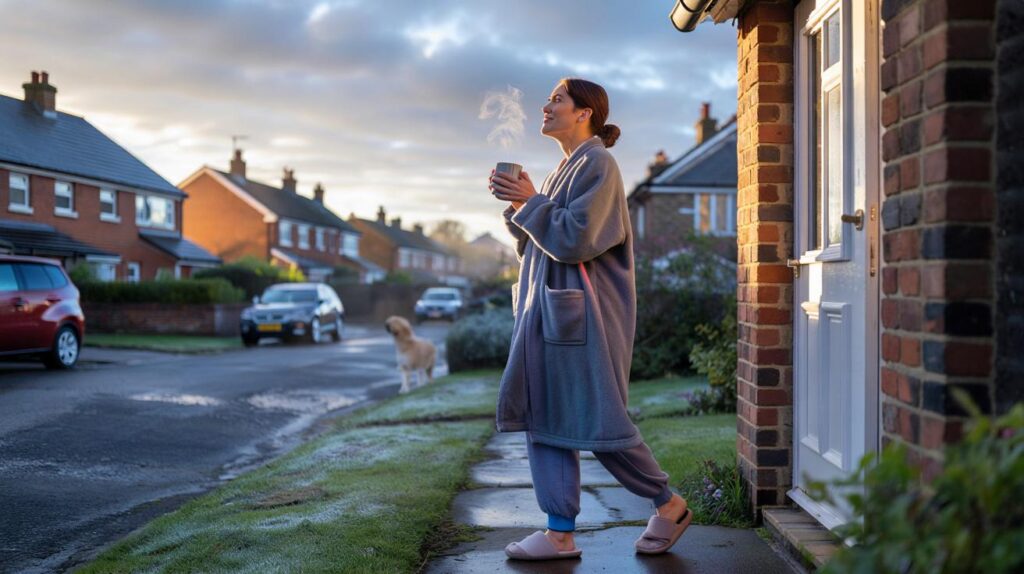
The door clicks, the morning air bites, and a thin ribbon of pale light sprawls over the pavement. A neighbour in a fleece robe hugs a mug, squinting at the sky in that half-awake way that says the day is deciding what it wants to be. We’ve all had that moment when a sliver of sun warms your cheek and, for no grand reason, your chest loosens and the brain unclenches. It’s so ordinary you barely notice it. And then you do. Ten minutes can change your day.
Why 10 minutes outside changes your morning
There’s a switch your body flips when your eyes meet daylight, even on a cloudy British morning. It’s not a motivational quote. It’s biology doing what it’s built to do. The first light after waking tells your internal clock to start the day’s orchestration: alertness up, sleep pressure down, mood steadying. That’s the quiet power of a 10‑minute stroll, a doorstep pause, a breath by the window with the glass open. One small ritual, generous ripple effect.
Picture Jess, 34, who began stepping outside while the kettle boiled. No Instagram sunrise, just the estate car park and a patch of sky. In a week, she noticed her 11 a.m. slump shrinking and bedtime arriving on friendlier terms. She didn’t overhaul her life. She nudged it. Researchers have linked morning light exposure with better sleep timing and steadier mood across age groups. Even in winter, the outdoor sky beats indoor bulbs by a mile on brightness. The numbers are boring. The feeling is not.
Here’s what’s going on, in plain English. Special cells in your eyes read light, especially blue‑rich daylight, and signal the brain’s timekeeper. That resets your circadian rhythm, nudging cortisol to rise earlier, which helps energy, and telling melatonin to wait until night. Your metabolism takes the hint. Your mind does too. You don’t need a wellness guru for this; you need the sky. The trick isn’t chasing perfection. It’s giving your body a daily anchor while the world spins.
How to get your 10‑minute dose without trying
Set a tiny rule: step into daylight before your first scroll or email. Coat on if it’s cold, face the general brightness, not the sun, and keep your eyes open to the sky. Skip sunglasses for the first few minutes unless you’re sensitive, then pop them on. Walk to the end of the street, water the plants, stand on the balcony, sit by an open window if that’s your only option. Count to 600 with your feet moving, or let the kettle timer be your lighthouse.
Common slips are easy to fix. Glass filters a lot of the good stuff, so outdoors beats behind-the-window. On dark winter days, take 15–20 minutes; on bright summer mornings, five to ten is often enough. Don’t stare at the sun, don’t hide behind a cap’s brim, and don’t pair your light time with a doom‑scroll. Let your eyes wander. Let your breath find a slower gear. Let’s be honest: nobody really does this every day. Aim for most days. That’s plenty.
Your morning light should feel like a favour, not a chore. Pair it with something you already love — coffee steam, a podcast chapter, saying hello to the dog who thinks every dawn is a miracle. Light is the cheapest mood lift you’ll ever try. Keep it messy, keep it real, keep it short. If you miss the window, grab a late‑morning break outdoors. Your body still listens to light cues after sunrise, just with a gentler effect.
“Light is the language of your body clock. Speak it early, speak it often, and the rest of the day understands.”
- Micro‑habit: put your shoes by the door at night so morning you doesn’t negotiate.
- Rain plan: hood up, three slow laps around the block; grey skies still count.
- Work hack: take your first call outside on headphones and walk the quiet streets.
What it feels like after a week
Day one feels like a shrug. Day three, you notice your brain arriving to work already warmed up, not grinding the starter motor. By day seven, the evening screen doom has less pull, because your sleep gate opens closer to its old, saner time. You still have messy days. You still have traffic, spilled tea, the email that lands like a piano. But the floor under your mood sits an inch higher. You find yourself recommending morning light to a friend and hearing your own voice soften as you do. Funny how something so small can feel like dignity. You’re not chasing a perfect morning. You’re choosing a humane one. Ten minutes, and the day answers back.
| Point clé | Détail | Intérêt pour le lecteur |
|---|---|---|
| Morning light syncs your body clock | Daylight hitting the eyes resets circadian timing and steadies mood and energy | Fewer slumps, easier sleep, calmer mornings |
| Outdoors beats indoors | Even cloudy skies deliver more useful light than most indoor rooms | Better results with the same 10 minutes |
| Consistency over perfection | Most days for 10 minutes is enough; stretch to 15–20 in winter gloom | Sustainable habit that fits real life |
FAQ :
- Does light through a window count?It helps a little, but outdoor light is far stronger. If a window is all you’ve got, open it and get your face close to the daylight.
- What if the weather is grey or raining?Still go. Cloudy skies can be thousands of lux, far above typical indoor lighting. Take 15–20 minutes on the dimmest days.
- Do I need sunscreen for a 10‑minute morning walk?Follow your usual skin routine. UV can be present even when it’s cool, so apply sunscreen as you normally would and avoid direct sun staring.
- Is it safe for my eyes?Yes if you don’t look directly at the sun. Look toward the open sky, keep your gaze moving, and wear sunglasses if you’re light‑sensitive.
- What if I work nights?Use your “morning” as the first wakeful hour after sleep, whenever that falls. Get bright light then, and keep your sleep environment dark later.



Merci pour cet article — clair, concret. L’idée des 10 minutes avant le premier scroll me parle. Je vais poser mes chaussure près de la porte ce soir et tenter la version « bouilloire + balcon ». Petite question: les 5–10 min d’été suffisent-elles même sous un porche ombragé ?
Je trouve ça un peu réducteur. La lumière ne va pas « régler » le stress du boulot ni la dépression saisonnière toute seule. Des sources chiffrées? Vous citez des chercheurs mais pas d’études précises. Et pour les horaires décalés, 10 min dehors à 18h après le réveil, ça a vraiment le même effet?