
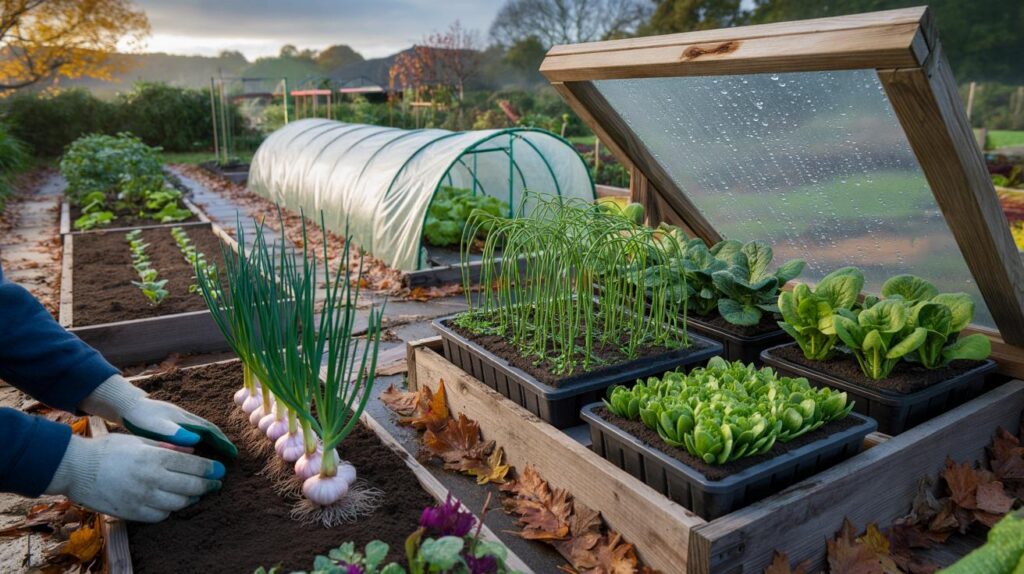
Cold rain tap-taps on the shed roof. Your seed tin is still half-full. And the thought of crunchy greens and sweet pods in early 2026 suddenly feels less like wishful thinking and more like a quiet plan.
I stood by the cold frame one late November afternoon, breath ghosting in the air, wondering if I’d missed my moment. The beds looked tired, a little scuffed from autumn’s scramble, and yet the soil still had that damp, forgiving spring to it. A robin watched as I pressed pea seeds into modules and tucked a fleece around a tray of winter lettuces like a blanket on a pram.
An older neighbour ambled past, hands buried in his coat. “You’re not late,” he said. “You’re early for next year.” And that changed everything. If you sow hardy veg now, they sit quietly through the darkest weeks, then sprint once light returns. Less drama, more momentum.
It’s a small act of faith. And it’s exactly what makes a plate in February taste like victory.
Seven hardy veg you can still sow before winter bites
The trick with late-autumn sowing is choosing plants that like a cold nap. Broad beans are the poster-child: ‘Aquadulce Claudia’ sown in November will root, wait, then kick in with flowers in spring. Peas such as ‘Meteor’ or ‘Feltham First’ do a similar dance, offering shoots first, pods later. Spinach ‘Giant Winter’ sits tight, then throws leaves the moment daylight stretches. Mizuna and mustard mixes barely pause under a cloche. Winter lettuces like ‘Arctic King’ hold firm. Spring onions from Japanese bunching strains tick along. Garlic, planted now, gives you “green garlic” in spring and bulbs by summer.
I think of last year’s cold frame as a tiny stage. Peas in root trainers made it through a week of frost with a single layer of fleece. Spinach in the ground shrugged off sleet, then fed us baby leaves by March. A tray of ‘Winter Density’ lettuce stuttered, looked sulky, then suddenly hearted up in April. And a neat line of ‘Ishikura’ spring onions bridged the hungry gap when everything else stalled. We’ve all had that moment where winter feels endless. A handful of early greens can flip the mood in one lunch.
Why does this work? Plants don’t stop; they slow. Below roughly 10 hours of daylight growth crawls, especially in the UK between mid-November and late January. Roots still knit the soil, though, so seedlings settle in without leggy rush. As day length returns in early February, you’re not starting from scratch. You’ve already loaded the spring. That’s the secret behind an early 2026 harvest from seeds you tuck in late 2025: bank time now, spend flavour later.
How to set them up now for a flying start in early 2026
Start most of these in modules, soil blocks, or root trainers kept in a cold frame, unheated greenhouse, or on a bright porch. Peas: sow two seeds per cell, cover 2–3 cm, then move under cloche once 10–15 cm tall. Broad beans: one seed per module, plant out 20 cm apart when roots knit the plug. Spinach and Asian greens: sow thinly in trays, prick out to 10–15 cm spacing. Winter lettuce: pricked out to 25–30 cm for hearts or closer for cut-and-come-again. Spring onions: sow in clusters of 8–10 per cell and transplant as a bunch. Garlic: plant cloves 15 cm apart, 30 cm between rows.
Keep the soil rich and loose with finished compost, then mulch lightly with leafmould after transplanting. Water to settle them in, then back off; cold, wet soil breeds sulk and rot. Ventilate cloches on any mild day to prevent mildew. Slugs love a cosy tunnel, so set simple beer traps and clear hiding spots. Let’s be honest: nobody really does that every day. If a cold snap dives below -4°C, add a second fleece at night and peel it back in the morning. Organic growing is rhythm, not policing. You’ll find your beat.
Seeds want light and patience more than heroics.
“Sow once, tuck them up, then trust the calendar,” my allotment neighbour Pat says. “February does most of the work for you.”
Here’s a quick grab-and-go on the seven to sow now:
- Broad beans ‘Aquadulce Claudia’: pods May–June; edible leaf tips from April.
- Peas ‘Meteor’/‘Feltham First’: shoots Feb–March; pods late May.
- Spinach ‘Giant Winter’: baby leaves from March; main pick April.
- Mizuna/mustard mix: cut-and-come-again from late Feb under cover.
- Winter lettuce ‘Arctic King’/‘Winter Density’: leaves March; hearts April.
- Spring onions ‘Ishikura’/‘White Lisbon Winter Hardy’: pull March–April.
- Garlic: green garlic March–May; bulbs in early summer.
*This is the quiet magic of winter gardening.*
Leave room for surprise
What you’re really planting now is certainty. A line of spring onions that shows up when the shops feel dreary. A fistful of spinach on a Tuesday when you’re tired and don’t want to think. If you’re short on space, tuck peas and spring onions into large pots, keep them on a balcony, and drop a fleece on frosty nights. If you’ve got beds, run a row cover on hoops and leave the edges pegged. It doesn’t have to look perfect to be productive.
I still love the sound of fleece clips popping open on a bright February morning. The plants look sleepy until you lean in. Then you see the new gloss on spinach leaves, the tight lettuce hearts, the tiny pea tendrils curling like handwriting. Move quickly and you’ll cut a salad before your tea goes cold. If you want a single upgrade, go for cold-frame protection and a bag of organic compost. A simple combo. A lot of meals.
Your late-autumn sowing list doesn’t need to be grand. Pick three of the seven and do them well. Watch the forecast, add a second fleece on harsh nights, and thin rather than fuss. Broad beans for heft, winter lettuce for comfort, mizuna for spark. That balance makes winter food taste awake. And if the odd tray fails, shrug and reseed. Plants forgive our timing far more than we forgive ourselves. The point is the promise you make with your hands now.
There’s also room for play. Try peas in guttering to slide whole rows into the soil when it softens, or root trainers for deeper taproots on broad beans. Slip cloves of garlic between winter lettuce plants, then harvest the lettuce before bulbs need space. Sow spinach and mizuna in alternating bands, so each cut looks pretty in the bowl. The kitchen loves variety, and the plot likes company. Companion planting with alliums near brassica leaves can help distract pests when the weather finally warms.
Organic care won’t cost you speed. Think compost tea in late February, a scatter of seaweed meal when plants wake, and a light hoe on the first dry day to knock back weeds. Thin spring onions in stages and eat the thinnings. Harvest pea shoots from the side stems and leave the core to climb. Every small, repeatable habit is a lever. And that lever turns a grey month into green lunches. That’s the quiet win of late-autumn sowing.
Early harvests don’t need drama, only momentum. Winter just holds the note while roots build the band. When the light leaks back into mornings, you’ll lift the fleece and find a garden that looks oddly ready, like guests showing up five minutes early. Share spare seedlings with a neighbour. Try one new variety next year. Keep the seed tin somewhere you’ll trip over it in November. The season shifts when you decide it does.
| Key points | Details | Interest for reader |
|---|---|---|
| Choose hardy varieties | Broad beans ‘Aquadulce’, peas ‘Meteor’, spinach ‘Giant Winter’, mizuna, winter lettuces, spring onions, garlic | Reliable crops from late-autumn sowings with minimal fuss |
| Use simple protection | Fleece, cloches, cold frames; ventilate on mild days to reduce mildew and slug pressure | Big yield boost without a heated greenhouse or high costs |
| Stagger harvests | Pea shoots first, then pods; green garlic early, bulbs later; baby leaves before hearts | Fresh food from February through early summer 2026 |
FAQ :
- Can I still sow in December?Yes, if your soil drains and you use protection. Focus on peas for shoots, mizuna, and winter lettuces in modules.
- Do I need a greenhouse?No. A cold frame, mini-tunnel, or a double layer of fleece over hoops will do the job in most UK gardens.
- What if a hard frost hits?Add a second fleece at night and remove it on bright days. Hardy varieties bounce back once the cold passes.
- Can I grow these in containers?Absolutely. Use deep pots for peas and broad beans, wide tubs for salads and spring onions, and keep compost evenly moist.
- How do I keep it organic without losing crops?Build soil with compost, ventilate covers, hand-pick slugs at dusk, use beer traps, and feed lightly with seaweed or comfrey in late winter.



Loved the “bank time now, spend flavour later” idea! I sowed ‘Aquadulce Claudia’ last November and you’re spot-on: less drama, more momentum. Pea shoots by March were a mood-saver. This year I’ll try ‘Giant Winter’ spinch and ‘Winter Density’ too. Any tips to stop slugs under a mini tunnel besides beer traps? They’re getting… sophisticated.
Curious but a bit skeptical: in a windy coastal garden (UK West), won’t a double fleece still lose too much heat when it dips to -5C? Also, does the 10-hour daylight rule mean growth basically stops in December, so sowing then is kinda pointless? I dont want leggy, sulky seedlings tbh.