
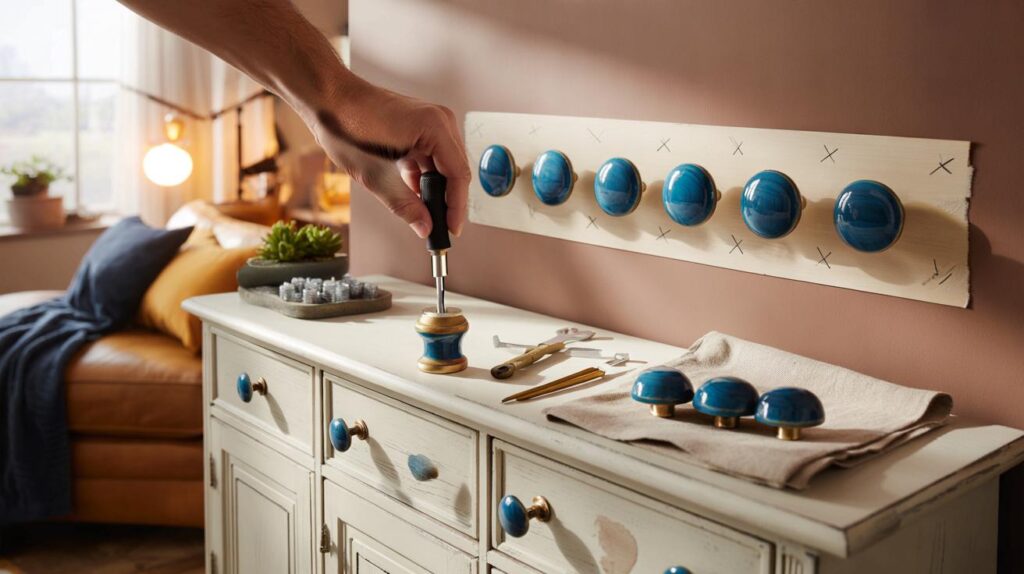
A tiny tweak can shift a room’s mood, especially as nights draw in and you crave warmth, texture and calm.
Instead of repainting or replacing whole pieces, stylists are nudging homeowners toward a shrewd micro-change that costs less than a euro. Swap the hardware. The right ceramic or wood knob turns a forgettable cupboard into a focal point without sanding, spraying or splurging.
Why stylists back the under-€1 knob switch
Hardware is the handshake of a piece of furniture. Change it, and you change the first impression. Interior stylists lean on this tactic because it delivers high visual impact for minimal effort. A matte-glazed ceramic knob on a scuffed bedside table adds polish. A warm timber pull warms up a stark white cabinet. Your eye reads the new material and finish before it registers the old carcass.
At Action shops, ceramic and wood knobs regularly sit under €1 each, so a six-drawer chest can be refreshed for the price of a takeaway coffee. That makes it a rare upgrade that’s both reversible and renter-friendly. No fumes, no drying time, no mess.
From around €0.89 per piece, 6–12 knobs can recast a cabinet or sideboard for well under €10.
Because the change sits at hand height, it feels tactile as well as visual. The cold, smooth touch of glazed ceramic or the satin warmth of sealed wood telegraphs quality, even on a budget carcass.
What materials and finishes say about your space
Finishes aren’t just looks; they set the mood. Ceramic reads clean, tailored and decorative. Wood reads warm, grounding and natural. In small doses, both can steer a scheme without clashing with existing furniture.
- Ceramic on painted pieces: crisp contrast that sharpens lines and frames colours.
- Wood on natural textures: complements oak, rattan, linen and woven baskets.
- Pattern as punctuation: a single motif per piece, echoed in textiles for harmony.
- Subtle metals: a hint of brass on a ceramic cap nods to festive sparkle without tipping into bling.
Fast makeover: a 15‑minute plan for doors, drawers and cupboards
If the holes already exist, the swap is simple and quick. Gather a crosshead screwdriver, a small adjustable spanner, a tape measure and the new knobs with bolts and washers.
- Measure spindle diameters and bolt lengths; note door thickness in millimetres.
- Remove old hardware; keep screws and any backplates in a labelled bag.
- Clean the area with mild soap; dry thoroughly to keep gunk from marking new knobs.
- Test-fit one knob. Add a washer inside the drawer front to prevent over-tightening.
- Align knob centres; use low-tack tape and a pencil mark to keep rows level.
- Tighten until snug; avoid overtightening, which can crack ceramic or crush timber fibres.
- Stand back and check sightlines; adjust for consistent spacing and angle.
- Repeat, then wipe fingerprints away with a soft cloth.
Measure twice, tighten once: reuse existing holes wherever possible for a zero-risk refresh.
Common mistakes that spoil the finish
- Mixing too many motifs on one piece; vary shapes within one palette instead.
- Forgetting grip; a pretty, tiny knob can frustrate on heavy drawers.
- Skipping washers; they prevent wobble and protect painted fronts from hairline cracks.
- Uneven alignment; 2–3 mm drift is visible across a bank of drawers.
Autumn 2025 shades and motifs that actually work
This season favours grounded, cosseting hues: deep blue, moss green, clay taupe and pearly white, with discreet gold details that echo candlelight. Use them to introduce seasonal warmth without repainting walls.
| Finish | Looks best on | Pair with | Risk if overused |
|---|---|---|---|
| Deep blue ceramic | White sideboards, light oak cupboards | Velvet cushions, navy throws, framed prints | Can darken a corner if the room lacks daylight |
| Pearly white with gold detail | Dark-painted chests, festive consoles | Warm brass lamps, crystal glassware | Too many gold accents feel fussy on modern minimal pieces |
| Moss green ceramic | Natural wood dressers, pantry doors | Botanical prints, linen table runners | Clashes with cool greys if not balanced by warm textures |
| Oiled wood knob | Painted shaker kitchens, nursery furniture | Cotton throws, wicker baskets | Disappears on mid‑tone oak; loses the contrast punch |
Real costs: what you’ll spend and what you’ll avoid
Run the numbers. Eight knobs at €0.89 total €7.12. Add a small pack of washers for stability at about €1 and you still sit under €9. Repainting the same chest can swallow €20–€40 in primer, paint, rollers and sheets, plus a weekend of drying time. Buying a new flatpack unit lands well over €70 before delivery. This is why stylists call hardware swaps a first step, not a last resort.
Eight new touchpoints for the price of a cinema ticket, with no drying time and no smell.
There’s a sustainability gain too. Keeping a sturdy carcass and refreshing the interface reduces waste, avoids volatile paint solvents, and makes later repairs simpler. If tastes change, knobs store in a small box and resell easily at car boot sales.
Beyond furniture: quick wins with spare knobs
A handful of knobs can solve small household niggles while keeping the look coherent across a room.
- Wall hooks: mount three wood knobs on a batten for scarves and dog leads in the hallway.
- Jewellery rack: fix ceramic knobs to a strip of plywood; stagger heights for necklaces and bangles.
- Tea‑towel holders: place two knobs on the side of a kitchen island for daily use, away from the hob.
Use appropriate wall plugs for plasterboard or masonry, and keep clear of pipework and cabling. In rented homes, mount on a removable rail to avoid patching walls later.
How to choose like a pro
Think of knobs as accents, not costumes. Let one detail lead, then echo it once or twice nearby. A navy ceramic on a sideboard pairs neatly with a navy ribbon on a wreath, or piping on a cushion. Keep handles within one metal family per room—brass with brass, black with black—so the scheme feels collected rather than chaotic.
For heavy drawers, prioritise ergonomics: larger diameter, gently domed faces and firm stems. Check the bolt length suits your door thickness—20–25 mm is typical for cupboard doors, while 30–35 mm suits chunkier drawer fronts. If the supplied bolt is long, add a nut and washer inside the drawer to take up slack.
Seasonal timing and upkeep
Autumn is ideal because cooler air and earlier nights make rooms feel flatter. A quick hardware swap brings a hint of shine and texture without locking you into a new paint colour. To care for ceramic, wipe with a damp cloth and avoid abrasive pads. For wood, a dab of furniture wax twice a year keeps the grain sealed and smooth.
A 15‑minute hardware refresh can carry a room from late autumn to New Year without a single brushstroke.
Extra pointers you may not have considered
- Child safety: choose rounded profiles and secure fixings on nursery pieces.
- Accessibility: place knobs slightly lower on wall cabinets if a family member uses a wheelchair.
- Reversibility: keep original hardware in a labelled bag with the assembly order for future reinstalls.
- Batch buying: if patterns vary, buy one extra to cover future breakages or changes.
If you’re kitting out a whole room, buy one test knob first and audition it in daylight and lamplight. The glaze can shift tone at night, and gold detailing reads warmer under filament bulbs. A five‑minute test now prevents a mismatch later.



Just tried this on a scuffed Ikea sideboard: eight moss‑green knobs, washers inside, low‑tack tape to line them up. Took about 15 mins tops and the thing suddenly looks curated. The tactile click of ceramic when you pull the drawer is oddly satisfying. Definitley more impact than a slapdash repaint, and under €9 all in. Bonus: renter‑friendly and totally reversable.