
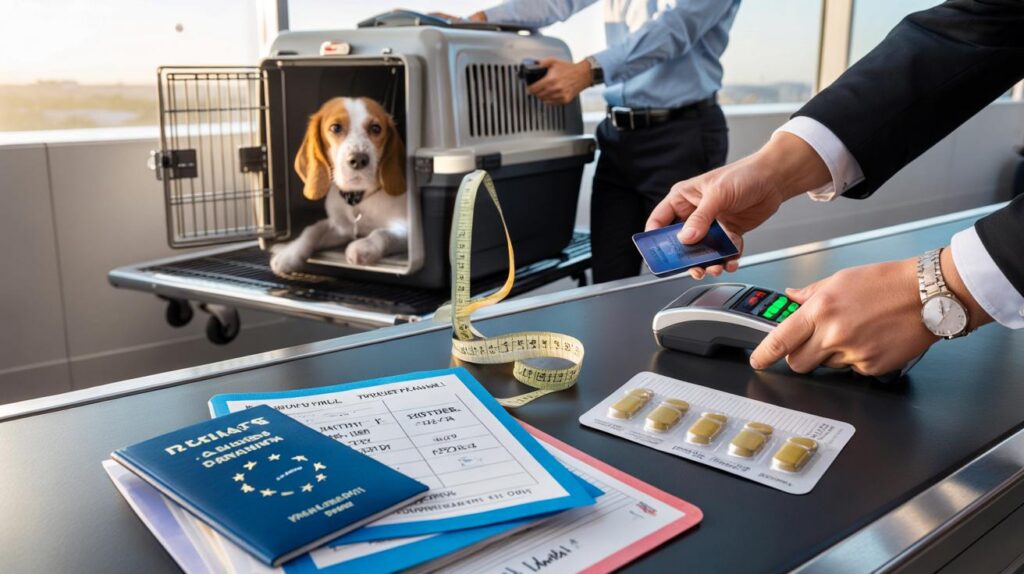
Autumn city breaks and winter reunions sound dreamy, until a microchip, a stamp or a pill derails your plans.
Across borders in 2025, pet travel hinges on strict paperwork, tight health windows and airline limits. Miss one date, choose the wrong crate, or forget a tablet, and a holiday turns into a stand-off at check-in.
Before you book: paperwork that decides if your dog boards
Start with identity. An ISO-compliant microchip must come before any rabies jab. If the chip comes after, the vaccination does not count. Vets can scan and confirm the number in minutes, but border staff will check it again on arrival.
Microchip first, rabies second, then the clock starts: 21 days minimum before departure from the date of the primary jab.
Most EU-resident dogs travel on an EU Pet Passport issued by a vet. It lists the microchip, owner details and rabies vaccination. Puppies must be at least 12 weeks old to receive rabies, and they cannot travel until the 21-day wait ends. If the vaccine lapses, the 21-day wait resets.
Heading to the UK from the EU, you still follow the classic trio: microchip, valid rabies, and a vet-administered tapeworm treatment for many routes. Travellers starting in Great Britain usually need an Animal Health Certificate for each trip, issued within 10 days of entry to the EU. Paperwork expires quickly, so schedule the vet visit alongside your tickets.
The last-week traps and how to avoid them
Four days can undo four months of planning. The UK, Ireland, Malta and Finland require a tapeworm treatment given by a vet 24 to 120 hours before entry. Arrive a few hours early or late and you risk refusal or quarantine at your cost.
Tapeworm rule: a vet must administer praziquantel 1 to 5 days before you cross into the UK, Ireland, Malta or Finland.
Check your passport pages for legible stamps and dates. A smudged sticker or a missing vet signature can be treated as “no vaccine”. Keep digital photos of every page in case you need to verify details during a transfer.
Remember the cap of five pets per traveller for non-commercial journeys. Events and shows need extra documents. Some countries restrict or ban specific types; France, for example, refuses entry to certain “category 1” dogs even in transit.
Country rules in 2025: where the fine print bites
Within the EU, requirements look similar but not identical. Outside the bloc, rules vary widely by rabies status and disease control. A few months out, map your route and list every border you will cross, including return legs.
When a rabies blood test is non-negotiable
Travelling to or from places with higher rabies risk often triggers a rabies antibody titre test. A vet draws blood at least 30 days after the rabies jab and sends it to an approved lab. You usually wait three months from the blood draw before entry to many destinations or for re-entry to the EU from a high-risk country. That timeline alone pushes some trips into the next season.
Non-compliance can lead to quarantine, re-export at your expense, or seizure. Airlines will not overrule border rules, even if ground staff let you board by mistake.
Where the tapeworm window applies and how to time it
- United Kingdom, Ireland, Malta, Finland: tapeworm treatment 24–120 hours before arrival, recorded by a vet.
- Norway and Iceland: similar parasite controls may apply; check exact windows before you book.
- Schengen land crossings: spot checks still occur; carry originals and copies.
Travel day and after landing: comfort, safety and airline rules
Airlines allocate limited pet spots. Reserve early, quote your dog’s weight including the carrier, and confirm dimensions against the airline’s cabin or hold limits. Many carriers embargo pets in extreme heat or cold, and some restrict short-nosed breeds on safety grounds.
Plane, train and car: what actually works
Pick an IATA-style hard crate for hold travel, tall enough for your dog to stand without touching the roof. For cabin travel, use a soft carrier that fits under the seat and meets the airline’s published measurements. Label the crate with your contact details and the microchip number.
Skip sedation unless a vet advises it; sedatives can alter breathing at altitude. Instead, train with the carrier for two weeks: short daily sessions with treats build calm behaviour. On the day, feed a light meal four to six hours before check-in, offer water often, and carry absorbent pads.
On trains, rules vary by operator. Expect a ticket or fee, a carrier for small dogs, and often a lead and muzzle on platforms. In a car, secure your dog with a crash-tested harness or crate, and plan water and toilet breaks every two to three hours.
At destination: local laws, accommodation and routine
Check lead rules, breed lists and muzzle zones before the first walk. Some cities require dogs on pavements to wear a muzzle regardless of temperament. Many beaches switch to dog-off hours only, especially in high season.
Ask your host in writing about pet fees, size limits and where dogs may not go. Some hotels take a deposit and charge per night; others only accept small dogs. Identify a nearby vet and a 24-hour clinic on day one.
Key dates and typical 2025 costs
| Task | Earliest timing | Typical 2025 cost | Notes |
|---|---|---|---|
| Microchip (ISO 11784/11785) | Any time | £35–£90 | Must precede rabies jab; keep the number on your phone. |
| Rabies vaccination | 12 weeks of age | £40–£80 | Wait 21 days after a primary jab before travel. |
| EU Pet Passport or AHC | Within 10 days of entry for AHC | £60–£220 | Passport for EU-resident dogs; AHC needed for GB-based trips to the EU. |
| Rabies antibody titre test | 30+ days after jab, then 3 months wait | £70–£180 | Compulsory for many high-risk routes and some returns. |
| Tapeworm treatment | 24–120 hours pre-entry | £15–£40 | UK, Ireland, Malta, Finland; vet must record time and date. |
| Airline pet fee | On booking | £50–£450+ | Cabin cheaper; hold or cargo cost rises with size and route. |
A 30-day countdown that actually works
Day 30–21: check microchip reads, confirm rabies is valid through the return date, and book a vet for certificates. Day 20–14: reserve the pet spot with the airline or train, measure and weigh the crate with your dog inside, and order spare tags. Day 10–7: obtain your certificate or passport updates, scan and save every page. Day 5–1: schedule the tapeworm appointment if required and align it with your arrival time at the border. Day 0: carry originals in hand luggage and keep a digital back-up.
Fast fixes for common problems
- Vaccine out of date: re-jab, wait 21 days, and rebook travel.
- No microchip: chip today, then vaccinate; earlier rabies jabs will not count.
- Mismatched name: carry proof of ownership or a letter from the vet explaining the correction.
- Airline refuses crate: buy to spec or switch to cargo with a pet shipper.
- Missed tapeworm window: find a vet at the last EU stop and adjust the ferry or flight time.
Extra angles many travellers overlook
Insurance: pet cover rarely includes overseas care by default. Add an international extension that covers emergency vet bills, third-party liability, flight rebooking and quarantine costs. A single incident can exceed £1,000 in fees in a capital city.
Heat, snow and tarmac risks: brachycephalic dogs struggle in warm holds, and many airlines place seasonal embargoes. Winter flights risk delays that stretch fasting times. Choose early morning or late evening departures in summer and midday flights in winter, and pack booties for ice and road salt.
Data matters: fit a GPS tag with an international eSIM plan, carry recent photos and the microchip number, and engrave a tag with a temporary local number. If your dog slips a lead in a new city, speed of contact decides the outcome.
Behaviour planning: a desensitisation routine beats last-minute panic. Five minutes a day in the carrier, feeding calm, rewarding quiet sits at station platforms, and short car loops build a dog that travels well. Neighbours, hotel staff and border agents notice good manners, which makes checks smoother.



This is the first guide that actually explains microchip-before-rabies and the 21-day wait without jargon. The 24–120h tapeworm window always trips me up—thanks for the reminder to align the vet visit with arrvial time. I’ve saved photos of every passport page now. Also didn’t know about the five‑pet cap or France’s category 1 ban. Lifesaver for our Xmas trip!