
Autumn damp, packed commutes and synthetic trainers keep moisture locked in. Then your hallway pays the price before dinner.
Across Britain, soggy mornings and long shifts are turning footwear into little greenhouses. The result lingers in fabric and foam, and it clings to doorways and carpets. A simple, cheap routine, done overnight, can kill the smell and keep it from coming back.
Why your shoes smell worse in autumn
Sweat itself does not smell. Bacteria living in warm, damp shoes digest sweat and skin cells, producing odorous compounds that stick to textiles and insoles. Autumn swings between rain and heating create perfect breeding conditions: moisture rises, ventilation drops, and shoes stay wet for longer. Trainers, boots and work shoes all suffer when they never fully dry.
Odour thrives where sweat, warmth and time meet. Break that triangle and the smell fades fast.
The 12-hour natural fix: powders that absorb, neutralise and prevent
Skip perfumed sprays. Two cupboard staples cut through the cause, not just the scent: bicarbonate of soda and talc. Both draw out moisture. Bicarbonate also neutralises acidic odour molecules, while talc reduces friction and damp, which slows bacterial growth the next day.
Step-by-step overnight method
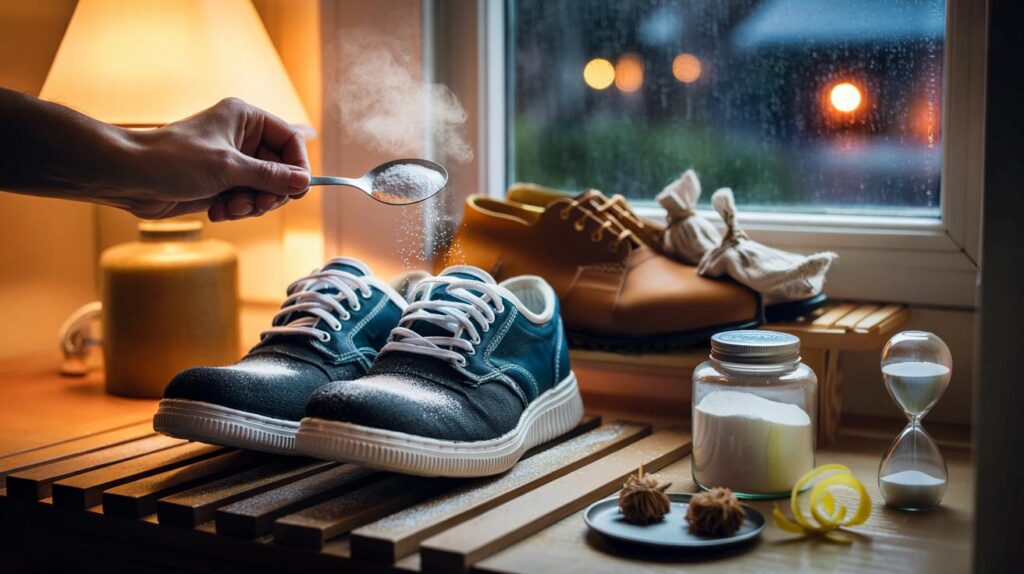
- Tap 1 level tablespoon of bicarbonate of soda into each shoe. For leather, tuck the powder into a thin sock or coffee filter to avoid residue on linings.
- Shake gently so the powder coats the insole and toe box.
- Leave the shoes open-laced in a dry spot for 8–12 hours.
- In the morning, tip the powder into the bin and wipe the inside with a dry cloth.
- Repeat after heavy exercise, rain or once a week through autumn and winter.
One tablespoon per shoe, one night of patience, and a fresher walk to work without synthetic perfume.
How much to use and how often
Light wear: 1 tablespoon per shoe once weekly. Heavy sport or all-day shifts: every two to three wears. Visible damp: repeat on two consecutive nights, then rotate pairs for 24 hours. Cost comes in under 7p per treatment with supermarket bicarbonate.
Five natural add-ons you can try tonight
Layering simple tactics boosts results and lengthens the time between treatments.
- Used tea bags: dry two bags fully, then place one in each shoe overnight to absorb moisture and soften odour notes.
- Citrus peel: a strip of lemon or orange peel adds a clean top note while shoes dry. Remove before wear.
- Cedar shoe trees: slip into leather shoes to pull out damp and keep shape. Cedar wood naturally deodorises.
- Washable insoles: if removable, rinse with mild soap, then machine-wash at 30°C in a mesh bag. Air-dry flat.
- Paper pack: stuff with plain newspaper for two hours after rain; swap once as it soaks up moisture.
What the science says about smell control
Bacteria flourish in the fabric-sweat mix inside trainers. As they break down sweat and skin, they release volatile acids and sulphur compounds. Bicarbonate of soda buffers acidity and reduces odour intensity. Talc lowers surface moisture and friction, so feet sweat less and bacteria spread more slowly. Neither adds perfume that mingles into a stale cloud later in the day.
| Method | Typical cost per use | Time needed | Best for | Watch-outs |
|---|---|---|---|---|
| Bicarbonate of soda | 5–7p | 8–12 hours | Trainers, fabric linings | Bag the powder for delicate leather |
| Talc | 5–10p | 8–12 hours | Daily work shoes | Dust lightly to avoid residue |
| Dried tea bags | Free if reused | Overnight | Quick moisture mop-up | Dry fully to prevent staining |
| Citrus peel | Free | 2–12 hours | Fresh scent while drying | Remove before wear |
| Cedar shoe trees | £10–£25 one-off | 24 hours | Leather shoes and boots | Not for narrow trainers |
Daily habits that keep trainers fresh
Good routines stop smells from building in the first place, so the powders work faster and less often.
- Rotate pairs: give each shoe 24 hours off after wear. Foam and fabric need time to dry at their core.
- Air on arrival: loosen laces, pull out tongues and place shoes near gentle warmth, not on hot radiators.
- Pick the right socks: choose cotton, wool or moisture-wicking blends; change midday if you commute and run.
- Trim wear time: switch from outdoor shoes to house slippers at the door to cut trapped damp.
- Target insoles: replace worn foam insoles every three to six months in high-use trainers.
- Vent your rack: leave a hand’s width between pairs and keep the hallway free of clutter that blocks airflow.
Myth-busting and common mistakes
Freezing shoes can dull odour for a day, but warmth revives bacteria. Perfume sprays mask rather than neutralise and often mix into something worse by lunchtime. Vinegar wipes can help on plastic insoles, yet they risk marking leather. Overdoing any powder leaves residue; bag the powder for delicate linings and tap away the excess in the morning. Constant wet radiators warp glue and leather; choose low heat and moving air.
When to wash and when to wait
Fabric trainers labelled machine-washable can go in a cold cycle inside a laundry bag, with laces and insoles removed. Dry with paper stuffed inside and refresh with bicarbonate after the first full day. Leather should never soak; stick to a damp cloth, occasional cleaner and cedar trees for shape and scent.
A quick, repeatable plan for busy weeks
- Monday night: bicarbonate of soda in work shoes, open-laced till morning.
- Wednesday night: swap to talc for a lighter dusting and to reduce friction on Thursday.
- Friday evening: dried tea bags in gym trainers, plus newspaper for two hours after a session.
- Weekend: 24-hour rest with cedar trees in leather boots; wash removable insoles at 30°C.
Switch pairs, dry them fully, and use powder once or twice a week. Odour never gets a foothold.
Extra pointers you can act on today
Make simple powder sachets: spoon bicarbonate into a clean sock, tie a knot, and slip one into each shoe between wears. Recharge by airing in the sun on dry days. Keep a small jar by the door for quick top-ups after rain. If you share a hallway, park shoes on a slatted rack away from coats; fabric absorbs smells from shoes and returns the favour.
Costs, savings and comfort
A 500 g box of bicarbonate of soda costs around £1 and covers roughly 30–40 treatments. That undercuts most sprays by more than half and avoids synthetic fragrance clouds indoors. Better drying also extends the life of foam, glue and leather, which delays replacement and saves money across a season.
When smell signals a deeper problem
Persistent odour that returns within hours usually points to shoes that never dry at the core. Increase rest periods, remove and wash insoles, and store near a dehumidifier or in a room with airflow. If shoes remain damp to the touch after 24 hours, the materials may be waterlogged; rotate them out for a week and focus on another pair while you reset the routine.



Just did the 12-hour bicarb trick — hallway smells human again 🙂 Love the 1 tbsp per shoe tip and the sock/filter hack for leather. Absolute bargain at 7p!