
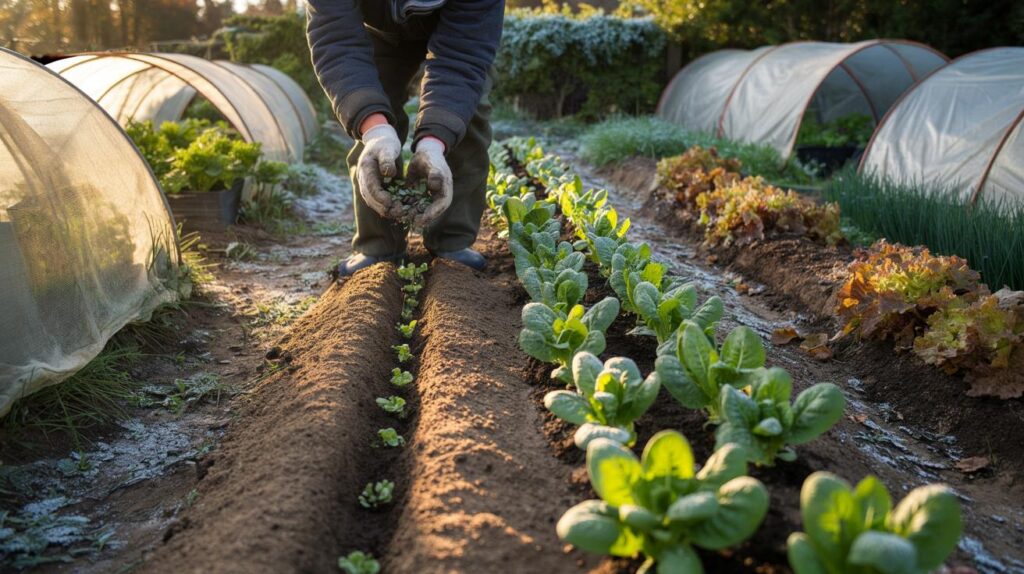
Cold nights creep in and plots fall silent, yet a tiny October decision could change what you fork onto plates.
Across Britain, gardeners brace for frost and shut the gate on salads. That choice often costs you flavour, texture and money. The final week of October carries a quiet opportunity. Use it, and winter sends tender leaves to your kitchen. Miss it, and your greens chew like boot leather.
The overlooked October move that softens winter leaves
One small habit separates plush winter leaves from leathery disappointments. It is not a costly tunnel or a fancy fertiliser. It is timing plus a kinder soil bed. Spinach and lamb’s lettuce (mâche) adore cool starts. They germinate in mild soil, then slow under short days. That slowdown builds supple tissue and concentrated flavour, not thickness.
Plant while the soil still feels mild to the touch, then let November shorten growth. Tenderness follows the clock more than the calendar.
Many gardeners wait for spring because they fear frost. They then rush into cold, waterlogged ground and raise tough leaves. The late-October window flips the script. A gentle start, a calm winter, and steady moisture set texture you can taste.
The short window: why 26–31 October matters
The last seven days before November offer a practical sweet spot for much of the UK. Daytime soil warmth lingers after lunch, yet nights cool enough to slow stems. In that balance, plants form fine cells and soft petioles.
Numbers you can trust
- Night minima around 5–8°C help seedlings harden without stress.
- Soil at 8–12°C triggers steady germination for spinach and lamb’s lettuce.
- Day length soon drops to under 10 hours, which caps growth and preserves tenderness.
Spinach germinates from roughly 2–5°C but thrives at 10–15°C. Lamb’s lettuce germinates from about 5°C and loves 10–15°C. Both handle frost once established. Spinach shrugs off dips near −7 to −9°C; lamb’s lettuce often survives down to −12°C, and lower with a fleece. These figures shift with wind, soil moisture and shelter, but they guide that crucial choice: sow before the true cold arrives.
Sow between 26 and 31 October if your nights average 5–10°C. You bank months of soft picking for minutes of work.
Build a kinder bed: light, loose and evenly moist
Texture begins underground. Dense, wet soil drives coarse leaves. Loose, aerated soil produces finer tissue. Aim for a crumb that breaks cleanly in your hand.
Simple bed prep that pays off
- Scratch the top 5–8 cm with a fork or hoe. Do not flip deep layers.
- Spread 1–2 cm of well-rotted compost on the surface. Avoid raw manure in autumn.
- Rake to a level, fluffy tilth. Break clods. Lift compaction where boots have pressed down.
- After rain, break any crust so water soaks instead of streaming away.
Keep fertility modest. Overfeeding pushes fast, thick leaves that turn tough in the cold. A thin compost veil feeds biology and smooths moisture swings without jolting growth.
Water with care: between showers, not on freeze
Autumn sees uneven rainfall. Seedlings hate feast-or-famine watering. Give short drinks between showers, ideally in the evening. That routine anchors roots and reduces evaporation overnight.
Lay a fine mulch once seedlings show. Dry grass clippings, shredded leaves or a sieve of compost hold moisture and buffer chill. Keep mulch off the crowns to prevent rot.
Once the surface freezes, stop watering. Frozen soil plus extra water means suffocation, not comfort.
Shelter from wind, not from light
Cold dry wind toughens leaves faster than frost. A low fleece, a cloche or a small polytunnel slows the air and keeps humidity even. Vent on mild days to avoid mildew and give plants light. Shadows slow growth, but steady air keeps cuticles thin and palatable.
Cheap kit that makes a big difference
- Lightweight fleece over hoops: fastest option, protects 2–3°C.
- Cold frame or reused window panel on bricks: adds warmth, strong in wind.
- Mini polytunnel: more headroom, easy to vent, ideal for mixed rows.
Spacing, depth and a quick timetable
Plant shallow and don’t cram. Crowding encourages mildew and stiff leaves. A light hand now saves trimming later.
| Crop | Last sowing (most of UK) | Depth | Spacing | First pick | Frost hardiness |
|---|---|---|---|---|---|
| Spinach (leaf) | 26–31 Oct | 1–1.5 cm | Rows 20–25 cm; thin to 8–10 cm | 8–12 weeks, then cut-and-come-again | About −7 to −9°C established |
| Lamb’s lettuce | 26–31 Oct | 0.5–1 cm | Rows 15–20 cm; thin to 5–7 cm | 10–14 weeks, then rosettes | Often to −12°C, lower with fleece |
Harvest strategy that keeps leaves soft
Pick modestly and often. Take outer leaves and leave the heart. This approach maintains a steady, slow engine rather than a surge. Cut in late morning on frost-free days. Frozen leaves bruise and toughen when thawed. If a hard snap arrives, drape fleece the night before and delay harvest until midday sun lifts the chill.
What to do by region
Southern and coastal plots keep warmth longer. Sow right up to 31 October in light soils. Midlands and the North often suit the 22–29 October window, unless you garden under cover. In Scottish lowlands, aim earlier in the month or use a cold frame. Urban courtyards run warmer; rural hollows run colder. Trust your microclimate more than a postcode.
Common mistakes that create chewiness
- Puddled seedbeds after heavy rain. Wait 24 hours, then loosen the surface before sowing.
- Thick, fresh manure. It drives lanky, fibrous growth in cold light.
- Overcrowding. Thin early. Airflow beats mildew and stiffness.
- Late, heavy watering in a freeze. Roots suffocate and leaves toughen.
- Permanent cover with no venting. Humid air hardens leaf surfaces and invites disease.
The quiet science behind tenderness
After late October, most of Britain drops below ten hours of daylight. Plants switch from sprint to idle. In that mode, they build denser sugars and thinner fibres. Cool nights increase soluble solids, which the tongue reads as sweetness and softness. A warm start lets roots explore. A dim winter keeps leaves mild. Your job is to hold that balance with even moisture and a shield from wind.
Two quick checks that save a crop
The squeeze test
Grab a handful of soil and squeeze. If it smears and shines, it is too wet to work. If it crumbles with light pressure, sow. This test prevents compaction that leads to tough leaves.
The night metre
Watch night lows for three evenings. If they sit around 5–8°C, your late-October window is open. Below 2–3°C at night for a week, switch to sowing under cover.
A practical add-on for variety and nutrition
Slip in a row of round radishes or mild mustards between spinach lines. These interplanted rows harvest early, open space for airflow and deliver crisp partners for winter salads. Mustards thrive at similar temperatures. Their quick leaves add bite, which flatters the gentle sweetness of lamb’s lettuce.
Risk management and small insurance policies
Use two sowings five days apart. If a hard frost hits one, the other often carries the season. Keep a spare fleece folded near the bed. A single windy night can lift covers; a ready replacement saves weeks of growth. Store watering cans indoors when freeze threatens. A cracked rose ruins delicate irrigation just when seedlings need it controlled.
Final tips to stretch the season and your budget
Try a cut-and-come-again rhythm. For spinach, take 25–30 percent of leaves per plant each week in mild spells. Skip a week after a frost. For lamb’s lettuce, harvest full rosettes but leave a few intact to seed a self-sown patch in spring. Those volunteers often germinate perfectly as light returns.
If you have only a balcony, fill a 20–30 cm deep trough with loam-based compost. Sow half a tray on 26 October and a second half on 31 October. Place the trough against a south-facing wall. That masonry releases heat at night, which nudges tenderness without pushing speed.



Brilliant breakdown! I sowed mâche late last year and it was shoe-leathery; now I get why—crowded and overfed. The ‘sow between 26–31 Oct if nights sit at 5–10°C’ rule is the missing piece. Love the reminder to vent fleece and stop watering once the surface freezes. Quick q: in a windy coastal plot, would a cold frame beat fleece for keeping leaves soft without mildew? Cheers for the practical numbers.