
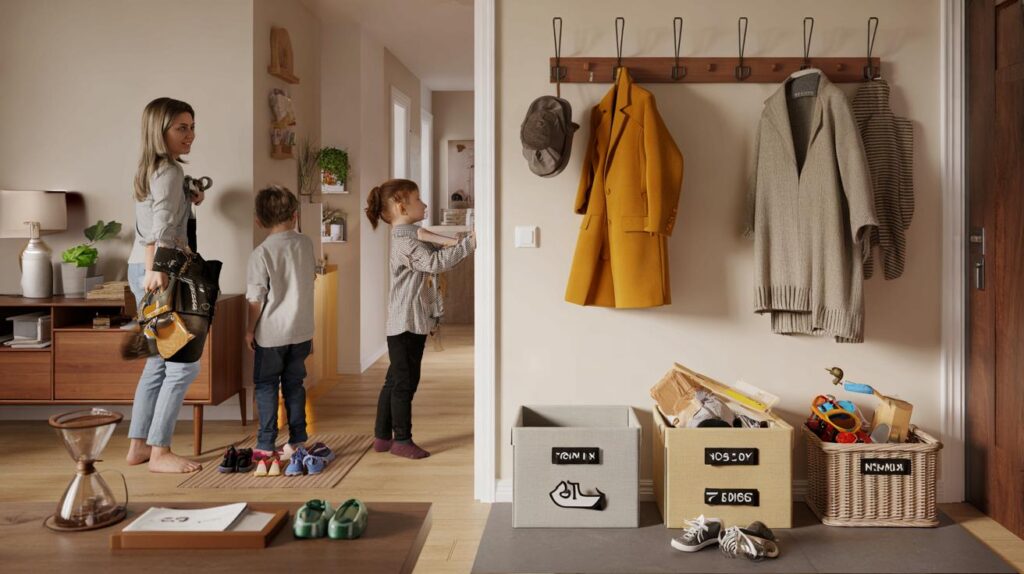
As autumn draws in, households face a fresh tide of coats, paperwork and toys while time shrinks and tempers fray.
Across the country, families are switching to a brisk 15-minute evening reset paired with a strict “one in, one out” rule. The aim is simple: stop clutter at the source, keep surfaces clear and free weekends from endless tidying. With budgets tight and rooms working harder than ever, small habits now beat heroic clean-ups later.
Why the autumn mess spike matters now
New school terms bring backpacks, stationery and forms. Cooler weather adds layers, scarves and boots. Online orders rise as gift season looms. Each item demands a home. Without one, piles sprout on chairs, stairs and tables. The longer things linger, the harder they are to move on. That creep is what derails busy households.
Give every category a single, obvious landing spot. If an item lacks a home, the home becomes the pile.
Organisers advocate tackling the friction points first: hallways, kitchen surfaces and living-room corners. Clear those zones and the entire home feels lighter. Momentum grows when the first three minutes reveal visible progress.
The 15-minute reset that sticks
A timer removes dread. Pick a fixed slot after dinner or before bedtime. Rotate three zones: entrance, kitchen, living room. Put on a playlist. Assign each person one job. No deep cleaning. No drawers. Only items left out, laundry in limbo and deliveries waiting for action.
- Entrance: shoes on a rack, coats on hooks, bags emptied, post triaged.
- Kitchen: clear the sink, wipe the hob, bin stray packaging, reset the table.
- Living room: fold throws, stack books, corral toys, return remotes to a pot.
Never leave a room empty-handed. Carry one thing to where it belongs every time you move.
Fifteen minutes caps the effort and resets the baseline. Stop when the timer sounds. Consistency, not exhaustion, keeps the home steady.
The rule changing what comes through the door
Clutter prevention beats storage hacks. The most effective brake is one-in-one-out. For every jumper, mug or toy that arrives, one similar item leaves. The decision happens at the threshold, not months later. That single reflex controls volume and curbs impulse buying.
One in, one out, without the guilt
Set up an exit station near the door: donation bag, recycling box, and a small “repair soon” basket. When a parcel is opened, choose the outgoing counterpart immediately. Photograph cherished pieces before parting if that helps. For children, make it a swap: a new book replaces one they have finished.
New in, old out. If nothing leaves, nothing enters. The house stays the same size even when retail seasons change.
Make it a team sport
One person cannot carry a household. Turn tidying into a quick game with visible wins and clear roles. Keep score by zones cleared or items returned. Reward with choosing the Friday film or weekend pancakes. Avoid blame. Aim for small, repeatable victories.
Jobs by age and time
- Under 7: match socks, put soft toys in a basket, hang a coat on a low hook.
- 8–12: load the dishwasher, wipe the table, sort post into keep/recycle.
- Teens: manage laundry, clear school kit nightly, maintain a desk drawer.
- Adults: approve exits, handle sensitive paperwork, fix the tricky five-minute tasks.
What you need to set it up
| Zone | Anchor point | 30-second reset | Exit rule |
|---|---|---|---|
| Hallway | Four wall hooks and a shoe rack | Hang coats, line up shoes, empty bags | New coat in, old coat to donation bag |
| Kitchen | Clear counter and a tray for post | Wipe surfaces, file post to tray | New mug in, chipped mug out |
| Living room | Basket for throws, caddy for remotes | Fold throws, return remotes | New magazine in, last week’s to recycling |
| Wardrobe | Seasonal rail and donation tote | Hanger back to rail, laundry to basket | New knitwear in, dated knitwear out |
If you have 60 minutes this weekend
Work fast, in four ten-minute bursts with breaks between. Timeboxing builds confidence and stops overwhelm.
- Minutes 0–10: sweep surfaces in the kitchen; bin packaging; load the dishwasher.
- Minutes 10–20: hallway drill; hang, rack, empty bags; start a donation bag.
- Minutes 20–30: living room reset; baskets for toys, fold textiles, stack books.
- Minutes 30–40: wardrobe skim; pull five items you never wear; choose five “outs”.
- Minutes 40–50: paperwork triage; recycle junk mail; file three important documents.
- Minutes 50–60: exit run; place donations by the door; set reminders to drop them off.
Risks and how to avoid them
Over-decluttering can trigger regret. Create a seven-day pause box for maybes. If you do not need the item within a week, let it go. Decision fatigue also derails progress. Limit each session to a set number of choices and stop. Landfill worries? Prioritise donation, resale, repair and community sharing before the bin.
Keep a pause box for maybes and an exit bag for certainties. Decisions stay light, progress stays visible.
What you gain beyond tidy shelves
Calmer starts, faster exits and fewer arguments. With a clear entrance, keys and bags appear on cue. A tidy kitchen speeds breakfast. A set wardrobe slashes morning dithering. The psychological lift is real when surfaces stay visible and choices shrink.
The time arithmetic adds up. A family of four can plausibly reclaim up to five hours weekly: less hunting for lost items (say ten minutes a day for two adults), smoother morning routines (five minutes per person on workdays), and quicker evening resets because things already have homes. That reclaimed time buys a game, a walk or simply a quiet cup of tea.
A seven-day trial you can start tonight
Keep it light and measurable. Use a notebook or phone to track wins.
- Day 1: set hooks, a shoe rack and a key bowl by the door.
- Day 2: create the exit station with donation, recycling and repair containers.
- Day 3: run the 15-minute reset once; list snags that slowed you down.
- Day 4: teach one-in-one-out to the whole household; do a live swap.
- Day 5: assign age-appropriate jobs; trial a scoreboard.
- Day 6: skim the wardrobe; five outs for five ins this month.
- Day 7: review and adjust; move any pause-box items you did not touch to the exit bag.
Extra context for sharper results
Two quick frameworks help keep momentum. The two-minute rule means anything that takes under two minutes gets done immediately—hang the coat, put the mug in the dishwasher, file the receipt. The 30-day rule slows shopping: if an item is not essential, wait 30 days. If you still want it, plan the exit for its counterpart before buying.
To maintain gains, pair the reset with seasonality. When the heating goes on, rotate summer kit out of sight and label the box. At the first spring weekend, reverse the rotation. Seasonal swaps keep only relevant items at hand, reduce visual noise and make the next 15-minute reset even faster.



Tried the 15-minute reset after dinner—floors visible at last! The “never leave a room empty-handed” tip actually sticks.