
Shop shelves teem with glossy produce, yet hidden residues linger. In kitchens, small habits can shift what reaches your plate.
New sampling figures show PFAS and other pesticide traces are now more common on fruit and veg. Families want a fix that works, costs pennies and fits busy evenings.
Why households are reaching for the bicarbonate bowl
Across routine checks, the share of fruit samples with PFAS jumped from 3.4% in 2011 to 25.1% in 2021. Vegetables rose from 2% to 8.6% over the same period. That trend alarms parents, older shoppers and anyone trying to eat more plants. It also explains the rise of a plain, kitchen-shelf answer: a bicarbonate-of-soda bath that targets surface residues in a single, timed soak.
Not all chemicals sit in the same place. Some cling to the skin, some pass through the peel, some move inside the tissues. Surface residues respond to water, agitation and mild alkalinity. Deeper, systemic molecules don’t. That split shapes what a wash can and cannot do.
Surface residues shift with the right routine. Systemic pesticides don’t. Aim to lower exposure, not chase zero.
The 15-minute, 10 g/L method step by step
Ratios, timing and agitation
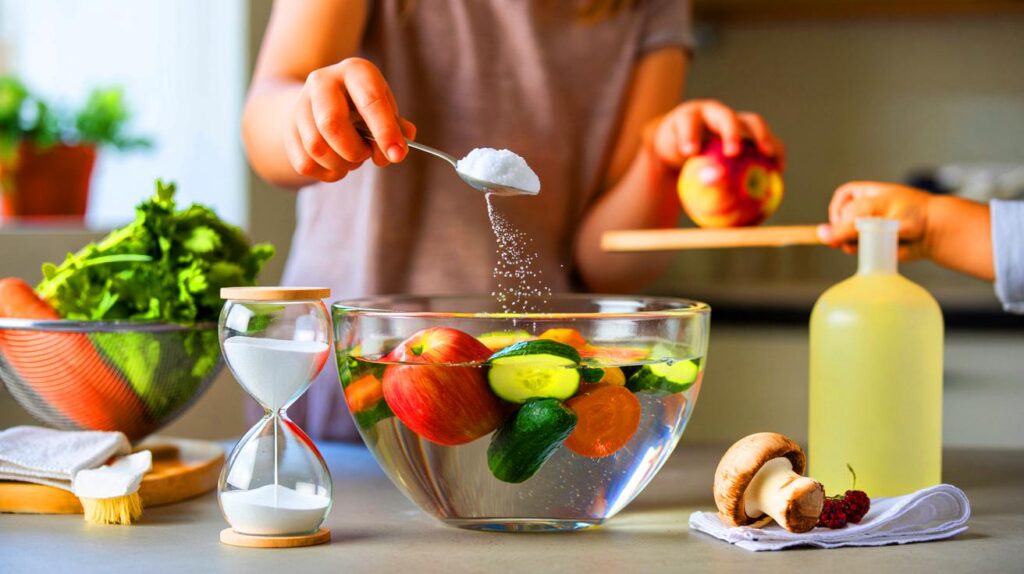
Start at the tap. Give produce a cold-water rinse for one minute to remove dust and loose soil. Then mix a bath at the sink: 10 grams of bicarbonate of soda per litre of cold water. Submerge fruit and veg for at least 15 minutes. Swirl the bowl once or twice to move the water around skins and stalks.
Use 10 g bicarbonate per litre of water, soak for 15 minutes, and rinse well before you dry.
Lift items out. Brush firm skins gently. Use a soft vegetable brush on apples, carrots, cucumbers and melons. For leafy greens and herbs, massage leaves in the bath to reach folds and midribs. Rinse well under the tap to remove the alkaline water and any loosened residues. Pat dry with clean tea towels or spin leaves. Store once dry to prevent spoilage.
What to do after the bath
Cut and peel after washing, not before. Washing first stops you driving surface material into the flesh with a knife. Drying matters too. Water left in crevices speeds up mould, so always remove excess moisture before the fridge.
Vinegar soaks, brushing and the real-world exceptions
White vinegar helps when you face waxes and grime. Use a mix of one-third vinegar to two-thirds water. Soak for 15 to 20 minutes, agitate, rinse thoroughly, then dry. A soft brush boosts the effect on smooth, robust skins. Many households use bicarbonate for a main clean and vinegar when produce arrives heavily waxed or dusty.
Some foods need special handling. Fragile berries hate long baths. Dip them for about 30 seconds in cold water, drain and dry on paper. Skip vinegar or bicarbonate in the rinse for these. Mushrooms absorb water and turn soggy; wipe them with a clean cloth instead. Peeling removes part of any surface load but also strips fibre and vitamins found in skins. Blanching can help with certain veg, yet texture and flavour may shift, so test small batches.
Quick-reference guide for busy evenings
| Method | Mix ratio | Time | Best for | Notes |
|---|---|---|---|---|
| Tap-water rinse | None | 1 minute | All produce | Good first step; removes soil and some residues |
| Bicarbonate bath | 10 g per litre | 15 minutes | Firm skins, greens | Brush firm skins; rinse and dry well |
| Vinegar bath | 1/3 vinegar, 2/3 water | 15–20 minutes | Waxy fruit, dirty veg | Rinse thoroughly to remove smell and acidity |
| Berries dip | Cold water | ~30 seconds | Fragile berries | Drain fast; avoid vinegar or bicarbonate in the rinse |
| Mushroom clean | None | As needed | Mushrooms | Wipe with a cloth; skip soaking |
What can a rinse really remove
Cold water alone shifts a modest share of residues and cuts the dirt you can’t see. Alkaline water does more. Bicarbonate changes the pH at the surface, which can break down or loosen certain pesticide molecules that sit on the skin. Agitation helps the solution reach seams and pores. A brush adds gentle abrasion without damaging the peel.
PFAS resist breakdown and can sit both on the surface and inside tissues. Washing reduces what sits on the outside. It won’t chase molecules drawn into the fruit. That gap is why growers, regulators and consumers still debate targets and limits. At home, the aim is a practical risk drop while your dinner stays fresh and tasty.
Wash just before you eat. You keep water-soluble nutrients in place and lower the chance of recontamination in the fridge.
Common pitfalls that blunt the benefit
- Washing after cutting spreads surface material into the flesh; always wash first, cut second.
- Soaking too briefly reduces the effect; set a timer for the full 15 minutes.
- Skipping the final rinse leaves alkaline water or vinegar on the skin; rinse and dry thoroughly.
- Storing wet produce encourages mould; remove moisture before chilling.
- Scrubbing hard damages skins; use a soft brush and light pressure.
Why this matters right now
More people eat plant-heavy meals, often raw. At the same time, monitoring programmes report a higher frequency of detectable PFAS on fruit, and a smaller but rising share on vegetables. That combination puts pressure on family routines. A low-cost, reliable wash gives parents and carers a clear script that fits weeknights and lunchboxes.
Systemic versus surface: set expectations
Pesticides fall into broad groups. Non-systemic ones stay on the outside. Translaminar types move a little into the peel. Systemic ones circulate in tissues. Washing targets the first group best, does something for the second and little for the third. Peeling removes a layer that can carry residues, yet you also lose fibre and phytonutrients, so reserve peeling for thick or damaged skins.
Practical add-ons for safer, tastier produce
Time your wash. Do it just before eating or cooking to preserve vitamin C and other water-soluble nutrients. Buy in smaller amounts if you can, so you wash closer to mealtimes. For bulk prep, dry extra carefully and store in breathable containers to avoid sogginess.
Weigh the trade-offs. Organic labels often mean fewer synthetic pesticides, but drift and persistent compounds can still appear. The bicarbonate soak remains useful. If you want advanced kit, electrolysed water or ozone systems exist, yet they cost more and need careful handling. For most households, a bowl, a spoon and a timer deliver the biggest win per minute.
If you fancy a quick trial, run a simple comparison at home. Split a bag of apples into three: rinse-only, bicarbonate bath, and vinegar bath. Note texture, smell and any residue left on a white cloth after drying. That small test helps you choose the routine that fits your taste, budget and schedule.



Thanks for the clear routine—bowl, spoon, timer. This is actually doable on a Tuesday night; weeknight life‑saver! 😊