
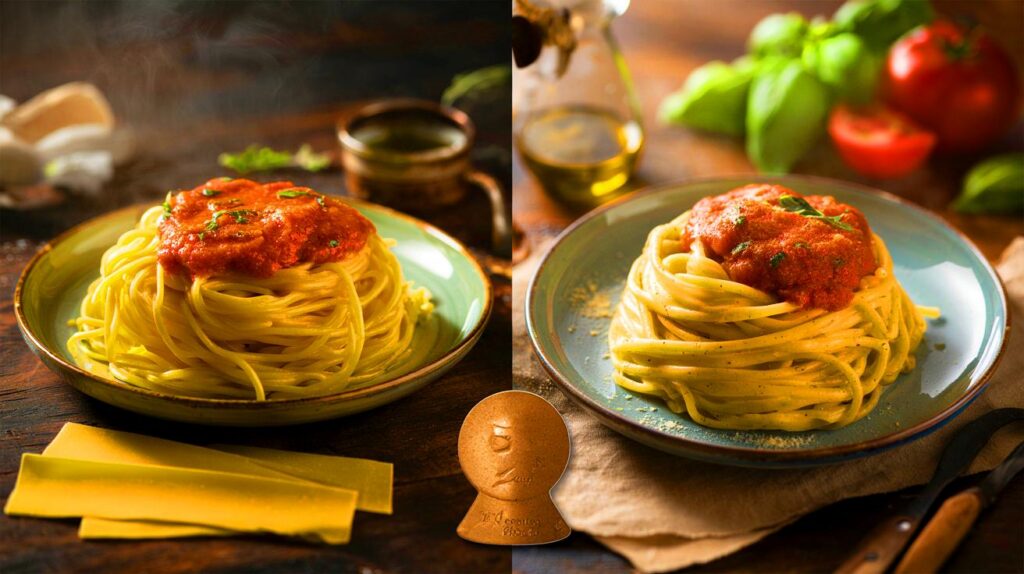
Shoppers rush the pasta aisle each week, yet small clues on the pack and in the pasta itself can change the meal entirely.
Look closer next time you reach for a bargain bag. The shade, the sheen and the surface tell you more than any slogan. These signs often reveal how the pasta was dried, how it will cook, and whether your sauce will cling or slide off.
The colour clue most people miss
Many supermarket pastas look bright yellow and glossy. That look usually points to quick, high‑temperature drying and very smooth dies. It often makes for speed on factory lines, not for flavour or texture at home. By contrast, pasta that looks pale, almost ivory, and slightly matte tends to come from slower drying at lower heat and rougher bronze dies.
Bright, shiny yellow often signals fast drying and slippery surfaces. Pale ivory and matte suggests slow drying and better sauce grip.
Why does this matter? Fast drying can stress the dough. Proteins change, fragile vitamins shrink, and the surface turns glassy. Slow drying lets moisture leave more gently, protecting the structure so the pasta holds its shape and cooks evenly.
When yellow is normal, not a red flag
Egg pasta will naturally look yellower. Some shapes also contain turmeric or saffron, and brands must state that on the ingredients list. In both cases, colour alone doesn’t tell the full story. Check the finish: an overly shiny, slick surface still hints at Teflon dies and a slippery bite, while a matte finish points to bronze dies and better sauce adhesion.
Bronze‑cut texture: what your tongue can feel
Look for words such as “bronze die”, “trafilata al bronzo” or “bronze‑cut”. Bronze dies roughen the exterior, creating tiny ridges that hold sauce. Smooth, Teflon‑die pasta shines under the lights and often sends sauce to the bottom of the bowl.
Rough means grip. Smooth means slip. The texture you see is the texture your sauce will live with.
Drying methods at a glance
| Method | Typical conditions | What you see | How it cooks | Nutrition impact |
|---|---|---|---|---|
| Slow, low‑temperature drying | Many hours to days, lower heat | Pale ivory, matte, fine pores | Holds shape, stays firm, absorbs sauce | Better protein structure, fewer heat losses |
| Fast, high‑temperature drying | Short hours, high heat | Bright yellow, glossy, very smooth | Softens quickly, sauce slides off | More nutrient loss, harsher texture changes |
A quick aisle checklist you can use today
- Prefer a pale, ivory shade over a bright, canary yellow.
- Choose a matte, slightly rough surface; avoid mirror‑shine.
- Scan for “bronze‑cut” or the Italian “trafilata al bronzo”.
- Pick packs stating “slow dried” or “low temperature drying”.
- Check ingredients: durum wheat semolina and water for classics; egg or spices when clearly stated.
Cooking for taste and blood sugar
How you cook matters as much as what you buy. Dietitians in France, including Julie Boët cited by health media, point to a simple rule: stop at firm. Pasta cooked al dente digests more slowly than soft, overcooked pasta. That can help reduce post‑meal blood sugar peaks.
Cook to al dente, pair with vegetables and a protein, and you tame both hunger and sugar spikes.
White pasta still fits a balanced plate. It just needs company and timing. Add plenty of leafy greens or tomatoes, some olive oil, and a protein such as beans, tuna or eggs. Keep cooking times at the lower end of the packet guide and taste early.
Wholegrain and legume options
Wholewheat and semi‑wholewheat pastas bring more fibre and minerals with a nutty bite. Legume pastas made from lentils, chickpeas or peas pack extra fibre and plant protein, which can help with fullness and reduce the need for a large meat portion. They cook fast and turn mushy if overdone, so watch the clock closely.
The “zero‑calorie” detour
Konjac‑based noodles offer very few calories and almost no nutrients. They can bulk out a meal on a tight day, but they do not replace the energy and nutrients your body needs over time. If you use them, add plenty of vegetables, healthy fats and a protein so the dish actually nourishes you.
Test the quality in your own kitchen
Two small trials reveal a lot. First, the break test: snap a strand before cooking. A fine, chalky break suggests a gentle dry; a glassy, splintery break hints at harder drying. Second, the sauce test: cook two brands side by side, toss with the same tomato sauce, and swirl the plate. Watch which one keeps the sauce clinging to the ridges.
Pasta, price and value
Slow‑dried, bronze‑cut pasta usually costs more per kilo. Yet you often need a little less because the texture satisfies and the sauce sticks. A 75–85 g dried portion per adult, with a generous serving of vegetables, brings the bill down and lifts the plate. If your budget is tight, buy shapes from value ranges that still state “bronze‑cut” and keep an eye out for pale, matte finishes even in lower shelves.
Smart cooking tweaks that pay off
- Salt the water well for taste; 8–10 g per litre is a fair kitchen rule.
- Keep back a mug of starchy cooking water; it emulsifies sauces.
- Finish pasta in the pan with the sauce for 60–90 seconds.
- Cool leftovers quickly; chilling and reheating can increase resistant starch.
What the label rarely tells you
EU rules allow egg or spice‑coloured pasta when labelled, but they do not force brands to print drying time or temperature. Clues live in the look, the wording and the origin. Small Italian mills and some French producers advertise “slow dried” because it takes energy and time. If the pack screams with bright photos and a glossy product window, inspect the pasta itself rather than the marketing.
The pasta tells its own story: look at the colour, feel the surface, then decide if it earns your sauce.
Extra pointers if you care about nutrition
Rotate shapes and grains to vary fibre and protein. Try wholewheat once a week, legume pasta when you want a lighter meat portion, and classic durum on busy nights. Aim for vegetables to make up at least half the plate volume. If you track blood sugar, stop two minutes before soft, test a strand, then finish the cook in the sauce.
Curious about portion planning? For a household of four, 320 g dried pasta with 600–700 g vegetables and 150–250 g protein serves a filling dinner with leftovers for lunch. Choose a pale, matte, bronze‑cut pack, cook to al dente, and let the sauce do the talking rather than the bright yellow glare from the shelf.



Finaly someone explains the yellow glare! I tried a pale, matte tagliatelle and the sauce actually clung—game changer. Thanks!