
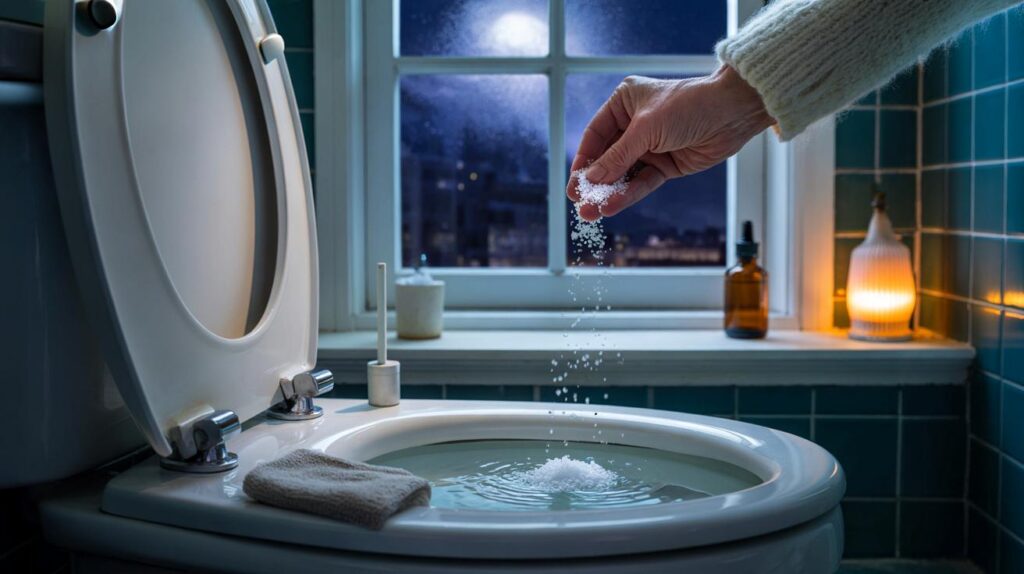
A late-night lavatory habit from generations past is back in British homes, promising fresher mornings without harsh chemicals for many.
Grandmothers swore by a pinch of salt in the bowl before lights out. Fans report fewer odours, fewer light marks and smaller cleaning bills. Scientists point to contact time, gentle abrasion and simple household chemistry rather than miracles.
Why the night matters
Nothing moves much in a toilet bowl while you sleep. That calm period buys you contact time. Gran’s trick uses the still water to hold ingredients against the porcelain. The mix sits, works on whiffs and soft grime, and waits for a brisk brush at sunrise.
Coarse salt brings a light scouring effect. Bicarbonate of soda adds a buffering, odour-absorbing push. A few drops of a chosen essential oil add fragrance, though fragrance is optional and not a cleaning step. You get a fresher bowl without strong fumes or foaming surprises.
Salt does not dissolve limescale. You need an acid, such as white vinegar or citric acid, to tackle hard deposits.
What salt can actually do
Salt crystals help you scrub without scratching glazed porcelain. They disrupt light biofilm and reduce stale smells. Salt also keeps costs low and storage simple. Add bicarbonate for better odour control. Keep the mix in the bowl, not in the cistern, and you avoid trouble with internal fittings.
Seven quick facts you’ll actually use
- Two tablespoons of coarse salt weigh around 35–40 g and cost roughly 3–5p per use in the UK.
- One tablespoon of bicarbonate adds about 15 g, another 2–4p, and improves odour control.
- Leave the mix overnight to maximise contact time; aim for 6–8 hours if possible.
- Brush in the morning to harness salt’s gentle abrasion, then flush once.
- Repeat once or twice per week; daily use brings little extra gain and wastes product.
- Ventilate the room for ten minutes a day to cut musty smells, moisture and mould growth.
- Hard water areas still need an acid soak for limescale lines and under-rim crusts.
The gentle method that works
- Before bed, sprinkle 2 tbsp coarse salt into the bowl water.
- Add 1 tbsp bicarbonate of soda. Do not add bleach.
- Optionally, add 3–5 drops of an essential oil to the water surface.
- Do not flush. Close the lid to contain aromas.
- In the morning, brush the sides, the waterline and the bend.
- Flush once. Check under the rim with a quick second brush if needed.
What it won’t fix
Salt will not disinfect a toilet bowl at household concentrations. It will not clear stubborn limescale rings. It will not shift a proper blockage on its own. You still need targeted tools when deposits or clogs appear, and you need acids for mineral scale.
Never pour boiling water into a porcelain toilet. Use hot tap water only to avoid cracks, warped seals or damaged PVC.
Target the right job with the right mix
| Method | Best for | Wait time | Typical cost | Key caution |
|---|---|---|---|---|
| Coarse salt + bicarbonate (overnight) | Light odours, film, fresh look | 6–8 hours | 5–9p per use | Keep away from metal hinges; do not use in cistern |
| White vinegar soak | Limescale lines, under‑rim crust | 30–120 minutes | 5–12p per 150–300 ml | Never mix with bleach; ventilate |
| Citric acid solution (5–10%) | Hard water scale without strong smell | 30–120 minutes | 6–10p per use | Rinse well on marble or stone floors |
| Hot tap water + salt (short soak) | Minor slow drain, early sludge | 30–60 minutes | 3–8p | Not a cure for solid clogs; avoid boiling water |
Two risks you can avoid
- Chemical clashes: bleach with vinegar or acids can release chlorine gas. Keep them apart and flush between products.
- Corrosion hotspots: concentrated salt left on chrome hinges or steel screws may pit the metal. Keep product inside the bowl water and wipe any splashes.
How often, and who should skip the fragrance
Once to twice weekly suits most households. Daily use wastes ingredients and effort. Skip essential oils if children, pregnant people, pets or asthma sufferers share the home. The cleaning action does not depend on fragrance, so you lose nothing by leaving it out. If you use oils, store them high, cap them tightly and dose sparingly.
Hard water realities across the UK
Large parts of England sit on chalk and limestone, so the supply carries calcium. Those minerals form limescale as water evaporates in the bowl. An acid soak tackles the crust. Pour a glass of white vinegar or a citric acid solution around the sides and under the rim. Leave it to sit. Brush and flush when the ring softens. Alternate the acid day with the salt night and you keep both odour and scale under control.
Safe combinations and the big no‑mix warning
Use salt with bicarbonate. Use vinegar or citric acid on a different night. Keep bleach for separate sessions when you need sanitising. Flush thoroughly before switching products. Open a window when using acids or bleach. Gloves protect skin from dryness and tiny nicks.
Septic tanks, drains and when to call a pro
Salt and bicarbonate at small doses do not harm septic systems. Do not dump handfuls of undissolved salt into a septic tank or the cistern. If the pan fills and drains slowly after several tries with hot tap water and a plunger, call a licensed plumber. Enzymatic cleaners help with organic build-up, but they need time and a warm room to work.
Costs, time saved and a simple weekly plan
This routine costs pennies. Two salt nights and one acid soak each week typically sit below £1 per month. You save time because the morning brush gets easier when the night soak loosens film. Try a rotation: Monday and Thursday for salt+bicarbonate overnight; Saturday afternoon for a two-hour citric acid soak, windows open, no bleach that day.
Extra practical notes that widen your options
Test a small area if your toilet seat has delicate finishes, and keep crystals off lacquered hinges. Use a compact brush with a flexible neck to reach under the rim. A pumice stick can lift stubborn scale on old, unglazed marks, but keep it wet and rub lightly. A silicone brush holds fewer germs and dries quickly. A dehumidifier or an open window after showers cuts odour sources elsewhere in the room.
You can adapt the same logic to other fixtures. Salt and bicarbonate lift faint tea stains in sinks with a short, gentle scrub. Citric acid descaling keeps kettle coils efficient and saves electricity. Small, regular, low‑tox steps often beat a monthly blast with heavy products, and your nose will notice the difference at breakfast.



Is leaving salt overnight in the bowl corrosive for the metal bits? The article says keep it off hinges, but splashes happen—any occassional pitting after months of use? Anyone tried on chrome seats without issues?