
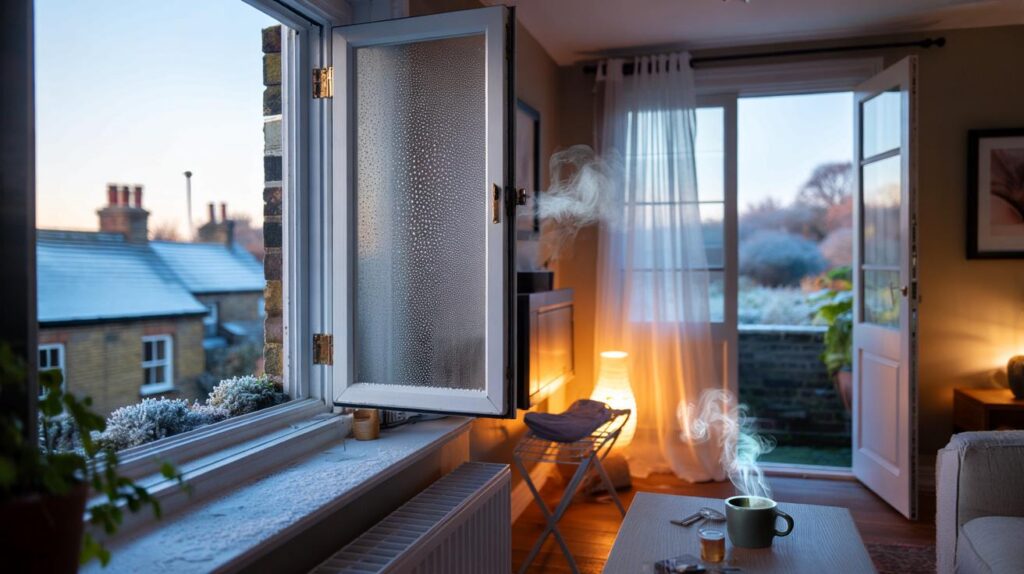
Cold mornings turn us into window-closing champions. The kettle steams, the radiators tick on, and the instinct is simple: seal the warmth in, keep the chill out. Yet the air inside your home is a living thing. When it sits, it sours. When it moves, the whole place resets.
It was a January night in a semi in Leeds when I clocked it. Windows locked tight, curtains drawn, the kind of cosy that makes you linger by the radiator and sip tea you don’t even want. By 10pm, the lounge smelt faintly of last night’s stir-fry, my eyes felt heavy, and the windows flashed little beads at the edges like quiet blame. I slid the latch and cracked one sash. Cold air barrelled in, then something stranger: the room felt sharper, lighter, like a thought finding words at last. A minute later, we stopped noticing the chill. The silence hummed different. A small thing had changed, and it didn’t feel small at all. A thin slice of winter air can do more than you think.
The quiet cost of sealed-up rooms
The moment the windows clamp shut for winter, a house starts collecting things it doesn’t need. Steam from showers, breath from meetings on the sofa, scents from candles that promise bergamot and give you benzene’s tired cousin. We rarely sniff it happening, but the body knows: foggy head, scratchy throat, a heaviness you mistake for January itself. **Fresh air is the cheapest home upgrade you never see.** You don’t need gadgets to prove it. Crack a window and the room’s mood shifts before you can Google “best air purifiers 2025”.
One small flat, one ordinary evening: cook pasta, drain it, sauce steams, plates steam, conversation steams. Later, someone showers long enough to fog the mirrors, then hangs a towel on a radiator because that’s what everyone does. A budget CO₂ monitor on the shelf creeps from 800 to 1,600 ppm, and the bedroom window wears a glistening collar by dawn. **Condensation is your room telling you it needs to breathe.** That water didn’t come from nowhere; a family makes litres of moisture daily without trying. It has to go somewhere, or it goes into your walls.
Here’s the plain maths you can feel without equations. Warm air carries more water. Cold air carries less. Bring in a short burst of cold, swap it with your heavy indoor air, and humidity falls fast while your walls don’t have time to chill to the bone. Short, sharp airing nudges indoor CO₂ back under 1,000 ppm and lowers relative humidity below the mould-friendly zone above roughly 60%. You don’t lose as much heat as you fear because the heat in a home is stored in your furniture and walls more than the air itself. Open wide, let the stale out, close again, and the radiators don’t have a mountain to climb. Your nose will tell you before a thermometer does.
How to air a cold home without freezing
Use purge ventilation: two or three times a day, open windows wide for 5–10 minutes to create a brief whoosh of fresh air. Cross-ventilate if you can — one window at the front, one at the back, doors ajar so the entire place exhales. Do it when humidity spikes: after cooking, post-shower, during laundry on the airer. Open wide, then close — fast.
Leave trickle vents open; they’re small for a reason. Wedge the bathroom door for five minutes after the shower, not the entire morning. Dry clothes by a window, not against a cold external wall. We’ve all had that moment where the bedroom smells like “wet Tuesday” and we blame the weather rather than the air we’re keeping. Let’s be honest: nobody cracks every window at dawn, every day, with monk-like discipline. Build one habit after dinner and one before bed. The house will repay you in quiet ways.
People worry about bills, and yes, heat is precious, but the quick-swap method hardly dents it compared with the cost of damp and endless dehumidifier runs. **Mould is moisture with a PR problem — it only grows when we let humidity linger.**
“Fresh air isn’t a luxury on cold days. It’s maintenance for your body and your building.”
- Open wide, twice daily, for 5–10 minutes.
- Cross-ventilate for a brief breeze, not a long draught.
- Vent during moisture moments: cooking, showering, drying laundry.
- Keep furniture a hand’s width off cold walls.
- Use lids on pans and the extractor on high for 10 minutes after cooking.
The gains you can feel tomorrow
The first thing you notice after a winter airing is speed: rooms feel calmer in minutes, like a tense conversation that finally breathes out. Morning brain fog eases, sleep feels deeper, and the curry you loved yesterday stops living rent-free in the curtains. The second gain is quieter: fewer window tears, fewer black freckles gathering behind the wardrobe, fewer arguments with a dehumidifier that sounds like a small plane. Your home smells like itself again, which is a surprisingly proud feeling. And there’s a social upside too — guests pick up on freshness before they pick up on decor. Open windows look like waste at first glance. Airing is actually thrift disguised as a breeze.
| Point clé | Détail | Intérêt pour le lecteur |
|---|---|---|
| Short, sharp airing beats a tiny crack | Open wide for 5–10 minutes to swap stale air fast | Feels fresher without chilling walls or spiking bills |
| Tackle moisture where it happens | Vent after showers, cooking and laundry moments | Cuts condensation and mould risk at the source |
| Cross-breezes are your free fan | Opposite windows, doors ajar, extractors on briefly | Faster air change, cleaner air, better sleep and focus |
FAQ :
- How long should I open windows in winter?Go for 5–10 minutes, two or three times a day. Open wide for a quick air swap, then close.
- Won’t my heating bill rocket if I do this?A short blast loses far less heat than leaving a window on the latch for hours. Warmth lives in walls and furniture; they don’t cool much in ten minutes.
- What if the outdoor air is polluted?Time your airing for quieter hours, use the back of the home, and run the extractor in kitchens and bathrooms. Even city air beats long-stale indoor air packed with moisture and CO₂.
- Is a dehumidifier enough on its own?Helpful, yes, but it doesn’t bring in oxygen or push out CO₂ and odours. Pair it with short, regular window airing for the full reset.
- I have asthma — should I still open windows?Short airings can help by reducing indoor triggers like damp and cleaning fumes. Pick times with lower outdoor triggers and keep a gentle, quick routine.


