
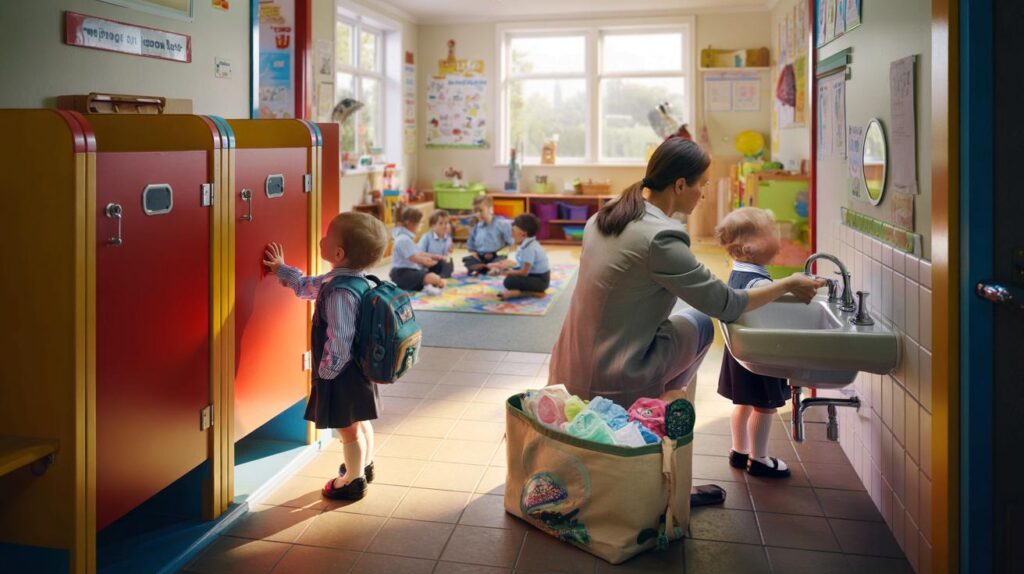
Morning routines, messy mealtimes and tiny toilets collide with classroom reality as families juggle readiness, confidence and the clock before that first school bell.
New polling has thrown a spotlight on what many parents count as “basic” skills before Reception, while schools report rising pressure to cover life skills that used to be learned at home.
Parents split on school readiness
A government-commissioned survey of 2,000 parents of under-fives suggests shifting attitudes to pre-school milestones. Most respondents said toilet training needn’t be nailed before the first term. Many also downplayed mealtime know-how, concentration spans and early communication skills.
Six in ten parents say children need not be toilet trained before Reception, setting up a big test for the school day.
The findings capture an uncomfortable truth: families face busy lives, contradictory advice and real-world constraints such as childcare timetables, long commutes and cost-of-living stress. That mix can push developmental tasks further down the list.
What parents said by the numbers
| Skill or behaviour | Parents saying it’s not essential pre-Reception |
|---|---|
| Toilet training | 60% |
| Using a knife and fork | 70% |
| Focussing on a task for around 10 minutes | About two-thirds |
| Speaking in full sentences | Around half |
| Recognising letters or numbers | 60% |
Early literacy targets sit later in the Early Years Foundation Stage, so parents needn’t push phonics before term starts. Yet teachers say self-care, attention and clear communication help children take part from day one.
Teachers raise concerns
Headteachers and early years staff have flagged a steady rise in pupils who struggle with day-to-day tasks: toileting, handwashing, dressing, and simple turn-taking. School leaders warn that stretched services leave them picking up needs that sit closer to health, social care and parenting support.
When nappies arrive in the classroom, teaching time shrinks. Staff step away from phonics to manage spills, spare clothes and anxious little faces.
That time cost adds up across a class. It affects lesson flow, outdoor play and pastoral care. Teachers also worry about children who find words hard to summon, or who tire quickly when asked to sit, listen and try.
Reception is designed for play-based learning and gentle routines. But it still relies on a few building blocks: confidence to ask for help, comfort with toilets and handwashing, and a habit of sharing space with others.
Government steps in with a new guide
The Department for Education has launched a free “Best Start in Life” guide, backed by NHS expertise, to give mums and dads one place for trusted advice. It pools guidance on sleep, feeding, speech and language, toileting, and local childcare routes.
Ministers say parents face a maze of online opinions, and many feel judged or overwhelmed. The guide aims to cut through the noise with sensible, everyday steps that fit around real family life.
No flashcards required: small routines build big independence — getting dressed, joining mealtimes and asking for the toilet in time.
What the guide covers
- How to set calm, predictable routines for mornings and bedtimes.
- Practical toilet training timelines, from noticing cues to handling setbacks.
- Play ideas that boost speech, listening and turn-taking.
- When to check in with a health visitor or GP about continence or communication.
- Local routes to childcare and early support if needs are more complex.
What this means for your family
Every child develops at their own pace. Still, daily practice makes the school day smoother. A child who can say “I need the toilet,” wash hands, put on a jumper and join a short small-group task will settle faster and feel proud.
Parents do not need specialist kits or expensive programmes. Ordinary activities build the right muscles, habits and confidence.
- Toileting: aim for regular trips after meals and before leaving home; keep spare clothes in the book bag.
- Mealtimes: use child-safe forks and talk about cutting soft foods; sit together for 10 minutes without screens.
- Attention: play short games with a clear start and finish — puzzles, matching games, “Simon says”.
- Language: model full sentences and expand what your child says: “Bus” becomes “Yes, a big red bus”.
- Independence: practise coats, zips and shoes during calm times, not in the rush before the door.
Inside the classroom: why these basics matter
Reception teachers weave learning through play. A child who can pause, listen and have a go will join in phonics songs, share blocks and try new tools. Toileting confidence reduces accidents and embarrassment, which keeps focus on friends and fun, not fear of the next mishap.
Knife-and-fork skills link to strength and coordination used for writing and drawing. Ten minutes of focus helps with story time and small-group tasks. Clear sentences help staff understand needs and spot when extra support might help.
A four-week readiness plan you can start tonight
- Week 1: set bathroom routines after breakfast, lunch and dinner; introduce a simple picture schedule for mornings.
- Week 2: add a daily 10-minute sit-down snack with a fork; practise asking for the toilet before leaving the table.
- Week 3: play two short turn-taking games each day; practise coats and shoes before a park trip.
- Week 4: try a school-day rehearsal — up, dressed, toilet, breakfast, shoes — then a local outing for timing.
What if progress stalls?
Setbacks happen with illness, big family changes, or after holidays. Return to routine, praise small wins and keep supplies handy. If bowel or bladder control hasn’t progressed after consistent practice, talk to a health visitor or GP. Some children need extra time or medical checks, and support exists without shame.
If speech seems stuck — limited words at four, frustration when trying to talk, or difficulty following two-step instructions — ask about speech and language support. Early help reduces stress for everyone and lifts classroom confidence.
How schools and parents can share the load
Schools can support by giving parents clear checklists at open days, storing spare clothes discreetly, and using playful prompts in class bathrooms. Parents can share what works at home — preferred phrases, reward charts, or sensory quirks — so staff respond consistently.
For children with additional needs, early conversations about toileting plans, equipment and quiet corners matter. Agree who does what, write it down, and review after the first few weeks.
Beyond the first term
Readiness is not a one-off test; it’s a slow, steady build. Routines free up attention for learning. As independence grows, teachers spend more time teaching and less time firefighting. That benefits the whole class.
If you want a quick gut-check, think in three lanes — body, words, and habits. Can your child use the toilet and wash hands with reminders, say what they need in simple sentences, and stick with a short task without wandering off? If not yet, start small tonight and stack the wins tomorrow.



Sixty percent sounds huge, but is that preference or reality? Teahcers can’t also be continence coaches and still deliver phonics—where’s the boundary with parents?
Big claim—where’s the data beyond one poll?