
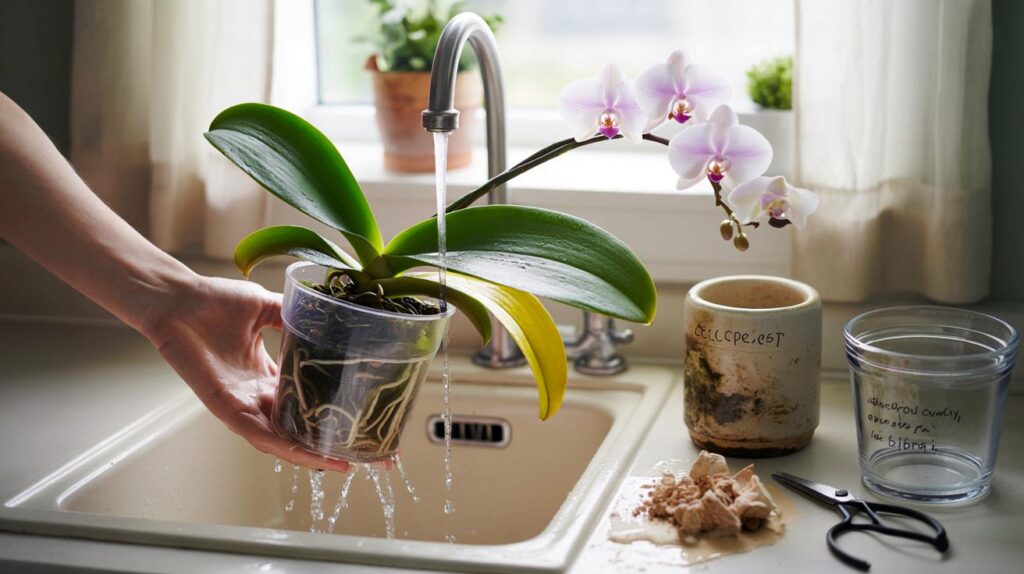
Across Britain, windowsills host a quiet drama as once-glossy orchid leaves fade, droop and shift shade. Owners worry. Routines crumble.
Yellow leaves rarely arrive overnight. They build from tiny missteps with water, light and heat. Change those habits and the plant fights back.
The mistake too many people make
Most people water on a calendar, then drop the nursery pot back into a decorative sleeve. The sleeve traps runoff. Roots sit wet. Oxygen disappears. Cells break down. Leaves turn sallow, then limp. The plant struggles long before anyone notices.
Never let the inner pot stand in leftover water. One centimetre of stagnation can undo weeks of careful care.
Orchids grown in bark need air around their roots. Constant wet closes those air gaps. Fertiliser salts build up faster in soggy compost and burn the roots. The leaves show the damage as yellow bands, patches or whole blades fading from the base.
What yellow leaves are trying to tell you
Yellowing signals stress, not always doom. The pattern points to the cause. Learn the pattern and you cut recovery time.
| Symptom | Likely cause | Quick check | Fix |
|---|---|---|---|
| Whole lower leaf turning evenly yellow | Natural ageing or past drought | Top leaves firm, roots silvery between waterings | Leave it or remove neatly; adjust watering by weight |
| Yellow with brown mushy base | Rot from overwatering | Roots black or slimy; sour smell | Unpot, trim rotten roots, repot into fresh bark |
| Yellow patches with crisp edges | Sun scorch | Direct midday sun on leaves | Move to bright, filtered light; add sheer curtain |
| Yellowing plus wrinkled leaves | Underwatering or compacted mix | Pot feels feather-light; roots bone-white | Soak thoroughly; refresh medium if dense |
| Yellow speckles and sticky residue | Sap-sucking pests | Fine webbing or tiny insects under leaves | Quarantine, wipe leaves, treat promptly |
The 60-second check you should do each week
Use weight, colour and runoff
- Lift the pot. Heavy means wet; light means time to water.
- Peer through the clear pot. Green roots are moist; silvery roots need a drink.
- Water at the sink. Pour until it runs freely, then let it drain for a full minute.
- Never return the pot to a sleeve with leftover water. Wipe the sleeve dry first.
Water when the pot feels light and a few roots look silvery, not on a fixed day of the week.
How to rescue a soaked orchid today
Work quickly and cleanly. Your aim is airflow and fresh bark.
- Slide the plant from its pot. Squeeze the sides to loosen if needed.
- Rinse the roots gently. Snip away black, mushy or hollow sections with sterilised scissors.
- Dust off old, compacted medium. Keep only firm, green or white roots.
- Repot into chunky orchid bark in a pot with plenty of drainage holes. A transparent pot helps you track root health.
- Water once to settle the bark, then drain thoroughly. Keep the plant in bright, indirect light for a week while it stabilises.
If the plant suffered drought, not rot, rehydrate differently. Stand the inner pot three-quarters deep in tepid water for about ten minutes. Lift, drain and let it dry before the next drink.
Light, heat and placement
Light drives recovery. Aim for bright, filtered conditions. An east-facing window suits most Phalaenopsis. A south window works with a sheer curtain from late morning. Avoid harsh midday beams that scorch tissue.
Heat matters too. Keep days around 18–24°C and nights above 15°C. Spikes and new leaves stall below 12°C. Radiators and fan heaters parch leaves and bark. Cold draughts shock roots. Bathrooms often help because higher humidity mimics the tropics, provided the room still gets good light.
Bright, indirect light and 40–60% humidity keep leaves turgid and green while new roots form.
Fertiliser without the fallout
Many people feed too much, then watch tips yellow. Feed “weakly, weekly” in spring and summer: roughly one-quarter the label dose, then flush with plain water once a month to wash salts away. In autumn and winter, reduce feeding to once a month if growth slows. Always fertilise on already moist roots to prevent burn.
Should you remove yellow or black leaves?
You can leave a yellowing leaf to finish its job. It still recycles nutrients into the plant. If you prefer a tidy look, cut it near the base with clean, sharp scissors. Let the cut dry in open air.
Spotted black areas suggest disease. Remove affected leaves promptly, sterilising blades between cuts. Keep the plant drier on the leaves for a few days and improve airflow to discourage further spread.
A simple weekly routine that prevents panic
- Monday: lift-test weight and check root colour.
- Wednesday: wipe leaves with a damp cloth to remove dust and pests.
- Friday: inspect the saucer or sleeve for hidden water; keep it bone-dry.
- First weekend of the month: flush the pot under the tap for 30 seconds to clear salts.
- Every 12–18 months: repot into fresh bark before the medium collapses.
When yellow is normal, and when it warns you
A single, oldest leaf turning uniformly yellow on a healthy plant is natural. New leaves stay glossy. Roots look firm. Buds set and open on schedule. Multiple leaves yellowing at once, especially from the base with soft tissue, signals trouble. Act fast to protect the crown and roots.
Extra guidance for keen growers
Media choices and drying times
Large-grade bark dries in 3–7 days in a heated home. Fine mixes hold moisture longer. Sphagnum moss suits rescue work but needs careful watering to avoid compression. Blend bark with a little perlite for airflow if your home runs humid. Choose the mix that dries within a week in your conditions; that rhythm simplifies care.
Light meters, fans and small gains
A cheap plug-in fan on low keeps air moving and frustrates fungus. A small hygrometer shows humidity swings between showers and heating cycles. Leaf temperature can sit several degrees above room readings in direct sun, so test with your hand. If it feels hot to touch, shift the plant back or add sheer fabric.
Realistic recovery timeline
After a trim and repot, expect new root tips within 2–6 weeks under steady warmth and light. Leaves firm next. Flowering returns after the root system rebuilds, which can take a season. Patience beats repeated meddling. Keep the routine stable and the plant repays you.
Consistency saves more orchids than any miracle product: light, air, modest water, and time.



Game-changer tip about not dropping the nursery pot back into a wet sleeve. I did that for years. The weekly 60-second sink rinse + full drain makes sense, especially tracking root color in a clear pot. Thanks for spelling out the patterns—yellow patches vs. whole leaf aging finally clicked for me.
Honest question: is the lift-by-weight test realiable across different container sizes and media? My coarse bark dries super fast, while a moss plug in the center stays damp. I’m afraid I’ll underwater the core. Any rule of thumb beyond “light vs heavy”? I use a hygrometre—er, hygrometer—but readings vary.