
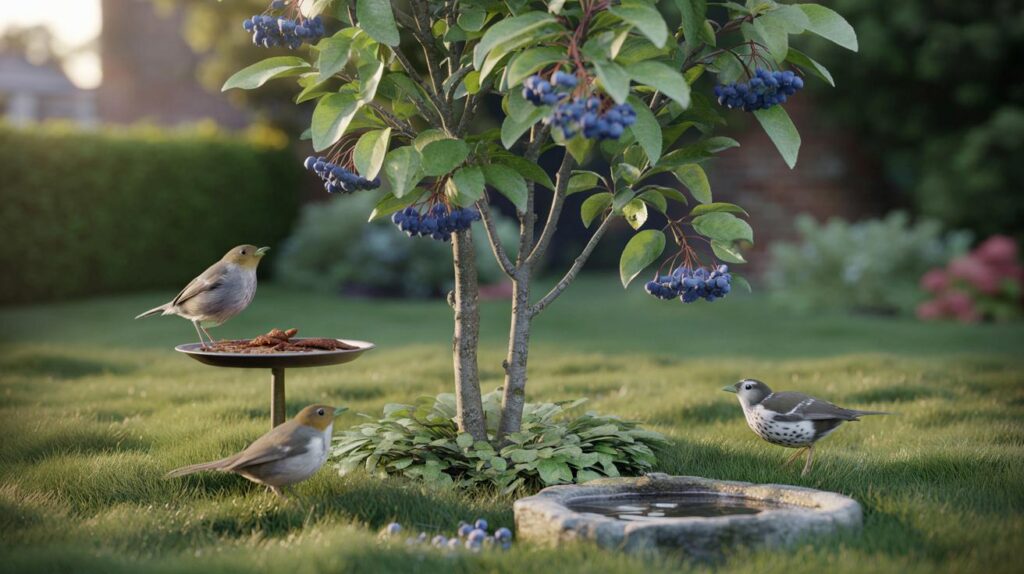
Dry summers push worms deep and frosts lock soil. Garden birds pay the price unless households change one simple habit.
Across Britain, robins stay put through every season, yet their food supply swings wildly between abundance and scarcity. Gardeners often respond with bags of seed and trays of mealworms. A single, well-chosen tree can do more, for longer, and for less money: it feeds, shelters and draws robins back day after day.
Why one small tree makes a big difference
Robins hunt by sight. In hot spells, earthworms retreat below reach, and frozen ground in midwinter shuts the larder altogether. A fruiting, insect-friendly tree fills the gap. The serviceberry, also known as Amelanchier, offers blossom for pollinators in spring, soft berries in summer, fiery colour in autumn, and fine-textured bark and structure in winter. That rhythm creates a dependable stop-off for birds that defend small territories and patrol the same routes.
Plant a serviceberry now and you set a four‑season buffet: nectar and insects in spring, berries in summer, safe cover in winter.
Robins also prize a clear view and quick escape routes. A light, open tree such as Amelanchier gives layered perches, dappled cover and fruit at beak height. That mix encourages repeat visits, especially when nearby lawns and beds turn lean.
What to plant and where
Amelanchier lamarckii suits most small gardens and grows to 4–6 metres if left unpruned. Amelanchier alnifolia stays smaller and fruits generously. Both tolerate clay or sandy loam, as long as drainage is good. Plant in full sun or light shade for the best flowers and fruits.
- Hole size: twice the width of the pot, no deeper than the root ball.
- Backfill: mix compost with existing soil; avoid high‑nitrogen fertiliser.
- Mulch: 5–8 cm of leaf mould or bark, keeping stems clear.
- Water: 10–15 litres weekly in the first growing season during dry spells.
- Prune: late winter; remove dead or crossing shoots; keep an open shape.
Expect the first meaningful fruit crop in year two or three. Birds recognise ripening clusters quickly, especially if you leave some fallen windfalls beneath the canopy for ground-feeding robins.
Feeding smart without attracting predators
Supplementary feed still helps, particularly during nesting and moult. Placement matters more than quantity. Cats exploit cover near feeding spots, and low, cramped corners spook robins. Create distance and height.
Keep feeders at least 2 metres from dense cover and about 1.5 metres off the ground, with a clear 360‑degree view.
Use a small, sheltered tray for live or dried mealworms in cold snaps, then rotate its position weekly. Clean feeders with a mild disinfectant solution and hot water every seven days to limit disease risk from droppings.
What robins actually eat
- Best draw: live mealworms or soaked dried mealworms.
- Good staples: sunflower hearts, finely crushed peanuts, soft fruit pieces.
- Avoid: whole peanuts (choking risk), salty scraps, stale bread.
Scatter feed sparingly near the serviceberry to link the new food source with safe cover. Remove leftovers at dusk to deter rodents.
Month-by-month: what your tree provides and what to do
| Month | Tree feature | Robin benefit | Your action |
|---|---|---|---|
| March–April | White blossom, early insects | Protein for territory defence and nesting | Top up water; keep cats indoors at dawn |
| June–July | Ripe berries on lower branches | Easy calories for fledglings | Skip heavy pruning; harvest only part of the crop |
| September–October | Orange-red foliage, lingering fruit | Cover during autumn storms | Refresh mulch; check stakes and ties |
| December–January | Fine branching, windbreak | Perches near feeders in bad weather | Offer mealworms; clean feeders weekly |
Costs, savings and what you can expect
A young serviceberry in a 7–10 litre pot typically costs £25–£45. A family that buys two 12.75‑kg bags of mixed seed each winter can easily spend £30–£40. Once established, the tree lowers reliance on purchased feed because natural fruit and insects take over for much of the year. You still add focused treats during cold snaps, but you cut impulse top-ups.
Gardeners report repeat visits of 6–12 robins across a week where territories meet along hedges and shared boundaries. Expect short, frequent drop‑ins rather than huge flocks. Robins are territorial; several birds appear over time, not all at once.
Reduce risks while you boost numbers
Predation pressure rises where feeders sit in shrub tunnels or beside fences that give a springboard. Move tables away from sheds and trellis by at least two metres. Fit a bell to outdoor cats, and avoid ground feeding at dusk. Rinse birdbaths every two days and scrub slime to prevent algae bloom.
Droppings around beds can carry bacteria that stress edible crops. Site the main feeding area away from vegetable plots and pick salad leaves above ground level. Wear gloves when clearing waste and add it to a hot compost heap rather than cold bins.
Small spaces, big returns
No lawn? Grow Amelanchier in a half‑barrel or a 50‑litre container with peat‑free compost and a slow‑release fertiliser pellet. Water deeply, then let the top few centimetres dry before the next soak. Choose a multi‑stem form to keep the canopy compact and fruit within reach.
Combine the tree with a shallow dish of fresh water. Robins sip and bathe several times a day, and clean water can double the time they linger. In heatwaves, add a flat stone that breaks the surface to give a stable footing.
What success looks like within 12 months
Spring: blossom hum draws insects and sets the food chain in motion. Early summer: berries darken; robins hop between lower limbs and turf. Late summer: leaf canopy hosts spiders and caterpillars. Winter: the framework gives a staging post near your feeder in icy spells.
Give the tree one year and you replace sporadic handouts with a living pantry that robins trust.
Extra tips you will use
Choose a cultivar that suits your soil. On alkaline ground, look for lime‑tolerant forms and add organic matter at planting. If birds strip fruit too fast, stagger resources with a second late‑fruiting shrub such as guelder rose or cotoneaster. Mix heights to break wind and add escape paths.
Mind nesting rules. From March to August, avoid hedge cutting near active robin nests. Keep night lighting low; motion floodlights can disrupt foraging. If a cold snap hits, run a simple routine: 30 grams of mealworms at dawn, a handful of sunflower hearts at midday, and a fresh water top‑up before dusk. That rhythm, anchored by your serviceberry, keeps visits regular and stress low.
If you like numbers, track activity for two weeks. Note time of day, weather, and how long each robin stays. You will spot patterns within days, and you can tweak feeder height or branch density. The goal is simple: one small tree, fewer bought bags, steadier bird traffic, and a garden that works in every season.



I swapped two plastic feeders for a single Amelanchier last spring and the change was wild: blossom buzzing in April, fledglings gulping berries in June, and winter perches beside the tray. I actually spent less on seed (no more panic top‑ups) and saw more repeat visits on calm mornings. Question: to keep fruit at beak height, do you remove lower shoots or just thin crossing stems in late winter? Don’t want to wreck that airy, layered look.