
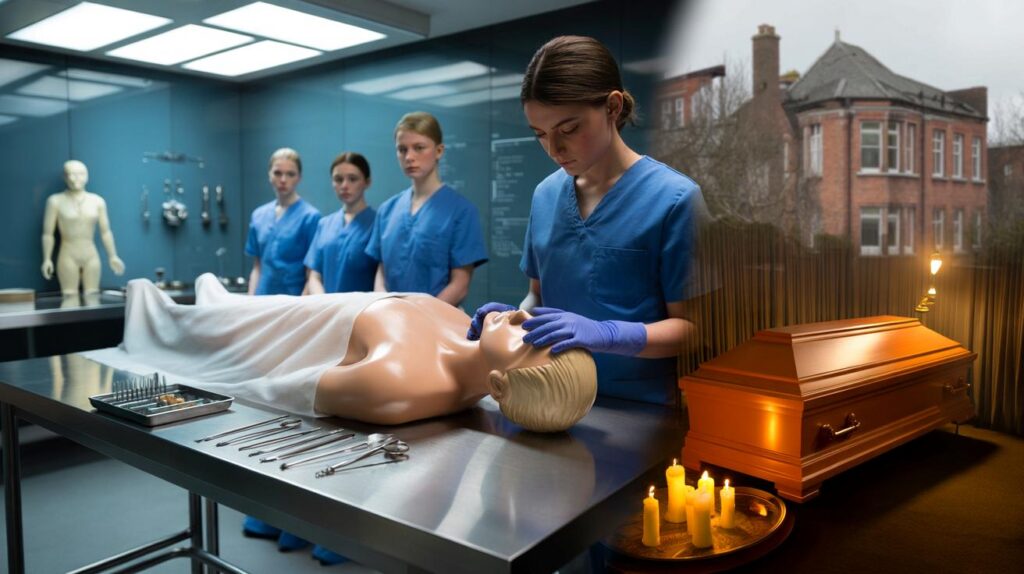
A quiet decision made in living rooms across Northern Ireland is reshaping how tomorrow’s doctors train, and how families grieve.
Queen’s University Belfast has restarted its body donation scheme, and the response is striking: roughly 1,000 people are already enrolled, with another 250 enquiries under review. Their choice means medical students will once again learn anatomy through human dissection rather than screens alone.
Why body donation is back in Northern Ireland
The university paused new donations during the pandemic. Staffing gaps then extended that pause into 2023. The medical school has now hired additional technicians, rebuilt capacity, and accepted its first donor since reopening. For many students arriving this term, the dissecting room will be open again.
Queen’s says there is no true substitute for learning anatomy on a human body. Virtual models help. But they do not fully capture variation, texture or complexity.
Applications have exceeded expectations. The current donor roll sits near four figures, and each registration represents a personal decision made in life, with consent recorded in writing. The demand from students is clear too. Faculty report that applicants — especially from overseas — often cite dissection as a reason for choosing Queen’s.
| Period | What changed at Queen’s |
|---|---|
| Covid years | New donations and dissection paused |
| 2023 | Pause continued due to staffing shortages |
| Now | Programme reopened, first donor accepted, new technicians in post |
Who signs up and why
Motivations vary, but many donors share a practical streak and a desire to help. One 95-year-old from Strangford put it bluntly to relatives: if her body can teach students, it still has value. She has no close family nearby, so clear plans reduce pressure on those who will handle her affairs.
Others sign up after a conversation with a GP or a medical student. They want future clinicians to learn with care and precision. They also like the idea that their last act will be useful — a final contribution to public health in the region.
Altruism drives the choice for many donors: “My body won’t help me when I’m gone. It could help someone else.”
A programme built on consent and trust
Donor consent underpins the scheme. In Northern Ireland, programmes are regulated by the Human Tissue Authority. People must record their wishes during their lifetime. Families then notify the university at the time of death. If the body is accepted, it will be used for teaching, training or research within strict ethical rules.
In most UK schemes, donors can indicate whether they want ashes returned to a named person. Many medical schools cover the cost of cremation after teaching concludes, often within a period of up to three years. The time frame reflects the teaching calendar and the care required to preserve and examine each body.
Technology helped, but real bodies still matter
While the pause lasted, Queen’s expanded its use of 3D models and advanced visualisation. Those tools remain in the laboratory. They are accurate and helpful for early teaching. Yet faculty insist the tactile, three-dimensional reality of dissection deepens understanding in ways a screen cannot. Blood vessels vary. Nerves twist. Pathology leaves unique traces. Students grasp those truths when they dissect.
That experience shapes future clinical judgement. Doctors learn to navigate unexpected anatomy in theatre. They see how disease changes tissue. They rehearse careful, respectful handling of the body. These habits serve real patients later.
How to sign up and what happens after death
Anyone considering donation should speak with family and read the university’s guidance. The process usually involves a registration form, witnessed consent, and clear contact details so loved ones can act promptly. Distance limits sometimes apply, and a post-mortem ordered by a coroner may prevent acceptance.
Common reasons a body might not be accepted
- Legal post-mortem ordered by a coroner
- Certain infectious diseases or uncontrolled sepsis at the time of death
- Major trauma or recent extensive surgery that alters anatomy
- Advanced decomposition or very long delays before notification
- Organ retrieval for transplantation (whole-body donation is usually not compatible)
- Some programmes set limits around body size to allow safe lifting and storage
Families should always have a backup funeral plan. If the university cannot accept the body, normal arrangements proceed. If it can, the medical school arranges transport. Teaching may take place for several terms. Once study ends, cremation occurs and ashes are returned if requested.
What this means for medical education and patients
The return of full dissection at Queen’s affects more than the students in white coats. Patients gain from graduates who have handled real human tissue and mapped living anatomy onto the cadaver in front of them. Those students remember where a nerve hides behind a vessel, not only where a diagram suggests it sits. They learn humility as well as technique.
Numbers behind the scalpel
Today’s tally is stark: about 1,000 registered donors and 250 more expressions of interest. The school has accepted its first donor since the restart, and the next cohort arrives with greater access to hands-on anatomy. That momentum matters. Without donor bodies, parts of the curriculum would move back to screens and plastic.
Thinking about it? Points to weigh up
Talk to your next of kin. Share exactly what you want. Name a person to receive ashes, if that is your wish. Keep paperwork where it can be found quickly. Ask the programme which costs it covers and which remain with the family. Clarify time frames, distance limits and medical conditions that could affect acceptance.
Consider how donation fits with organ or tissue donation. Programmes differ, but whole-body donation generally cannot follow organ retrieval, as teaching requires an intact body. If you want to prioritise transplantation, say so. If your main goal is education, record that clearly. Either path can help future patients; the choice rests with you.
If you work in health or social care, share accurate information with families who ask. Many people assume anatomy labs resemble Victorian theatres. Modern facilities are clinical, regulated and focused on dignity. Students observe a code of conduct and often hold remembrance events to honour donors. Those rituals mark the value of the gift and the responsibility it carries.
For those who cannot donate because of medical or legal reasons, there are other ways to support training. Consider consenting for surgical simulation using 3D-printed models derived from scans, volunteering as a standardised patient, or backing bursaries for anatomy teaching. Each option strengthens the pipeline from classroom to clinic.



As a junior doctor who learned on screens during Covid, this makes a world of difference. Anatomy is 3D, variable, and messy; you can’t feel texture on an iPad. Huge credit to Queen’s for rebuilding capacity.
Genuine question: if my family objects at the time, can they override my consent, or is it legaly binding under the Human Tissue Authority? The process still feels a bit confusing, tbh.