
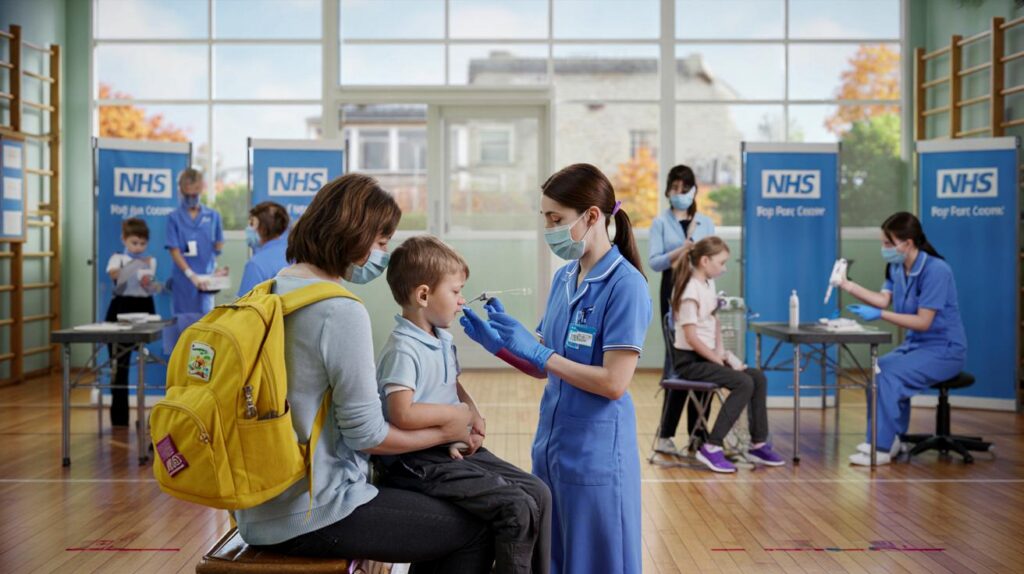
Families are juggling half-term plans as a seasonal threat edges in. Community venues are suddenly doubling as vaccine hubs.
Across England, the NHS is opening temporary vaccination points in familiar places to slow an unusually early rise in flu among children. The plan is simple: bring quick, free protection closer to where families already are, and do it before classrooms fill again.
Why flu is rising among children
Health officials say this year’s flu season arrived ahead of schedule, with infections climbing fastest among school-age children. Classrooms, clubs and busy households create the perfect mix for the virus to jump from child to child. That pattern risks sending more pupils home ill and putting pressure on hospital services as winter begins.
The UK Health Security Agency has signalled a clear uptick in both cases and admissions, especially in younger age groups. Early vaccination can break chains of transmission. It also reduces the chance of serious illness in children with asthma, heart conditions or weakened immunity.
More than 10 million flu doses have been delivered so far this autumn, including around 1.5 million for school-age pupils and over 300,000 for two- and three-year-olds.
Officials warn that the flu virus changes each year. Last winter’s immunity will not reliably shield children this winter. A fresh vaccine match matters, not just for personal protection but to slow spread when schools reopen.
Pop-up clinics: where, when and how they work
Local NHS vaccination teams are running catch-up clinics throughout half-term in places you might already be visiting. Think fire stations, football grounds, bowling alleys, libraries and sports halls. Many offer walk-in slots, cutting out the long waits and hard-to-find appointments that put parents off.
The standard option for most children is the nasal spray. It is needle-free, quick, and usually done in a few minutes. Children who cannot have the spray for medical or religious reasons can be offered an injectable alternative.
What you can expect at a pop-up site
- Arrival and quick eligibility check with your child’s details.
- A brief health screen to confirm the right vaccine type.
- Nasal spray or jab administered in around five minutes.
- Advice on mild side-effects and when to seek help.
- A note for school records if your child missed the in-school session.
Who can get vaccinated during half-term
Children of school age, two- and three-year-olds, and young people with long-term conditions are eligible for a free flu vaccine. Adults at higher risk, including over-65s, pregnant women and carers, should also take up the offer. Younger children and those with certain medical needs can attend GP surgeries, while some community pharmacies are now vaccinating pre-schoolers.
| Group | Where to go | Vaccine type | Typical time |
|---|---|---|---|
| School-age children | Pop-up clinic or school catch-up session | Nasal spray or jab if spray unsuitable | About 5 minutes |
| Two- and three-year-olds | GP surgery or participating pharmacy | Nasal spray | About 5 minutes |
| Children with long-term conditions | Pop-up clinic or GP | Spray or jab based on clinical advice | 5–10 minutes |
| At-risk adults | GP or pharmacy | Jab | 5–10 minutes |
Officials urge parents to act now
NHS leaders say early action will curb outbreaks when term resumes. England’s chief nursing officer has called rising child cases “hugely concerning”, urging families not to wait. Cardiac specialists also stress the wider impact: flu can trigger serious complications in people with heart disease and can worsen heart failure, so reducing spread in households protects vulnerable relatives too.
Getting a child vaccinated takes minutes, helps keep classrooms open, and reduces winter pressure on the NHS.
Schools benefit as well. Fewer infections mean fewer absences, steadier staffing and less disruption to lessons. That matters for pupils preparing for assessments and for parents balancing work with childcare during winter bugs.
How to find a clinic near you
Finding a pop-up site is designed to be easy, with multiple routes for parents who missed the in-school session.
- Check school emails or letters for local catch-up times and venues.
- Use the NHS school vaccination website to select your area and view walk-in or bookable clinics.
- Visit your local NHS Trust or Integrated Care Board pages for half-term schedules.
- Ask your GP practice or a community pharmacy for the nearest available session.
- Follow official NHS and council social media accounts for late changes or extra dates.
Most pop-ups run through the half-term week. Many accept drop-ins, which helps families fit vaccination between activities, travel and childcare.
Key numbers this autumn
- 10,000,000+ flu doses administered across England so far this season.
- 1,500,000 of those given to school-age pupils.
- 300,000+ delivered to two- and three-year-olds.
- Typical visit time at a pop-up clinic: around five minutes.
- Venues include fire stations, football pitches, bowling alleys, libraries and sports halls.
Answers to common parent questions
Is the nasal spray suitable for most children?
Yes. The spray is the first choice for most children and offers protection across the winter. Some children will be advised to have an injectable vaccine instead, for example due to medical conditions or dietary restrictions. Staff will guide you on the right option.
Can my child have the vaccine if they have a cold?
Mild snuffles usually do not prevent vaccination. If your child has a high fever or feels very unwell, you may be asked to return later in the week. That avoids confusing flu-like symptoms with post-vaccination effects.
What side-effects should I expect?
Most children have no side-effects. Some may get a runny nose, slight fever, headache or tiredness for a day or two. You can use age-appropriate paracetamol if needed. Seek medical advice if symptoms persist or worsen.
Why vaccinate if children rarely become severely ill?
Flu can still make children very unwell and can lead to complications, especially for those with underlying conditions. Vaccination also reduces spread to grandparents, pregnant relatives, younger siblings and classmates with health risks.
The wider picture: how vaccination changes the maths
In a typical classroom, one infected child can seed multiple cases in a single week. If each case leads to 1.3 new infections, a handful of cases can become dozens over two weeks. Vaccination reduces the chance of catching and passing on flu, pushing that rate closer to one or below. That helps schools stay open and protects hospital capacity during colder months.
Vaccine effectiveness varies by season, but even moderate protection has big public benefits when delivered early and widely. The nasal spray starts working within days. For families juggling work and childcare, a five-minute appointment during half-term can prevent a week of illness later on.
Practical tips for a smooth visit
- Bring your child’s NHS number if you have it, plus any recent medical letters.
- Tell staff about egg allergy, immune conditions or wheeze in the last 72 hours.
- If your child is needle-anxious, ask about the spray before discussing the jab.
- Plan a calm activity afterwards, like reading or a short walk.
- Keep school informed so records show your child is protected.
Extra context for parents
Flu and COVID-19 can circulate at the same time. Vaccines target different viruses. Getting a flu vaccine does not protect against COVID-19, but it does reduce the chances of dual infection, which can be harder on the body. Ask your GP or pharmacist about eligibility for other seasonal vaccines in the same visit.
Children with asthma, diabetes, heart disease or neurodisability face higher risks from flu complications. Vaccination reduces the likelihood of hospital care, oral steroids for wheeze, and missed school days. For families planning holiday travel or visits to older relatives, protecting children now lowers the risk of bringing flu into vulnerable households later in the season.



Is there a way to check whether the nasal spray contains porcine gelatine and what alternatives are provided? The article mentions injectable options, but how easy is it to request one at a pop-up—do they have availablity?