
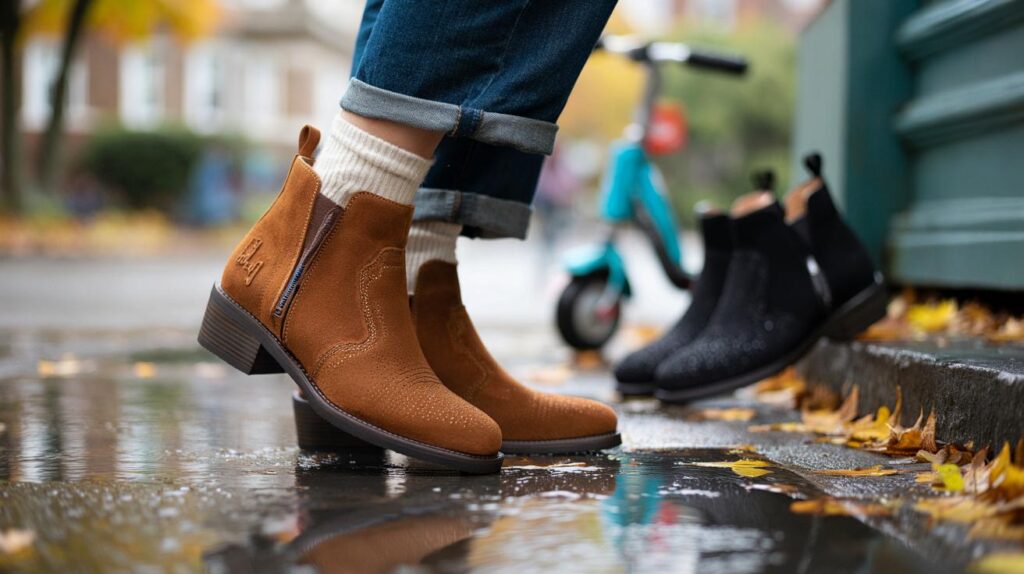
Cold mornings, wet pavements and endless errands are back, and your feet want something softer, drier and smarter than trainers.
A fresh contender for the school‑run shuffle and weekend dashes is turning heads for practical reasons. Skechers’ Texas – Westernville ankle boots blend everyday polish with problem‑solving features. Priced at £80, they pitch themselves as wearable all day, in real weather, without looking like a compromise.
Why parents are paying attention
The silhouette borrows lightly from western shapes, yet the finish reads understated rather than fancy-dress. Two neutral colourways, Black and Chestnut, make outfit planning simple. A side zip means no wrestling with laces when the clock is unforgiving. A modest 1.5‑inch stacked heel adds a lift without penalising comfort on long days.
Quick zip entry, a low lift and muted shades help these boots move from school gate to supper without fuss.
Design that works in real life
Small details matter when you are on your feet. Subtle knot accents at the collar add a point of interest without shouting. The toe is gently rounded, which gives toes room to spread, particularly helpful when socks get thicker as temperatures fall. The upper is suede for a softer look that still feels pulled‑together with denim, wool or a midi dress.
- Price: £80
- Colours: Black, Chestnut
- Heel height: 1.5 inches (stacked)
- Entry: side zip
- Insole: Skechers Memory Foam
- Upper: suede treated with 3M Scotchgard (water‑repellent)
- Outsole: traction pattern for slippery pavements
- Customer score: 4.8/5 from buyers
Comfort under pressure
Memory Foam sits at the heart of the pitch. The insole compresses under load and returns as you step off, which reduces hot spots and spreads pressure more evenly. That softness helps during long stints on hard surfaces, from supermarket aisles to station platforms. Because the foam adapts, the fit feels more forgiving through the day as feet change volume.
Support comes from the broader platform and the low, stable heel rather than rigid arch pieces. That makes these boots feel familiar straight from the box. Pair them with a cushioned sock on extra‑long days and you get more mileage before fatigue creeps in.
All‑day wear hinges on two things here: a forgiving footbed that moulds to you and a heel that stays out of the way.
Grip and weather protection
Autumn means damp leaves and surprise showers. The outsole carries a defined tread that bites on wet paving and park paths. The suede has a 3M Scotchgard treatment, which beads off water and resists stains from splashes. That does not make the boot waterproof for downpours, but it slows soak‑through during drizzle and puddle‑dodging, and it cleans more easily after a muddy detour.
Water‑repellent beats the forecast by buying you time; it is protection for showers, not a licence to wade.
Is £80 good value?
The sticker price sits above bargain-bin ankle boots yet below designer labels that still scuff at the bus stop. Value depends on how often you wear them and for how long they hold up. With versatile styling and weather‑ready features, they invite frequent use. Cost per wear, not just cost, tells the story.
| Scenario | Uses | Estimated cost per wear |
|---|---|---|
| Weekdays only, one term (12 weeks) | 60 uses | £1.33 |
| Autumn to spring, 3 days a week (30 weeks) | 90 uses | £0.89 |
| Daily through two seasons (6 months) | 120 uses | £0.67 |
That maths looks better if they replace two older pairs or if the water‑repellent finish saves you a dry‑cleaning bill on a splashed hem. The near‑perfect 4.8/5 buyer rating suggests repeatable comfort rather than a lucky break in sizing or materials.
Style notes for autumn
Try Chestnut with indigo denim, a cream knit and a waxed jacket for a classic weekend look. Black leans city: black tights, a midi skirt and a cropped blazer sharpen the outline. The low heel suits straight‑leg jeans that graze the top of the boot, keeping the ankle line clean and the draughts out.
On wet days, swap long hems for mid‑calf cuts to avoid splash marks. If you commute, keep a microfibre cloth in your bag and wipe the suede dry when you arrive, which prolongs the life of the protective treatment.
Buying tips and care
Try boots at the end of the day when feet are slightly larger. Wear the socks you plan to use in winter to judge space. If you sit between sizes, consider the thicker sock route with the roomier option, as Memory Foam compresses slightly over time. Walk on a hard surface for a minute and check heel slippage; the zip should hold you securely without pinching the ankle bone.
Care is straightforward. Brush suede with a soft brush after it dries to lift the nap and remove marks. Re‑treat with a suede protector when water stops beading. Dry shoes away from radiators to avoid stiffening the leather backing. Use paper or shoe trees to help them keep shape in the cupboard.
Who should skip them?
If you need firm arch scaffolding, a soft Memory Foam bed may feel too plush under load. If your winter includes standing water or prolonged downpours, look for a waterproof membrane and sealed seams instead. Those seeking animal‑free materials should check the composition, as the upper is suede.
What readers keep asking
- Break‑in time: most feet settle within a day because the heel is low and the foam is forgiving.
- Weight: the stacked heel and zip design keep bulk reasonable for an all‑day ankle boot.
- Slip risk: the tread helps on wet pavements, but take care on smooth tiles and metal grates.
- Fit: aim for a snug midfoot and a thumbnail of space at the toe; the foam will ease slightly.
- Rain plan: they resist showers; carry a compact umbrella when the forecast threatens a soak.
A wider look at the market
At this price, rivals often skip weather protection or dial back underfoot cushioning. Some fashion‑led options offer a sharper toe and taller heel, but they fatigue quicker on long days. Hiking‑style boots add grip and durability, yet they look chunkier and less flexible with dresses. The Westernville splits the difference by keeping the lines neat while dealing with puddles and pavements.
If you are budgeting, list the situations you need one pair to cover. Add up school runs, office days and weekend trips for the next three months. If that total clears 60 outings, a better‑made boot that works everywhere likely costs less per wear than two cheaper pairs that both sit idle. That is the quiet case for spending £80 once and using them hard while the weather tests your resolve.



4.8/5 and £80—worth it long‑term, or hype?