
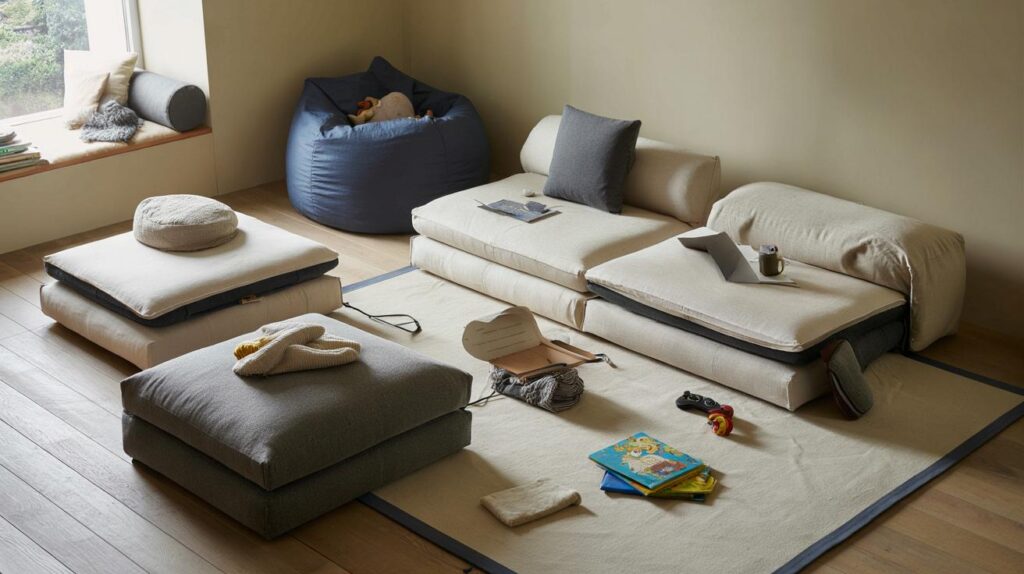
In the next year, British living rooms are shifting in size, cost and comfort, forcing households to rethink how they sit.
That rethink is changing what we buy, where we put it, and how it works during the week. The classic armchair, once a status item to match the sofa, now faces a quiet retirement as flexible, floor‑hugging seating moves in.
Why armchairs are being sidelined
Traditional armchairs swallow space, block sightlines and rarely move once placed. Homes are smaller, rent is higher, and hybrid work now turns the lounge into a playroom at 4pm and a laptop station at 8pm. Fixed, heavy seats don’t cope well with that routine.
Design has shifted too. Lower profiles, rounded edges and warmer textures suit open‑plan rooms and make it easier to slide furniture aside for yoga, crafting or a sleepover. The result is lighter rooms with more floor to use and less visual bulk to fight.
By 2026, the default seat in many homes won’t have arms at all. It will be modular, washable and easy to move.
What replaces the armchair in 2026
A mix of mobile, playful pieces is taking the armchair’s job and splitting it between lounging, perching and stretching out. The most in‑demand options share three traits: low weight, wipe‑clean covers and the ability to re‑arrange in minutes.
- Modular floor sofas: foam blocks with connectors that build into corner nooks by day and spare beds by night.
- Giant beanbags: supportive beads or shredded foam fill, with zip‑off covers and child‑safe liners for quick washing.
- Chaise longues and daybeds: slim silhouettes along walls or windows, doubling as reading perches and guest sleepers.
- Pouffes and ottomans: extra seating that tucks under coffee tables, often with hidden storage for toys and throws.
- Armless sectionals: low, deep bases you can extend or split, with bolt‑on backs and bolsters for support where needed.
- Platform pads: Japanese‑inspired low frames with thick cushions for layered, social seating around a low table.
- Stackable cushions: dense, firm floor pads you can pile, scatter or line up to create a movie‑night bench.
Families gain capacity fast: three pouffes and a floor pad can seat five people in the footprint of one armchair.
How families actually use the space
Weekdays favour perching and laptop time. Weekends mean gaming sprawls and film nights. The new kits let you switch modes without heavy lifting. Put two floor modules together for a snuggly corner at story time, then split them for a craft station after breakfast. When grandparents visit, wheel out a chaise to act as the supportive seat with a firm bolster behind the lower back.
Texture is guiding taste as much as shape. Bouclé, linen blends and recycled microfibre covers bring warmth without fuss. Colours are earthy and grounded: terracotta, saffron, chocolate brown, olive and inky blue temper the low silhouettes and make a white wall feel cosier.
Costs, sizes and care at a glance
Swapping from one armchair to a small kit of modular pieces needn’t mean splashing out. Per‑seat cost is falling as brands push washable covers and flat‑pack shipping. Here’s a simple comparison to gauge footprint and spend.
| Option | Typical footprint | Price range (UK) | Best for | Care |
|---|---|---|---|---|
| Traditional armchair | 80–100 cm wide | £300–£1,200 | Formal seating, reading nooks | Spot clean, occasional steam |
| Modular floor sofa (2–3 blocks) | 120–180 cm wide | £350–£900 | Movie nights, spare bed | Zip‑off, machine washable covers |
| Giant beanbag | 90–120 cm diameter | £80–£250 | Gaming, reading, quick seat | Liner with refillable fill; cover wash |
| Chaise longue/daybed | 160–200 cm long | £200–£700 | Napping, window seating | Vacuum and rotate cushions |
| Pouffe/ottoman | 40–60 cm diameter | £40–£180 | Extra guest seats, storage | Wipeable tops; occasional refill |
Design notes shaping the 2026 look
Lower and rounder
Curves reduce knocks in tight hallways and soften boxy flats. Lower backs keep long rooms airy and make a TV or window the visual anchor rather than the chair.
Natural and tactile
Linen, cotton, wool blends and bouclé give grip without feeling sticky in summer. Recycled foam cores trim weight and cost, while removable covers extend lifespan and resale value.
Warm colour families
Terracotta, saffron yellow and chocolate brown suit north‑facing rooms. Add moss green or petrol blue to ground open spaces and to complement timber floors and jute rugs.
Health and ergonomics without the arms
Lower seating doesn’t have to punish knees or backs. Aim for a seat height of 35–40 cm and use firm bolsters to support the lumbar curve during longer sessions. If you struggle to rise from low positions, pair a chaise with a medium‑height pouffe to create a step‑up perch. Rotate positions during the evening: 20 minutes reclined, 20 upright with a cushion behind the lower back, then a short stretch break.
Comfort comes from layers: a supportive base, a breathable cover, and adjustable bolsters where your body needs them.
Safety and durability checks before you buy
- Fire safety: look for a permanent label stating compliance with UK upholstery fire regulations (match and cigarette tests).
- Child and pet proofing: inner liners on beanbags, double zips, and non‑slip bases keep beads contained and seats stable.
- Washability: cotton or polyester covers with hidden zips, rated for 30–40°C washes, extend life and reduce odours.
- Refills and spares: check that foam blocks, bead refills and spare covers can be ordered in future seasons.
Trying the trend in a weekend
Map your room at scale on paper. Sketch a 90 cm circle where a beanbag might sit, a 160 cm rectangle for a daybed, and two 60 cm squares for pouffes. Leave at least 75 cm for walkways. If that opens a view line from the sofa to the kitchen or window, you’ve found a layout that feels bigger without an extension.
Test it live: stack cushions to simulate a low module, shift the coffee table to the side, and mark footprints with painter’s tape for 24 hours. Notice where shoes gather and where kids read. The right plan often reveals itself after a normal weekday.
Money questions people ask
How many pieces do you need? For a family of four, plan three primary seats and two flexible perches. Can you keep one armchair? Of course. Many households keep a single supportive chair for reading and lend the rest of the floor to modular pieces. What about guests? A three‑block floor sofa converts to a single bed in seconds, saving you a spare room you don’t have.
Risks to watch and smart workarounds
Very low seats can gather crumbs, so choose a raised platform pad if you prefer easy hoover runs. Deep foam can feel hot; pick breathable covers and rotate positions. Cheap beads compress quickly; buy refillable liners and top up every six to twelve months. If posture suffers, add a wedge cushion under the hips to tilt the pelvis forward and keep the spine neutral.
Where this trend is heading next
As living rooms keep doing double duty, expect more clip‑on arms, magnetised backrests and washable slipcovers offering seasonal changes without a new frame. Rental‑friendly packs will arrive flat and lock together without tools. The big prize is flexibility: a room that shifts between school run chaos and calm evening in five minutes.
If you’re planning a 2026 refresh, set a per‑seat budget—£150 to £300 is realistic—and build gradually. Start with a pair of pouffes and a floor pad, keep your favourite reading chair if you love it, and spend where it matters: removable covers, sturdy stitching and shapes that work hard on busy days. The armchair isn’t vanishing by decree; it’s simply making room for seating that earns its keep, minute by minute.



Love this breakdown! Our tiny flat needs to do school, yoga and movie night without heaving furniture around. The 35–40 cm seat height tip + washable covers is gold. We’re eyeing a modular floor sofa in bouclé and a couple pouffes—definitley under £500 per seat if we pace it. Thanks for the practial guide 🙂