
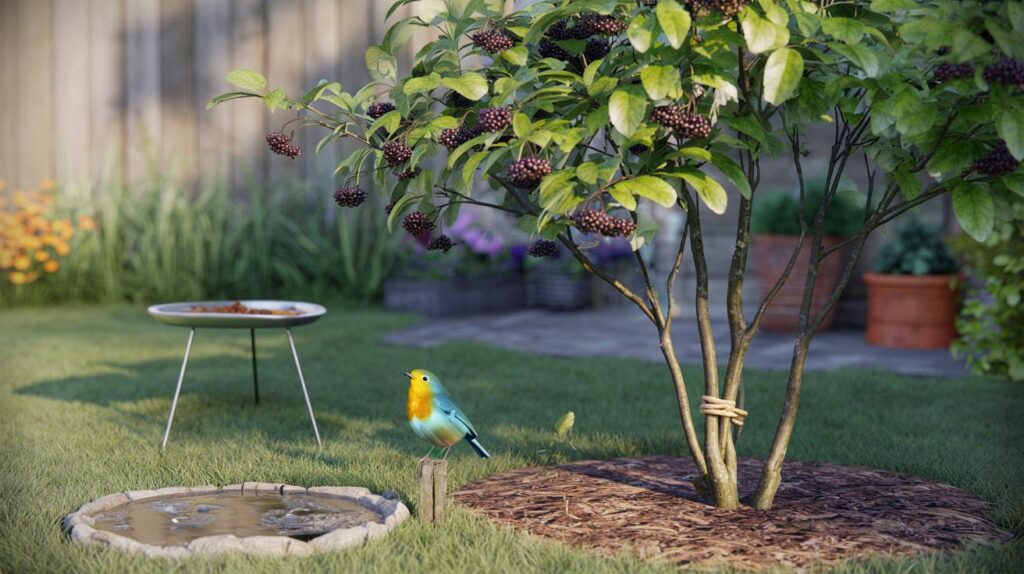
Britain’s favourite garden visitor is under quiet pressure as weather swings grow harsher. Your lawn can help more than you think.
Across the UK, householders are turning small corners of their plots into lifelines for robins. One compact tree, planted once, can give nectar in spring, cover in summer, berries in high season and structure in winter. It takes little space, costs less than a tank of petrol, and draws birds back month after month.
One tree, twelve months of pull
The serviceberry (Amelanchier), also called juneberry, is proving a shrewd pick for city balconies and suburban plots alike. It flowers early when insects are scarce. It carries summer fruit just as lawns harden and worms retreat. It holds bronze foliage in autumn, then shows silvered bark for winter shelter. Robins use it as a perch, a pantry and a lookout.
Plant one serviceberry and you deliver blossom, cover and fruit across four seasons with a single hole in the ground.
Most garden centres stock multi‑stem forms that reach 3–5 metres at maturity, often far smaller in pots. Expect berries from year two or three if you water well in the first summers. Potted specimens in the UK typically sit between £35 and £75, while bare‑root plants in winter can dip below £30.
Month-by-month value
| Month | What the tree offers | Why robins benefit |
|---|---|---|
| March–April | White blossom; early insects | Protein before breeding; perches for song |
| June–August | Dark berries ripening in waves | Energy during droughts when worms drop deep |
| September–November | Bronze foliage; shelter | Cover while territories are defended |
| December–February | Fine twig structure; bark interest | Safe vantage points near feeders |
Why robins vanish in heat and sing in frost
Robins stay with us year‑round, but their behaviour shifts with the weather. In dry spells, earthworms sink beyond reach and garden soil bakes. When cold arrives, frozen turf locks food away and berries thin out. The result is hit‑and‑miss visits unless gardens supply alternatives. A tree that fruits in summer and frames a feeder in winter closes that gap.
Food security for a 16‑gram robin hinges on metres, not miles: one fruiting shrub near clean water can decide whether it stays.
How to plant your serviceberry this weekend
- Pick the spot: full sun to light shade is ideal; give 1.5–2 metres of width for a multi‑stem form.
- Check the soil: moist but well‑drained suits best; slightly acidic to neutral pH keeps foliage fresh.
- Dig wide, not deep: a hole twice the width of the pot and only as deep as the root ball.
- Water in: 10–15 litres at planting, then weekly through the first summer if rain is scarce.
- Mulch: 5 cm of leaf mould or woodchip, kept 5 cm clear of the stem to prevent rot.
- Stake if windy: a single low stake and a soft tie for the first year.
- Prune lightly: in late winter, remove dead or crossing twigs to keep an airy crown.
Compact choices for small plots
Look for Amelanchier alnifolia and A. lamarckii in multi‑stem forms for a graceful, narrow footprint. Named selections such as ‘Ballerina’ or columnar types keep to 2–4 metres in many gardens. Ask for forms grafted on modest rootstocks if you have a courtyard or balcony pot.
Feeding that works with the tree, not against it
Robins relish mealworms, sunflower hearts, fruit and soft suet. They will also take crushed peanuts from a tray. Match the offer to the season and keep the station clean and calm.
- Spring: small mealworms and sunflower hearts fuel nesting.
- Summer: fresh water daily, fruit halves and occasional mealworms.
- Autumn: suet and sunflower hearts build reserves.
- Winter: high‑energy suet and soaked raisins near cover, not inside it.
Place the feeder with safety in mind
Predators use cover. Birds avoid trays sited within pouncing distance. Give them space to see trouble coming and routes to escape.
- Height: 1.5–1.8 metres from ground level.
- Clearance: 2–3 metres from dense shrubs, fences and sheds to blunt cat ambushes.
- Shade: dappled light keeps food fresh and birds cool.
- Hygiene: wash weekly with hot, soapy water; rinse and dry before refilling.
- Baffles and guards: add if cats patrol your boundary.
Keep the feeder visible, the serviceberry close by, and the ground beneath clean. Birds will linger, not dash.
Costs, timing and what you can expect
A healthy, two‑litre potted serviceberry typically costs £35–£60. Bare‑root plants sold between November and March often undercut that. Plant in autumn or late winter for quicker establishment. With steady watering, expect light flowering next spring and the first meaningful berry crop within two or three summers. Add a shallow bath nearby and you multiply visits within weeks.
No room for a tree? Try these swaps
If a serviceberry will not fit, pair smaller plants to mimic its year‑round service.
- Hawthorn (Crataegus monogyna): flowers for insects, red haws for winter; best as a clipped hedge.
- Crab apple (Malus): blossom in spring, fruit in autumn; many compact cultivars for pots.
- Pyracantha: dense shelter and heavy berry trusses; site away from paths due to thorns.
Blend blossom, berries and cover within a few metres of water, and you recreate what a single serviceberry provides.
Common mistakes that push robins away
- Planting too deep: bury the collar and the stem may rot.
- Overfeeding with nitrogen: you get soft growth, fewer flowers and lighter fruiting.
- Placing feeders in shrubs: cats gain cover; birds refuse to settle.
- Letting baths go green: disease risk rises; change water daily in warm spells.
- Forgetting summer drinks: heat kills more small birds than cold; top up every evening.
Extra tips for a robin‑friendly plot
Robins prefer open‑fronted nest boxes tucked 1–2 metres high in thick ivy or a quiet corner. Put them up from late winter. Avoid pruning hedges during the breeding season. Leave a small leaf pile beneath the serviceberry; it shelters insects and keeps moisture for worms.
If you like data, keep a simple tally for four weeks: note visits before planting, then after planting and setting the feeder. Many households see an uplift from a handful of fleeting visits per day to 10–15 pauses, especially during dry spells. Small changes bring steady, repeatable returns.



Will this work on a windy balcony?