
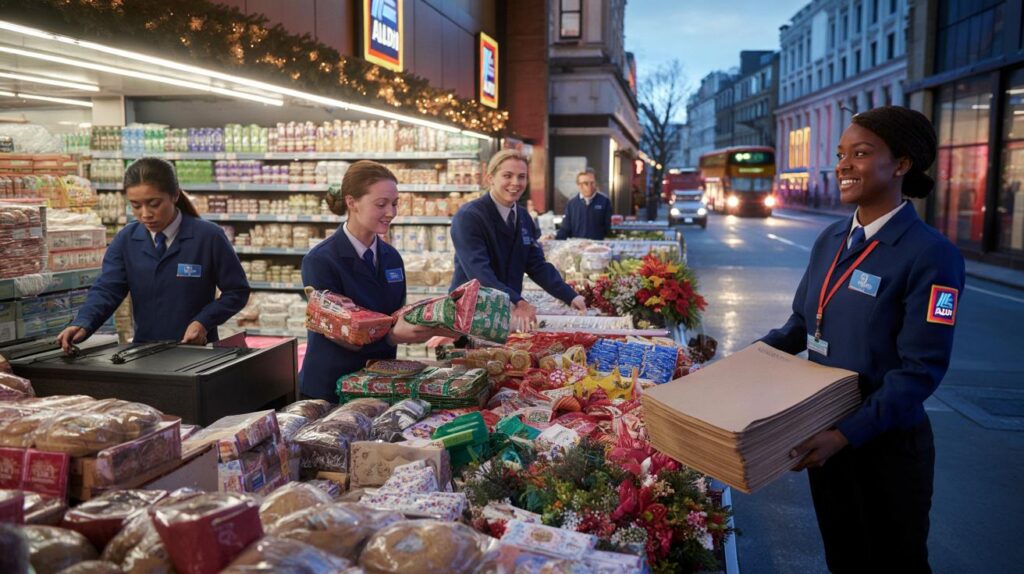
As the festive rush looms, one supermarket is resetting the stakes for staff and shoppers with bold seasonal plans.
Aldi has moved early ahead of Christmas, lifting headline pay for many colleagues, opening hiring at scale, and setting out clear holiday hours. The move raises the temperature in a fiercely competitive grocery market and lands just as households plan seasonal budgets.
What the £14 rule means for staff
Aldi says it has become the first UK supermarket to cross the £14-an-hour line, with rates above £14 for colleagues in London and within the M25. National starting pay for Store Assistants stands at £13.02 an hour, while roles inside the M25 start at £14.35.
The retailer says it is the only UK grocer to pay colleagues for breaks, adding around £1,425 to a typical store worker’s annual earnings.
The new headline pay lands in time for the peak trading window. It signals a bid to attract and retain staff for late nights, early starts and heavy footfall. The timing also helps Aldi prepare for 2026, when growth plans and new stores will demand stable teams.
National and London rates at a glance
| Area | Store Assistant starting hourly rate | Example weekly gross at 30 hours | Notes |
|---|---|---|---|
| UK (outside M25) | £13.02 | £390.60 | Before tax and NI; paid breaks apply |
| Within the M25 | £14.35 | £430.50 | Before tax and NI; paid breaks apply |
Paid breaks change the arithmetic for take-home pay. A worker on 30 hours inside the M25 could see the value of those breaks worth roughly £27 a week across a year, based on the £1,425 figure. That tops up hourly earnings without adding extra time on shift.
4,500 jobs before Christmas
The supermarket is hiring 4,500 store colleagues ahead of the peak period. Roles include Store Assistants, managers and cleaners. The push also supports Aldi’s pipeline of openings, with a plan to open around one new store a week until year-end and a longer-term ambition of 1,500 UK sites.
New colleagues will help restock at pace, keep queues moving and handle surges in seasonal lines from mid-November to New Year.
The company frames the expansion as a way to keep prices sharp and shelves full while service pressures rise. Recruiters say flexibility across early mornings, evenings and weekends will prove valuable, as will comfort with fast-moving systems and heavy deliveries.
Roles and what to expect
- Store Assistants: replenishment, tills, click-and-collect support, seasonal merchandising.
- Managers and deputies: rota planning, availability, peak-hour cover, colleague coaching.
- Cleaners: front-of-house standards, backroom hygiene, turnarounds between peak waves.
Most stores will prioritise applicants who can cover at least one weekend day and adapt to changing patterns close to Christmas week. Training typically happens on the shop floor and ramps up quickly as festive stock lands.
Holiday closures and trading plans
Aldi will close all UK stores on Christmas Day and Boxing Day, then trade from Saturday 27 December. Stores run normal hours from 27 to 31 December and close again on New Year’s Day, reopening on Friday 2 January 2026.
| Date | Day | Status |
|---|---|---|
| 25 December 2025 | Thursday | Closed (Christmas Day) |
| 26 December 2025 | Friday | Closed (Boxing Day) |
| 27 December 2025 | Saturday | Open |
| 28 December 2025 | Sunday | Open |
| 29 December 2025 | Monday | Open |
| 30 December 2025 | Tuesday | Open |
| 31 December 2025 | Wednesday | Open |
| 1 January 2026 | Thursday | Closed (New Year’s Day) |
| 2 January 2026 | Friday | Open |
The schedule mirrors previous years and gives colleagues guaranteed time with family. Shoppers should plan bulk shops before 24 December and use the 27–31 December window for top-ups.
Why Aldi is doing this now
The wage signal lands at a sensitive moment in retail. Grocery chains face rising demand, higher operating costs and a tight labour market. Pay that clears a clean threshold such as £14 inside the M25 helps fill rosters and cut seasonal churn. It also underlines a value proposition that relies on fast, lean service rather than costly overheads.
Paid breaks set Aldi apart in the benefits mix. Many hourly workers in retail do not get paid for rest time. Aldi’s policy boosts effective hourly compensation without lengthening shifts, which can lift retention through winter when fatigue typically rises.
Expansion adds pressure. New stores need experienced people who can model pace and standards. Hiring ahead of the rush seeds teams that will stay into 2026, reducing the drag of constant recruitment.
What it could mean for shoppers
More colleagues on the shop floor usually means faster checkouts and fuller shelves. Seasonal ranges can move quickly; extra hands keep availability high. Better staffing often shortens queues on peak days like 23 and 24 December. It can also improve freshness in produce and bakery where turnover is rapid.
There is a trade-off to watch. Higher wage bills increase costs. Aldi’s model depends on efficiency to protect prices. Expect a sharper focus on throughput at tills, self-service expansion where suitable, and tighter delivery windows to keep labour productivity high.
Will rivals match the move?
Competitors such as Lidl, Tesco, Sainsbury’s, Asda and Morrisons will review festive staffing and pay signals. Any response may target hotspots with hiring gaps rather than a sweeping rise everywhere. Watch London and commuter belts first, where roles are harder to fill and Christmas trade is brisk.
How the £14 threshold translates into pay
Here are quick illustrations before tax. Figures exclude premiums for nights or bank holidays, which vary by contract.
- Inside the M25 at £14.35: 20 hours yields £287 a week; 30 hours yields £430.50; 40 hours yields £574.
- National at £13.02: 20 hours yields £260.40 a week; 30 hours yields £390.60; 40 hours yields £520.80.
- Paid breaks worth about £1,425 a year add roughly £118.75 a month to the value of your time on an annualised basis.
Shifts close to Christmas often run longer and start earlier. Overtime may be available where trade demands it. Applicants should ask store managers about expected rotas in the week commencing 16 December and over New Year’s week.
Applying: what candidates should know
Successful applicants usually bring pace, precision and resilience. Supermarkets value people who stay calm under pressure and switch quickly between tasks. A clean right-to-work status and flexibility across evenings and weekends help. If you rely on public transport, check last trains for late shifts between 20 and 24 December, when stores may extend trading hours locally.
Interview processes in grocery often move fast in October and November. Be ready to start within days if offered a role. Training concentrates on health and safety, till accuracy, stock rotation, and how to merchandise seasonal lines.
Aldi says the pay rise, paid breaks and guaranteed holiday closures are designed to reward teams and protect service during the busiest weeks of the year.
For households planning budgets, the headline is simple. If you live in or around London, a Store Assistant role now pays a headline £14.35 an hour plus paid breaks. Elsewhere, starting pay at £13.02 still lands above many entry-level retail rates. Those figures may shape the wider market as the festive countdown begins.



Finaly a supermarket paying for breaks. That extra ~£1,425 a year is no joke, especially on 30h weeks. £14.35 inside the M25 could tip me to apply—anyone know how fast training ramps up before mid‑December?