
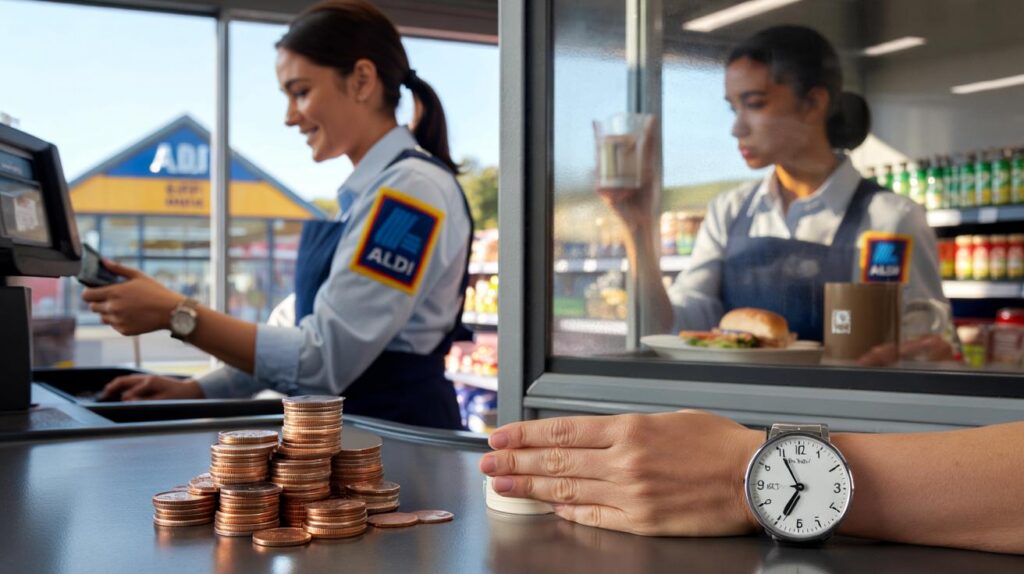
Next week’s shifts bring a tiny but telling change for supermarket staff, as grocers tussle over hourly rates and loyalty.
Aldi will nudge its minimum store pay up by an extra 2p per hour on Monday, lifting the new UK base rate to £13.02 and outflanking rivals after a summer of wage moves. The change applies to more than 28,000 hourly paid colleagues across Britain, including teams in Birmingham and other major cities.
What is the 2p rule and when does it start?
The “2p rule” describes Aldi’s decision to add a 2p top-up to the £13.00 hourly rate it had already planned for September. The tweak takes effect from Monday morning. The chain says the uplift preserves its position at the front of the sector on hourly pay.
From Monday, Aldi’s base store rate outside London rises to £13.02 an hour for more than 28,000 colleagues.
This extra rise follows an earlier announcement in July that moved the rate from £12.75 to £13.00. It means many workers will see a slightly higher figure than expected on upcoming payslips.
Who gets what: pay by location and service
Aldi’s rates vary by region and length of service. The company has set out the following hourly figures for store colleagues:
- UK base rate (outside London): £13.02 an hour from Monday.
- Length-of-service rate (outside London): up to £13.95 an hour.
- London base rate: rising to £14.35 an hour.
- London length-of-service rate: up to £14.66 an hour.
These changes mark the second pay rise for store teams this year. Aldi frames the move as part of a wider commitment to lead supermarket pay and to keep experienced staff on board in a tight labour market.
Why a 2p move matters
Two pence sounds small. Across a large workforce, it signals intent. Aldi’s rival Lidl flagged a £13.00 minimum earlier in the summer, prompting a fresh round of comparisons across the sector. By lifting to £13.02, Aldi creates a headline advantage while reinforcing retention and recruitment messaging at the start of the peak trading season.
For a typical week, the extra 2p per hour makes only a modest difference at an individual level. Over months, it still adds up, and it sits alongside longer-standing benefits that distinguish the discounter’s package.
How much more does 2p an hour actually pay?
| Weekly hours | Extra per week from 2p | Approx extra per year |
|---|---|---|
| 16 | £0.32 | £16.64 |
| 24 | £0.48 | £24.96 |
| 30 | £0.60 | £31.20 |
| 37.5 | £0.75 | £39.00 |
| 40 | £0.80 | £41.60 |
Figures are before tax and national insurance. The uplift applies on top of the announced base rates.
Paid breaks: the quiet £1,425 advantage
Aldi says it remains the only UK supermarket to pay staff for their breaks. For an average store colleague, that benefit is worth around £1,425 a year. The value varies with shift length and pattern, but the paid time counts towards the hourly earnings without requiring extra minutes on the shop floor.
Aldi says paid breaks add roughly £1,425 to the typical colleague’s annual pay packet.
When combined with the new base rate and service-linked progression, paid breaks form a notable part of the overall package. Many retail employers do not pay for breaks, which means headline rates can mask a meaningful difference in take-home pay across a full year.
Rivals, reactions and what comes next
Lidl’s move to £13.00 set a benchmark that other grocers studied over the summer. Aldi’s extra 2p answers that challenge and keeps its pay line at the top. Asda, Morrisons and others have made adjustments of their own this year, reflecting a sector-wide push to recruit and retain store teams as footfall steadies and online orders remain sticky.
Company leaders frame these decisions as investments in service and productivity. A small uplift can help morale, limit churn and cut recruitment costs. Those savings matter when energy bills, logistics and supplier prices still run hot.
What it means for staff and applicants
If you are on the base rate outside London, your hourly pay will move to £13.02 from Monday. Experienced colleagues may already be on the higher rung that rises to £13.95. London stores sit on a separate scale, with headline rates of £14.35 and a top end of £14.66 for longer service.
For applicants, two features stand out: faster progression to the higher rate with service, and paid breaks that lift the real value of the job across a full year. Shifts, overtime availability and travel costs still matter, so candidates will weigh the complete picture rather than the headline alone.
Key dates and how it lands on payslips
- Effective date: Monday, first shifts of the day.
- Who’s covered: hourly paid store colleagues across the UK, including London on a separate scale.
- How you’ll see it: base rate shown as £13.02 outside London; London rates at £14.35 and £14.66 for longer service.
- Breaks: paid as standard, adding to total paid hours for the period.
The bigger picture: pennies, perception and retention
In a wage race measured to the penny, perception shapes reality. A two-pence edge creates headlines, helps recruitment ads stand out, and signals commitment to staff during a period of tight household budgets. The decision also keeps pressure on competitors that matched £13.00 but did not go further.
For teams on the shop floor, the practical boost comes from the structure as much as the rate. Guaranteed paid breaks, clear progression with service, and a published start date all add predictability to take-home pay.
A quick pay check you can run at home
To estimate the change on your wage, multiply your weekly contracted hours by £0.02. Then multiply that result by 52 to get the annual difference. Add the value of paid breaks if your previous job did not pay for them. This simple check highlights why a small hourly edge can compound across a year.
Example: a 37.5-hour contract yields an extra £0.75 per week from the 2p uplift, or £39 per year. Paid breaks, where applicable, contribute far more across the same period, especially on full-time patterns.
What to watch through autumn
Further announcements may follow from competitors as seasonal hiring ramps up. Temporary contracts, weekend premiums and night rates can swing comparisons in unpredictable ways. Applicants should compare total packages by location, hours, breaks, and progression timelines rather than a single headline figure.
For existing staff, the new rate kicks in automatically from Monday. Check rota changes, overtime rates and bank holiday arrangements to see how they interact with the updated base. Keep an eye on internal bulletins for clarity on eligibility for the higher length-of-service rate and how performance reviews link to progression.



Does the 2p uplift stack with overtime premiums and night rates, or is it only on the base hourly rate shown on the rota?
2p feels like PR more than a payrise—40 hours = 80p a week before tax. The paid breaks are the real value here, but inflatoin has eaten alot more than that.