
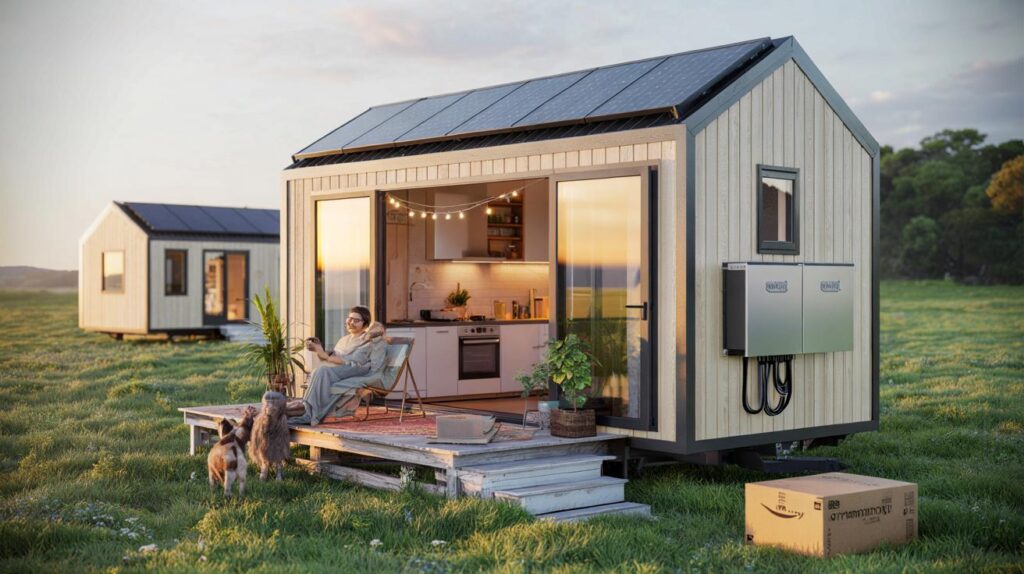
A shopping basket with a roof? Online carts now include compact dwellings that promise space, light and lower monthly costs.
Amazon shoppers are eyeing a solar‑powered tiny home listed from around $11,000, offering two bedrooms, custom finishes and near plug‑and‑live convenience. It packages core household functions into a modest footprint while dangling the lure of lower energy use.
What Amazon’s tiny home actually offers
The listing in question is a modular prefabricated tiny home with a base size of 387 square feet. It’s configured as two bedrooms and one bathroom, but the seller offers multiple layouts and a personalised floor plan option. The frame is steel. The wall panels use flame‑retardant foam boards. The structure arrives pre‑wired for electricity and plumbing to shorten the path from delivery to move‑in.
Inside, the main living zone squeezes in a kitchenette with an induction hob, an oven, built‑in storage and usable worktops. Double‑pane windows run through the design to keep the small space bright and temper swings in temperature. A covered front porch adds usable outdoor area and a spot for a chair, shoes and string lights.
The headline feature is a built‑in solar roof designed to power lighting, appliances and climate control without leaning entirely on the grid.
At the time of writing, the advertised starting price sits at $10,178 before options. The seller lists five layout choices, including two 40‑foot options that can stretch to four bedrooms if you need more sleeping space. One key note for readers comparing models: the manufacturer says the design can expand to 774 square feet, effectively doubling the base footprint for families who need it.
Key numbers at a glance
- Starting price: $10,178 (around $11,000, options add cost)
- Base footprint: 387 sq ft; expandable up to 774 sq ft
- Configuration: two bedrooms, one bathroom as standard
- Structure: steel frame, flame‑retardant insulated wall boards
- Utilities: pre‑wired electricity and plumbing
- Energy: integrated solar roof for everyday power needs
- Windows: double‑pane for light and comfort
- Outdoor: covered front porch
What the solar setup means for your bills
A solar roof on a compact home changes the maths. The footprint is small. The loads are lighter than a full‑size house. That helps solar cover a bigger share of consumption on sunny days. In practice, real savings depend on location, shading, panel capacity, inverter quality and whether a battery is included or added later. The listing positions solar as a way to run lighting, appliances and climate control, but buyers should ask for the array’s rated output and daily yield in their region.
In northern latitudes, winter sun is scarce and demand for heat is higher, so you may still want a grid connection or a backup generator. In southern states or during spring and autumn, the array could carry most daily use. Either way, a built‑in system can trim the monthly bill and cushion you from price spikes.
Ask the seller for the panel wattage, inverter type, battery options and a consumption estimate for the chosen layout.
Liveability inside 387 square feet
Space planning makes or breaks a small home. Here the kitchen wall packs the heat source, oven and storage. Two bedrooms suggest flexibility: a couple and a guest room, roommates, or a main bed plus a compact office. Double‑pane windows bring in daylight, which makes a small plan feel less cramped and reduces artificial lighting hours. The porch extends living space by a few crucial square feet and offers shade and a gathering spot when weather allows.
Finishes are customisable, so you can pick flooring, window styles, interior paint colours and bathroom fixtures to match your taste or rental market. That helps whether you’re placing it as a backyard annexe, a holiday let or a starter home on rural land.
Assembly, permits and site prep
Prefabrication speeds the build, but there is still on‑site work. You’ll need a level foundation or footings, safe access for delivery and trades, and a plan for water, waste and power. Planning permission and building codes vary dramatically by jurisdiction. Some areas allow tiny homes as backyard ADUs; others restrict them or require specific anchoring, setbacks and energy standards. Insurance and finance can also differ from conventional homes.
- Check local planning rules and building regulations for small dwellings or ADUs.
- Confirm foundation requirements, snow and wind ratings, and anchoring details.
- Ask whether installation, commissioning and inspections are included in the price.
- Get written specs for structural steel thickness and insulation R‑values.
How it compares with other Amazon‑listed tiny homes
Amazon’s marketplace features several prefab options at different price points. The modular solar model starts near the $10k mark, putting it in reach for buyers testing the waters. Other listings advertised alongside it include an expandable prefab around $13,700, a luxury container‑style model near $35,160 and another branded tiny home at roughly $34,999. Prices move with materials, finishes, appliances and the level of factory assembly. The solar roof is a standout on the lower‑priced model, while higher‑ticket options may lean into container aesthetics, larger spans or premium interiors.
Price is only one lever; compare insulation, window specs, roof loads, delivery lead times and after‑sales support.
Who this is for—and who should think twice
This kind of compact, solar‑ready unit suits downsizers, first‑time buyers on rural plots, backyard annexe seekers and hosts building short‑let cabins. It also fits people who want lower energy draw and a smaller carbon footprint without designing a custom build from scratch.
Cautious buyers will want clear answers before paying a deposit. Ask about local compliance, warranty terms, return policies and service networks. Probe the solar system details and what’s included in base price versus options. Lay out a budget that covers delivery, groundwork, utilities, permits and furniture. That total can exceed the headline price by a wide margin.
Practical next steps to validate the purchase
- Request a full spec sheet, electrical plan and plumbing plan for your chosen layout.
- Run a simple energy model: list daily appliance loads and compare with the panel’s expected output.
- Obtain a written quote for delivery, craning (if needed) and on‑site assembly.
- Confirm lead time, payment milestones and warranty coverage for structure and systems.
- Speak to your council or permitting office about siting and inspections.
Extra context to help you decide
Financing remains the sticking point for many tiny homes. Traditional mortgages often don’t apply if the unit isn’t on a permanent foundation or if it’s classed as a movable structure. Some buyers use personal loans, cash or builder financing. Insurance can be a hurdle too; get quotes early and confirm how the insurer classifies a prefabricated dwelling with solar.
Finally, think about future flexibility. The ability to expand to 774 square feet gives room to grow, but only if local rules and your site allow it. Modular add‑ons can change how the home heats, cools and uses power, so revisit the solar and HVAC sizing if you plan to extend. A well‑planned purchase can deliver a liveable space with lower running costs and a smaller environmental footprint—without surrendering the essentials of daily life.



Honestly, 387 sq ft with a solar roof for ~$11k sounds awesome 🙂 As an ADU or weekend cabin, this could slash bills and simplify life.