
Bills rose, tempers frayed, and everyone kept asking the same thing: what’s the first change that actually cuts costs without turning your home into a fridge? An energy adviser finally answered by looking at his own house. The fix was quiet, almost boring — and it worked.
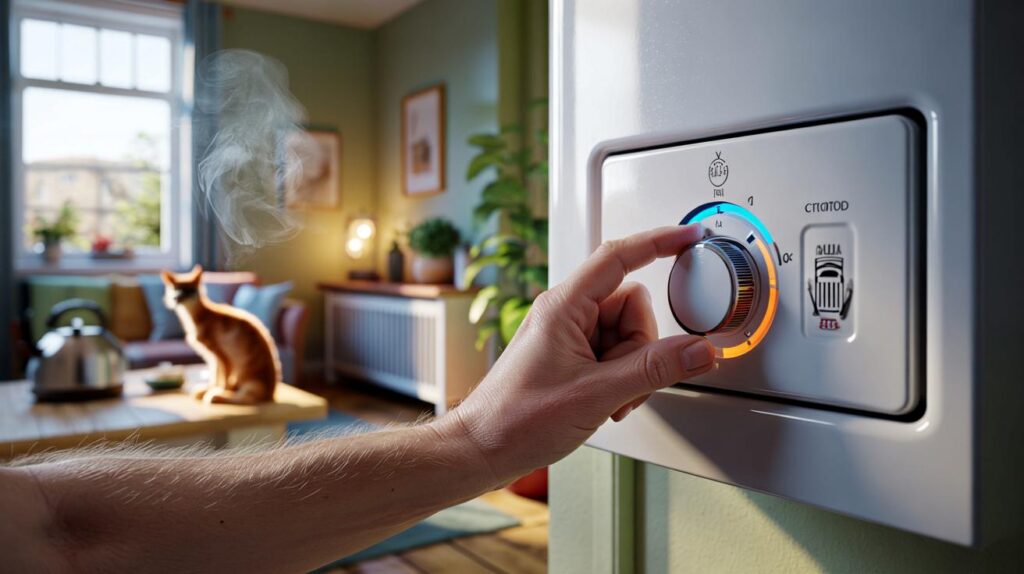
It was a grey Tuesday when he first tried it at home. The kettle hissed, the boiler nudged on, and the radiators gave that faint ticking you only hear if you’re listening. He’d spent months walking through other people’s kitchens, preaching simple wins, then came back to his terrace and did the one tweak he always meant to make: he turned down the boiler’s flow temperature for heating.
We’ve all had that moment when the bill lands and your stomach drops. He felt it too. So he pressed one button, then two, and watched the little number slide from 70 to 55. The house didn’t complain. Not even the cat. It started with a twist you barely notice.
The quiet fix that trims bills without a chill
The first change he made wasn’t a gadget or a fancy app. He dropped the radiator flow temperature on his condensing gas boiler to about 52–55°C. The rooms warmed slower, then stayed steady, instead of yo-yo heat that blasts, stops, and blasts again. The difference on comfort was small. The difference on his meter wasn’t.
Trials across the UK have seen this simple shift cut gas use by a decent slice — think 6–12% for many homes using a modern condensing boiler. One energy challenge last winter reported typical savings nudging £90–£120 a year in a mid‑terrace. He tested it on a draughty downstairs loo first, then the lounge. *It felt like cheating.* A gentler radiator, a quieter boiler, and no one asking where the blankets were.
Here’s why it adds up. Condensing boilers are at their best when the return water coming back from your radiators is cool enough to condense the flue gases — that’s when they squeeze extra heat out of the exhaust. Warmer flow settings push that return temperature up, so the boiler condenses less and wastes more. Lower the heating flow to the mid‑50s, and you give the system time to sip, not gulp. The pump works longer. The burner purrs instead of roaring. The fuel stretch improves.
How to do it at home in five calm minutes
Find the radiator icon on your boiler controls and turn the central‑heating flow down to around 50–55°C. That’s the number for your radiators, not your hot water taps. On a combi, you’ll usually see two dials or menus — one with a radiator, one with a tap. On a system with a hot‑water cylinder, leave the cylinder target at 60°C to protect against bacteria, and only lower the heating circuit. Try it on a mild day and give it 24 hours.
Watch how the house feels. If the far bedroom lags, nudge the flow a touch or open that radiator valve a quarter‑turn. Bleed radiators that have cold tops. Keep one radiator always open if you’ve fitted TRVs so water can circulate. Let’s be honest: nobody does that every single day. That’s fine. Do the basics once, then set and forget until the next cold snap. If the mercury drops hard, you can bump the flow a bit for a week, then come back down.
“Lower it to the low‑50s for heating, keep hot water at 60, and let the boiler do what it was built to do — condense,” he told me. “It’s not heroic. It’s just smart.”
Try pairing the tweak with two or three of these five‑minute wins — they stack without pain:
- Close the letterbox brush, keyhole cover, and any obvious draught gaps around doors.
- Drop your washing to 30°C and run full loads; modern detergents are built for it.
- Swap the last non‑LED bulbs you still haven’t touched.
- Use the 1‑hour boost on extractor fans, not the always‑on setting.
- Set your hot‑water timer to the actual hours you need, not the default block.
What changed in the house — and what didn’t
After a week, the gas use graph on his phone flattened. Peaks dulled into low hills. The lounge felt less like a switch and more like a sunrise — slow, even, kinder. The boiler noise softened. The family stopped fiddling with the thermostat every hour because the heat arrived and stayed put. Nothing dramatic happened. That’s the beauty of it. The magic was almost invisible.
There were limits. On the coldest weekend of January, he nudged the flow back up to 60 for two days, then returned it to 54 on Monday. Radiators ran longer to reach the set temperature, which is the point — long and low beats short and fierce for efficiency on a condensing boiler. No fresh hardware. No call‑out. Just a small, human habit shift. Friends laughed when he said the first change he made in his own house wasn’t a smart thermostat. It was turning one number down.
That choice unlocked a calmer approach to the whole home. It’s amazing how one tiny, controllable action can change the tone of winter. You start to notice the way warm air moves on the stairs, how a door left ajar steals heat, where the dog naps when the radiator is on a gentle glide. The money saving is real. The feeling of control is the bigger prize. The best part is that you can do it tonight.
| Key points | Details | Interest for reader |
|---|---|---|
| — | Lower the boiler’s central‑heating flow temperature to ~50–55°C | Immediate, no‑cost action that often trims gas use without losing comfort |
| — | Keep hot‑water cylinder at 60°C; adjust only the heating circuit | Stays safe for hygiene while unlocking boiler efficiency |
| — | Pair with small habits: draught‑proof, 30°C laundry, LED bulbs | Stackable gains that feel easy and add up across the month |
FAQ :
- Will turning down flow temperature make my home colder?Rooms may warm more gradually, then sit at the set temperature more steadily. If a room struggles to reach target on very cold days, nudge the flow up a little temporarily.
- What number should I choose on a combi boiler?Use the radiator control and start around 50–55°C for heating. Leave the hot‑water tap setting where you like it for showers.
- Is it safe with a hot‑water cylinder?Yes, as long as the cylinder temperature stays at 60°C. Lower only the heating flow; don’t drop stored hot water below 60°C.
- Will this work with heat pumps or only gas boilers?Heat pumps already run at lower flow temperatures by design. The principle of long, low, steady heat applies to both, but the settings and controls differ.
- Do I need a plumber to do this?Not usually. It’s a front‑panel or menu change. If your controls are confusing or you have an older non‑condensing boiler, a quick check with an engineer can help.



Tried dropping my boiler flow from 70 to 55 after reading this and the house feels… calmer. Radiators run longer but no more yo‑yo heat. Kids didn’t notice, bills might! Saved me from overthinking smart tech — the simplest tweak is definately the winner.
Genuine question: will this still condense properly in a draughty 1930s semi‑detatched with undersized radiators? On freezing nights mine struggles at 55°C. Would weather compensation or slightly higher flow be smarter than cranking TRVs? Curious how you balance comfort vs. efficiency without short‑cycling or tepid bedrooms.