
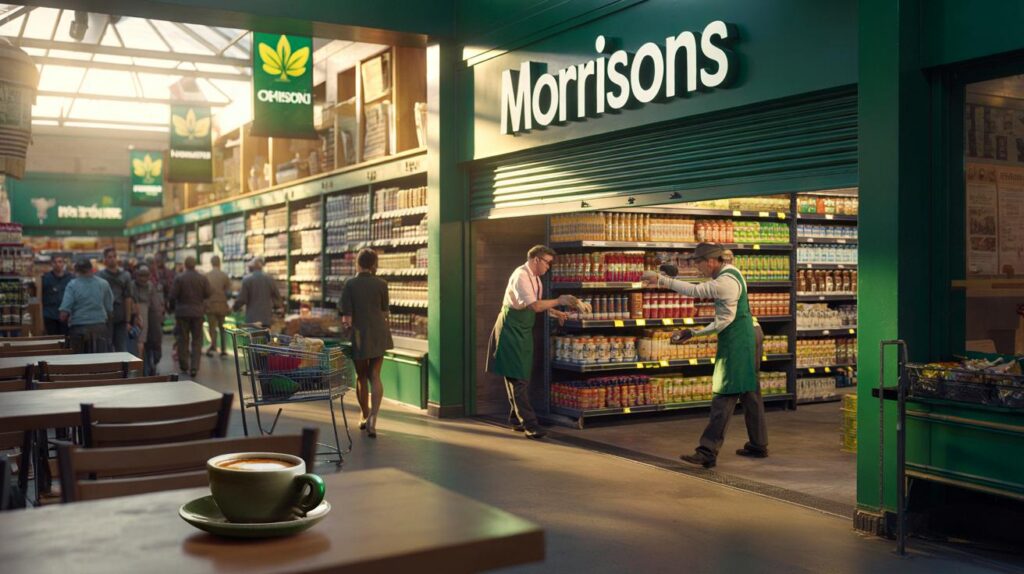
Your supermarket café might look different next year, as chains reset priorities and shoppers change how and where they eat.
Morrisons has begun a sweeping rethink of its in‑store space, with scores of café closures planned through 2025 and other counters pared back. The shift reflects fiercer price competition, changing habits, and a push to channel investment into core grocery value.
What Morrisons plans to shut and why
The retailer has identified dozens of cafés for closure as it reshapes non‑grocery space in stores. The move sits alongside the wind‑down of several specialist counters and smaller formats, after a period of heavy investment and tough trading. Aldi recently leapfrogged Morrisons into fourth place by market share, raising the pressure to keep prices sharp and costs lean.
Up to 54 cafés are due to close during 2025. Morrisons has named 52 affected sites so far and signalled wider service changes across the estate.
| Service | Number affected | What shoppers will notice |
|---|---|---|
| Cafés | 52 named (up to 54 in total) | In‑store sit‑down areas removed or replaced by alternative offers |
| Florists | 13 | Fewer on‑site bouquets; more pre‑packed ranges on shelves |
| Meat counters | 35 | Packaged meat aisles take the strain; fewer made‑to‑order cuts |
| Fish counters | 35 | More pre‑packed fish; reduced counter service |
| Pharmacies | 4 | Prescription services move to nearby branches or independents |
| Market Kitchens | 18 | Hot food concessions withdrawn in affected stores |
Leaders at the Bradford‑based grocer have framed the changes as a pivot towards value, speed and consistency. The chain operates close to 500 stores, and says it will refit space where it sees stronger demand for everyday lines and sharper pricing.
The competitive squeeze behind the move
Supermarket dining has lost ground as households trim discretionary spend and grab cheaper food‑to‑go. Rival Sainsbury’s also pulled back its café estate, while discount chains stepped up pressure on weekly shop prices. Many retailers now favour pre‑packed ranges and third‑party concessions that turn space faster and require less labour.
Sales recover, profits return
Morrisons reported improving trading through its financial year. Like‑for‑like sales rose by 3.9%, with total sales up 4.2% to £3.9 billion in the second quarter. After losses of £1.3 billion and £919 million in the two previous years, the group posted a pre‑tax profit of £2.1 billion for the year to 27 October 2024, signalling a turnaround in performance.
The retailer is reshaping cafés and counters, not closing supermarkets. The focus sits squarely on non‑grocery services.
What it means for you
Regulars who rely on in‑store cafés for affordable breakfasts, hot drinks and a warm seat will see changes. Some sites will lose sit‑down areas altogether. Others may host grab‑and‑go fixtures, bakery seating nooks or new concessions, depending on local demand and space constraints.
- Check store notices and the Morrisons app for local changes and timing.
- Expect more ready‑to‑eat choices in aisles where cafés close.
- Look for alternative seating near bakeries or customer service hubs in larger stores.
- If you plan to meet friends at a branch café, confirm status before you travel.
Full list of cafés closing
Morrisons has named the following cafés for closure. The company has indicated further service changes across the estate during 2025.
- Bradford Thornbury
- Paisley Falside Road
- London Queensbury
- Portsmouth
- Great Park
- Banchory North Deeside Road
- Failsworth Poplar Street
- Blackburn Railway Road
- Leeds Swinnow Road
- London Wood Green
- Kirkham Poulton Street
- Lutterworth Bitteswell Road
- Stirchley
- Leeds Horsforth
- London Erith
- Crowborough
- Bellshill John Street
- Dumbarton Glasgow Road
- East Kilbride Lindsayfield
- East Kilbride Stewartfield
- Glasgow Newlands
- Largs Irvine Road
- Troon Academy Street
- Wishaw Kirk Road
- Newcastle UT Cowgate
- Northampton Kettering Road
- Bromsgrove Buntsford Industrial Park
- Solihull Warwick Road
- Brecon Free Street
- Caernarfon North Road
- Hadleigh
- London Harrow Hatch End
- High Wycombe Temple End
- Leighton Buzzard Lake Street
- London Stratford
- Sidcup Westwood Lane
- Welwyn Garden City Black Fan Road
- Warminster Weymouth Street
- Oxted Station Yard
- Reigate Bell Street
- Borehamwood
- Weybridge Monument Hill
- Bathgate
- Erskine Bridgewater Shopping Centre
- Gorleston Blackwell Road
- Connah’s Quay
- Mansfield Woodhouse
- Elland
- Gloucester Metz Way
- Watford Ascot Road
- Littlehampton Wick
- Helensburgh
Jobs, redeployment and timing
The company says it aims to redeploy staff wherever possible into nearby stores and departments. That can include grocery, front‑of‑house, click‑and‑collect and replenishment teams. Timetables vary by branch, so locals should look out for notices and speak to managers about roles that open up as layouts shift.
Why cafés are in the firing line
Sit‑down food service ties up space and labour at a time when shoppers chase price and speed. Packaged alternatives, smarter bakeries and on‑the‑go fixtures can serve more people per square metre. That helps fund price cuts on staples and investment in supply chains, which remain central to winning weekly shops back from discounters.
Grocers want each aisle to earn its keep. Space moves to what sells fastest and most often.
Need‑to‑know extras
Like‑for‑like sales growth compares revenue from stores open at least a year, stripping out change from new space. It’s a clean way to track genuine trading momentum. A 3.9% rise signals more shoppers buying more items, paying slightly different prices, or both. The swing to a £2.1 billion pre‑tax profit after two heavy loss‑making years shows management has cut costs and lifted margins, even as it trims non‑core services.
If your town loses a café, plan a simple swap. A £3 to £4 takeaway coffee, bought three times a week, adds up to £468 to £624 a year. Switching two of those to home‑brewed could free up £300 or more, which covers a month of cupboard staples for a family of four. For older customers who value the social side, local libraries, community centres and independent cafés often host low‑cost coffee mornings that keep the routine intact without a long trip.



Is London Harrow Hatch End definately on the chopping block, or could this still change after local consultation? Can’t find dates.
So my weekly ritual—cheap latte, rubbery toast, and eavesdropping retirees—has been axxed. Progress, I guess? Hope the ‘grab-and-go’ isn’t just a sad fridge with tuna triangles. At least make the bakery nook cosy; give us plugs and a seat while we plan the big shop.