
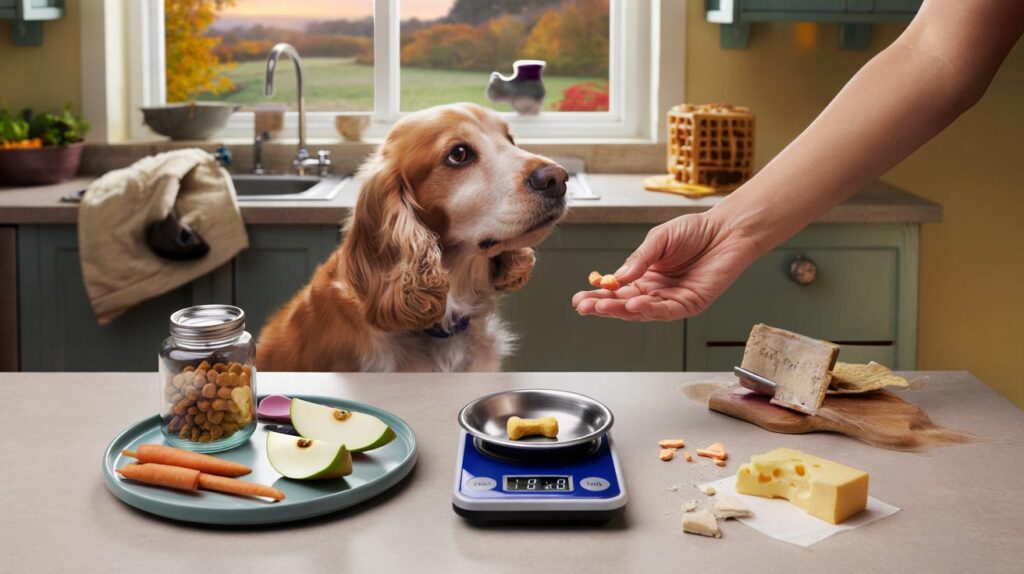
Autumn rolls in, sofas beckon, and snack bowls fill up. Your dog watches closely, tail wagging, waiting for crumbs.
Across Britain, cooler nights often mean more nibbles slipped under tables. Vets keep seeing the same pattern. Tiny extras add up fast, and waistlines follow. You can turn that tide with a few measured habits and a plan that still feels generous.
Why small bites add up fast
Most dogs do not need many spare calories. A neutered 12 kg dog often needs roughly 700–750 kcal a day. Two biscuits and a cheese cube can hit 70 kcal before you notice. That equals a meaningful slice of the daily budget.
Keep treats under 10% of your dog’s daily energy needs. That means no more than 1 in 10 calories from snacks.
Family routines magnify the problem. A child drops a crust. A partner hands over a sausage-end. You reward a polite sit at the door. Each act looks harmless. Together they create a steady surplus. Weight rises silently over weeks.
Portion blindness and the “just this once” trap
Owners often forget to count treats into meals. The bowl stays full-sized while snacks flow. That gap drives gain. Many dogs move less in wet, dark months, so they burn fewer calories. The same treats then hit harder.
For a 12 kg dog, one 20 g biscuit can mirror a pastry for a person, once you scale the body size.
What labels rarely tell you
Commercial treats can be dense. Many contain fats, sugars and salt to boost palatability. Labels sometimes hide this behind vague terms or tiny portion sizes. “Light” on the packet may still mean rich calories per gram.
Spot the red flags
- Energy per 100 g higher than your dog’s dry food.
- Added sugars or syrups in the first five ingredients.
- Heavy oils, glycerine or flavourings high on the list.
- Portion guidance that suggests tiny pieces you rarely use.
Chews marked as dental can also pack energy. A single large chew may exceed your entire daily treat cap. Weigh one once. The scale tells the truth when marketing does not.
Set a clear daily cap
Work from your dog’s estimated needs. Then ring-fence 10% for snacks. Reduce the main meal to match treat use. The numbers below help you set a starting point for a neutered, healthy adult. Adjust for age, condition and activity with your vet’s guidance.
| Dog weight | Typical daily energy | 10% treat limit |
|---|---|---|
| 8 kg | ≈ 530 kcal | ≈ 50 kcal |
| 12 kg | ≈ 720 kcal | ≈ 70 kcal |
| 25 kg | ≈ 1,250 kcal | ≈ 125 kcal |
Pre-pack a day’s treats into a small pot in the morning. When the pot is empty, you are done.
Make pieces tiny, make moments big
Break treats into pea-sized bits. You stretch the reward without stretching the belt. Dogs value frequency over size. Ten tiny rewards beat one chunk for training and mood.
Smart swaps that dogs love
You can keep the ritual and cut the energy. Many dogs enjoy simple foods with texture and scent. Test small amounts first to check tolerance.
- Thin carrot coins, 10–20 g for a medium dog.
- Apple wedges without pips.
- Courgette slices, lightly cooked, no salt.
- Lean chicken breast, plain, no skin, no oils.
Avoid toxic foods. Never give chocolate, grapes, raisins, onions or xylitol. Keep cooked bones off the menu. Plain water should sit beside any chew session.
Make treats earn their keep
Food works best as payment, not background snack noise. Use it during training, nose-work or puzzle feeders. Swap couch-grazing for a five-minute scatter feed in the garden. That builds brainwork and movement.
Training beats grazing
Mark and reward specific behaviours. A calm settle. A recall under distraction. A loose lead step. You build skills while you spend your treat budget with purpose.
Say more, feed less: warm praise, a game of tug, or a scratch in the favourite spot can replace calories.
If weight has already crept up
Switch your praise first. Raise verbal rewards and toy play. Cut treat energy by a third and watch response over two weeks. Weigh weekly at the same time of day. Aim for gradual loss, not a crash. Slow change sticks.
Involve the whole household
Post the treat plan on the fridge. One person manages the pot. Log what goes in and out. Ask friends not to feed during visits. Consistency beats everything.
Autumn habits that protect your dog
Shorter days reduce steps. Plan short, frequent walks. Set a movement target that suits your dog’s joints and breed. Build sniff time into routes to tire the brain. Move the last meal earlier to ease late-night scrounging.
Chew time without calorie creep
Rotate low-calorie chews and non-food enrichment. Try ice cubes made from low-salt stock, frozen rubber toys stuffed with a portion of their normal meal, or longer-lasting fabric tug games. You deliver relief for jaws and nerves without pushing the scales.
A simple rule keeps you safe: plan the treats, shrink the pieces, and subtract from the bowl.
Extra help: quick numbers and a home check
Count energy, not just pieces. Many small training treats carry 2–4 kcal each. A 10–15 treat session may add 20–60 kcal. Balance this by trimming 10–20 g from the main meal for a medium dog, based on the food’s energy density.
Run a monthly body check. Feel the ribs with light pressure. You should feel them without a search. View from above. A waist should taper behind the ribs. If not, tighten the plan and speak to your vet nurse for a clinic weigh-in.
Two things owners ask about
Dental sticks and health claims
Dental chews can help when used within calorie limits and alongside brushing. Look at energy per piece. Choose smaller sizes if needed, or brush teeth and switch to low-energy chews a few times a week.
Sharing “human” snacks
Small tastes of safe foods can fit. Cheese and cured meats deliver dense calories and salt. If you want to share, weigh a 10 g portion and budget it. Better yet, hand over a carrot slice while you enjoy your crisps.
If you want a simple start today, fill a treat pot, break every piece down, and set a two-walk training plan. Track the scales across four weeks. That small system turns treats from a risk into a tool, and it keeps joy in the routine as nights draw in.



Brilliant breakdown—pre-packing a treat pot and going pea-sized finally clicked for us. Love the 10% rule and “say more, feed less.” Starting our two-walk training plan tonight. Thanks for the practical, no-guilt approach! 😊