
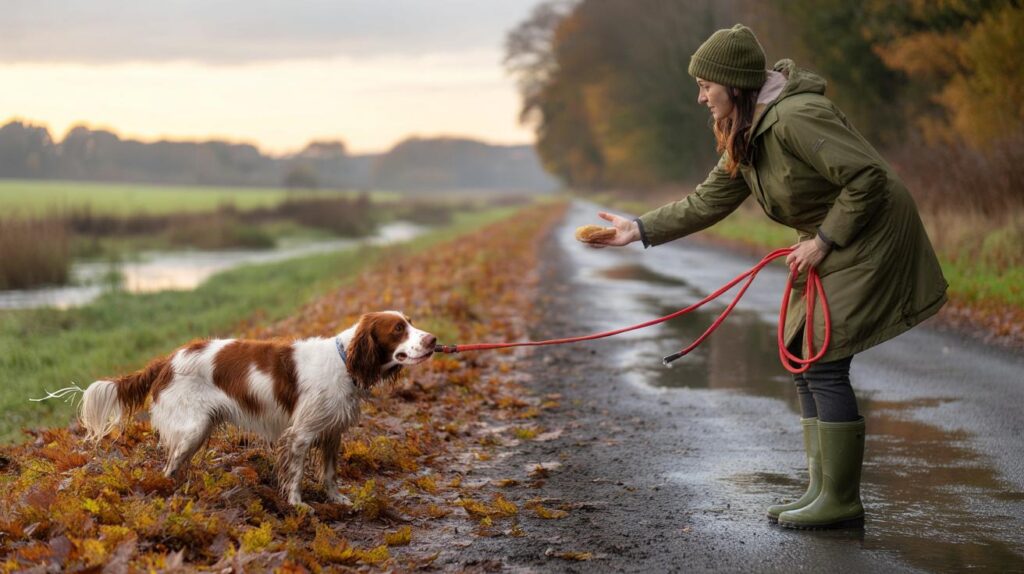
British dog walkers face a familiar autumn headache: joyous pets, leaf-littered paths, and a whiff that lingers long after.
Behind the muddy grins lies a rooted drive to coat their scent. You can redirect it without crushing your walks.
Why dogs seek powerful smells
Rolling in pungent matter isn’t mischief. It’s camouflage. Dogs inherit this habit from wild canids that masked their scent before hunting or passing rival packs. Strong odours carry data too. Territory, diet, health and status all travel by scent. To a dog, fox droppings or fish remains read like a bulletin board.
Autumn adds temptation. Wet leaves, decaying vegetation and wildlife traffic spike the smell map. Many dogs dive shoulder-first, since that patch spreads scent well. The ritual tends to follow a pattern: head drop, slow zig-zag sniff, freeze, then a sudden tilt and roll.
Watch for the head-down sweep, a fixed stare at ground level, and a brief hold of breath. That is your five‑second window.
- Top lures in parks and trails: fox scat, dead fish near waterways, manure piles, stale urine marks, algae-rich puddles.
- High-risk times: after rain, on warm afternoons following a cool night, and along the edges of fields where wildlife crosses.
- Usual roll sites: shoulder, neck, then along the flank for a full smear.
Stop a roll before it begins
Build recall that holds under pressure
Rehearse recall where you can predict success. Use a short, crisp cue. Reward fast approaches, not slow meanders. Aim for three rapid reps, then a break. Keep tension out of your voice.
- Change direction without warning. Mark and reward when your dog wheels round with you.
- Use a jackpot for hard choices. If your dog abandons a hot scent, pay with extra-high value food or a favourite toy.
- Practice the “find it” cue. Scatter-feed a few pieces on grass the moment your dog aborts a roll. Nose work beats nose work.
- Work on a long line near tempting zones. Give room to sniff, but keep a safety net for that first shoulder dip.
Interrupt the sequence before the shoulder hits the ground; a calm recall beats a shouted chase every time.
Turn movement into prevention
Dogs lock onto scent more when the walk becomes predictable. Vary the route, pace and tasks. Mix brisk stretches with short sniff stops you control. Use sudden arcs, figure-eights and brief jogs to reset focus.
- Carry a pocket toy for a quick tug session away from a suspect patch.
- Drop a cue for a simple behaviour chain: sit, touch, spin, treat. Short chains crowd out the urge to roll.
- Give the nose a job: ask for a “search” in clean grass, not near hedgerows with wildlife traffic.
Map your risk zones
Some places trigger more roll attempts than others. Walk there with intent or take a detour. A little planning saves a bath.
| Risk zone | Why it tempts | What to do |
|---|---|---|
| Field edges after rain | Fox and deer routes carry fresh marks | Keep to the centre path; use a long line and short sniff permits |
| Car parks and bins | Food spills and scent-rich run-off | Heel past with treats; no loose lead until clear |
| Riverbanks and lakes | Dead fish and algae mats | Recall early; switch to a game 20 metres before the waterline |
| Woodland verges | Hidden carcasses under leaf litter | Walk the middle track; add brief training stops every 50 metres |
When the roll wins: a fast de‑stink plan
Act quickly. Rinse the coat within 30 minutes if you can. Use lukewarm water. Human shampoo strips oils and can irritate, so stick to a mild dog formula.
- Bicarbonate pre‑wash: mix 2 tbsp bicarbonate of soda with water to make a thin paste. Work into the area. Leave for two minutes, then rinse.
- Dog shampoo wash: lather once for dirt, rinse, then lather again for odour. Massage down to the skin. Rinse until the water runs clear.
- Dry thoroughly. Damp coats can trap a faint smell. Towel first, then air dry or use a pet dryer on low heat.
- Clean the kit. Wash the collar, harness and lead; they hold odour longer than fur.
Decontaminate the collar and harness as carefully as the coat; fabric keeps the stink alive.
If skin looks red or your dog keeps scratching, pause and contact your vet. Strong scents can irritate sensitive skin or ears.
A two‑week plan to cut incidents
Give yourself 14 days to reset habits. Short, daily rehearsals change what your dog expects from a walk.
- Days 1–3: three recall games per walk. Pay big for fast turns. Walk on a long line near mild distractions.
- Days 4–6: add a “leave it” cue for ground smells. Cue, reward eye contact, then offer a permitted sniff elsewhere.
- Days 7–10: visit a medium-risk route. Pre‑plan two play breaks before known hotspots.
- Days 11–14: trial an off‑lead section only after two clean recalls. End early on a win.
Permit sniffing on your terms. Short, scheduled scent breaks reduce the urge to seek the worst patches.
When to bring in a behaviour specialist
Seek tailored help if rolling escalates, happens on every walk, or triggers guarding of the rolled area. A certified behaviourist can watch your timing, adjust rewards and design games that compete with scent without constant restraint. Two or three focused sessions often shift the pattern.
Health checks that change the picture
Sudden surges in rolling may link to itch, ear trouble or stress. Pain can push dogs to self-soothe through scent. Ask your vet about skin health, parasites, diet and any recent changes at home. Addressing discomfort often trims unwanted habits.
Extra ideas to feed the nose
Add scent work at home so your dog gets a daily olfactory workout. Hide five treats in one room, then raise difficulty across the week. Use cardboard boxes or rolled towels as search stations. Finish with a calm settle on a mat.
Consider a “sniff walk budget”. Allow three one-minute sniff stops per kilometre, then move on with a cue. Your dog learns that sniffing is guaranteed, not contested. That promise reduces frantic foraging for the strongest smells and nudges attention back to you.



Finally, a plan to defeat Eau de Fox. My beagle will hate this, my nose loves it 🙂