
When roads fall silent after impact, small signals can cut through panic for people who struggle to speak under stress.
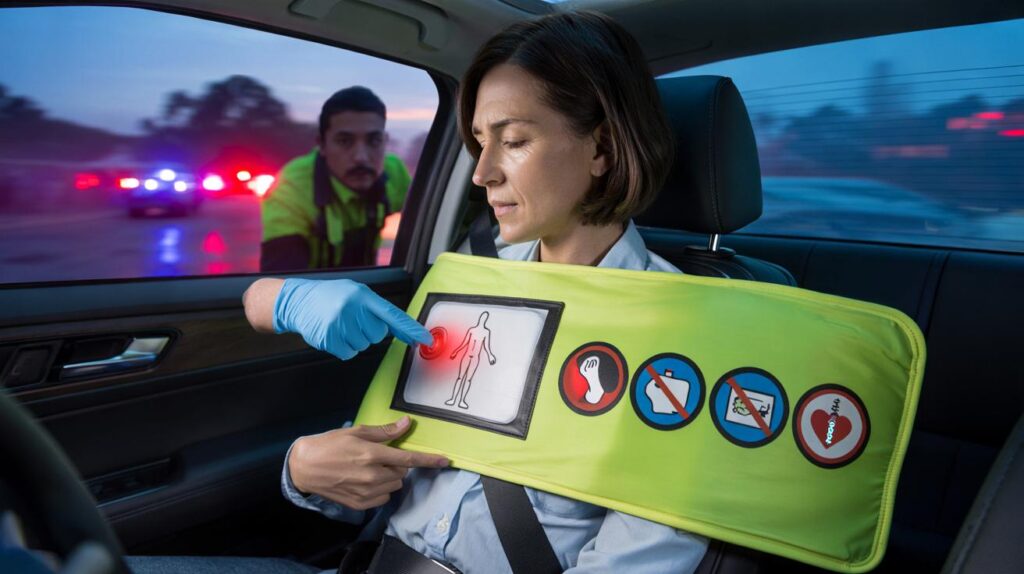
Devon and Cornwall Police is offering free seatbelt covers to help drivers and passengers with additional needs communicate clearly after a collision. The fabric sleeve wraps around an adult seatbelt and carries simple tools that remove guesswork when voices fail, stress rises, and time runs short.
What the new seatbelt cover does
The cover holds a pocket card for personal details and communication preferences. It also includes images showing body areas, so a person can point to where they hurt. The sleeve attaches in seconds. It slips off easily and can move between vehicles. The aim is practical: give responders and bystanders an instant, consistent way to understand someone who may be in pain, frightened, or unable to speak.
A removable seatbelt sleeve carries a personal card and a body map to speed conversations when every second counts.
Police say the covers are designed for drivers and passengers who are neurodiverse, live with a learning disability, or have a medical condition that affects speech or language. Shock or anxiety after a crash can silence anyone. A visible prompt on the belt invites a calmer, more focused exchange.
How it works at the roadside
Responders look for the sleeve as they assess the scene. The card tells them how the person prefers to communicate. The body images allow quick pointing rather than complex sentences. Short, direct questions work best. Many people can indicate pain sites or needs even when words are difficult.
- Show the cover and card to the person before asking questions.
- Use closed questions, offering simple choices or yes/no options.
- Invite the person to point to body images to mark pain or injury.
- Follow the preferred communication method on the card, such as gestures, writing, or slower speech.
- Scan the details for allergies, medications or conditions that matter in treatment.
Who it aims to help
The cover targets people who find speech hard in noisy or stressful settings. That includes autistic people, those with learning disabilities, and anyone with speech or language impairments. Hearing-impaired drivers and passengers may also benefit, especially where background noise and shock make lip-reading difficult. The idea is simple: reduce friction in the first crucial minutes.
This tool complements medical information people already carry. It does not replace clinical care or formal identification.
Why police are pushing the scheme
Acting Insp John Ford described the sleeve as a practical way to flag that someone might need extra help. Road traffic collisions can overwhelm even confident communicators. For people with speech, language or communication needs, those moments are tougher still. A shared tool creates a common starting point for help.
Alison Hernandez, the Police and Crime Commissioner for Devon, Cornwall and the Isles of Scilly, has stressed that early, clear communication with a trapped occupant can affect how fast crews can safely move them. Extrication decisions often rest on accurate, quick information. A nod, a point, or a written word may save precious time.
| What | Details |
|---|---|
| Item | Free seatbelt communication cover with card and body map |
| Who offers it | Devon and Cornwall Police |
| Funded by | Vision Zero South West road safety partnership |
| Accessibility | Information video includes British Sign Language and subtitles |
| Fit | Adult seatbelts; removable and transferable between vehicles |
| Where to get it | Police enquiry offices |
Where and when you can get one
The force says the covers are available from police enquiry offices. The scheme has been funded by Vision Zero South West, the regional road safety partnership chaired by the Police and Crime Commissioner. An information video supports the rollout and includes a British Sign Language version and subtitles so more people can understand how to use the kit.
Free to collect at enquiry counters, the sleeve is intended to sit on your belt long before you ever need it.
What to write on the card
Keep the card concise and up to date. Avoid jargon. Write clearly in block letters. Rely on short phrases rather than full sentences. The goal is clarity under pressure.
- Name and emergency contact number.
- Preferred communication method, for example “short questions”, “slow speech”, “write it down”, or “BSL”.
- Relevant conditions, such as autism, aphasia, epilepsy, diabetes, or a stoma.
- Critical allergies and regular medications.
- Assistive devices used, like hearing aids or communication aids.
If space is tight, list only what responders must know first. You can attach a second small card if a condition requires extra notes. Review details every few months so information remains current.
What this could mean for road safety
Communication gaps slow everything at a crash scene. People talk over one another. Instructions get missed. Pain and fear make speech harder. The seatbelt cover creates a focal point. It signals a need for tailored communication before the first question lands. That can lower anxiety. It can also reduce misinterpretation and repeat questioning.
Closer to the vehicle, small gains add up. A paramedic can ask a pain score and get a pointed answer. A police officer can confirm allergies without searching for a wallet. Fire crews can plan movement while observing signs of pain when the person points to the body map. Better first minutes often lead to safer choices in the next five minutes.
Limitations and care
No single tool fits every crash. A cover may be hidden by damage, clothing or seat position. Some people will not be able to reach or point. Children’s restraints use different designs, and this sleeve targets adult belts. Information must be correct to be helpful. Too much detail can confuse. Keep data minimal and relevant, since the card may be seen by others at the scene.
Think of the sleeve as part of a bundle. Medical bracelets and phone-based emergency info can add detail once responders stabilise the scene. The cover’s strength lies in speed and visibility, not completeness.
Taking the idea further
Households can practise simple routines. Sit in the car, place the cover on the belt, and rehearse pointing to the body map for “head”, “neck”, “chest”, “arm”, “leg”. Agree on a few hand signals for yes and no. Repetition builds confidence. People who rely on sign language or symbol boards can tuck a small cheat sheet into the sleeve pocket next to the card.
Drivers who use smartphone medical ID features can keep those alongside the cover. Emergency settings on many phones place allergies and conditions on the lock screen. Families might keep a duplicate card in a wallet or on a keyring. Community groups that support autistic adults or stroke survivors could help members fill in cards and test the cover in a calm setting. Small steps taken on a quiet day can make a loud day less frightening.


