
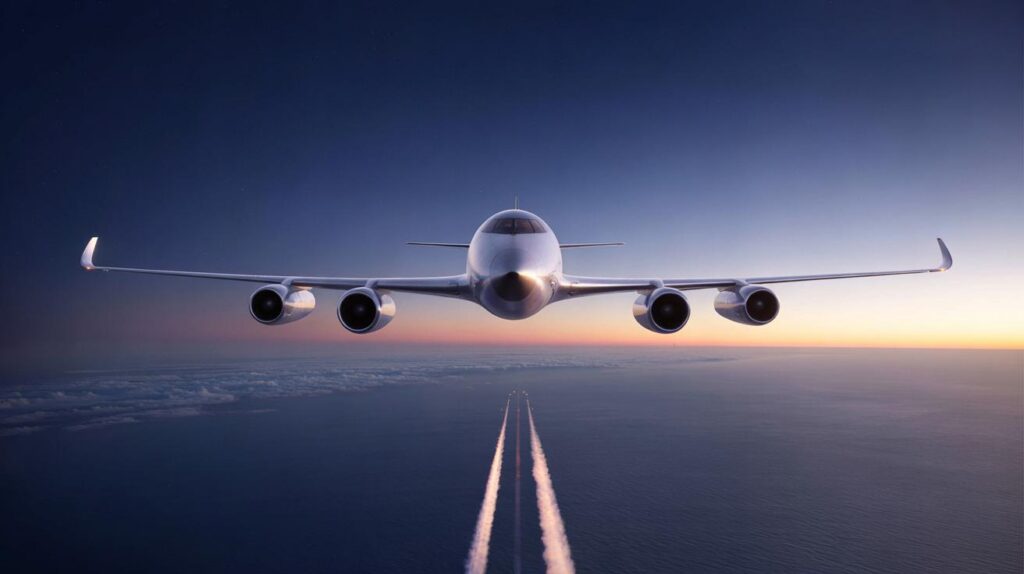
Goodbye to long night flights and tight connections. A new race in the skies hints at quicker journeys and fresh rules.
After two decades of silence at supersonic speeds, a new generation of fast jets is edging closer to passenger service. The pitch is simple: cut hours off key routes, trim jet lag, and restore a sense of occasion to long-haul travel. The details are far from simple, yet the numbers are now concrete enough for travellers to start asking what it would mean for their plans and their wallets.
What’s actually changing in 2029
A Denver-based company, Boom Supersonic, is developing a passenger jet called Overture, targeting limited commercial operations by 2029. The company says it will fly between London and New York in around 3 hours 40 minutes, slashing roughly three hours from today’s schedules.
London–New York in 3h 40m by 2029, with point-to-point savings of around three hours compared with today’s timetables.
According to industry briefings, a pivotal policy shift arrived in the United States in June 2025, with legislation that opened the door to controlled supersonic operations over land. That change, if fully enacted in rules and corridors, removes a major barrier that grounded the previous era of supersonic passenger services.
Early services, if they launch on time, would operate on a narrow set of long overwater and permitted overland corridors, with a focus on dense corporate routes where time saved translates most clearly into value.
How the Overture differs from Concorde
Speed, altitude and capacity
Overture is designed to cruise at up to Mach 1.7—faster than today’s fastest airliners—and at altitudes around 60,000 feet. The cabin is planned for 60 to 80 passengers, significantly fewer than a wide-body aircraft and closer to a premium-heavy narrow-body layout.
A planned cruising altitude near 60,000 feet and a 60–80 seat layout give Overture a lean, premium-first footprint.
Boom says the aircraft will use modern noise-reduction approaches, new engine inlets and aerodynamic shaping to address the sonic profile that dogged the original Concorde. While the sound barrier still creates a boom, the goal is to restrict audibility to designated zones and keep airport communities within agreed noise envelopes.
Orders, partners and possible route map
United Airlines has announced plans to take 15 aircraft, with options for more. American Airlines and Japan Airlines have also signed purchase agreements or pre-orders. Boom touts a potential network of at least 600 routes, anchored in transatlantic and transpacific markets and selected long domestic legs where permitted.
- Top speed: up to Mach 1.7
- Cruising altitude: about 60,000 ft
- Seat count: 60–80 passengers
- Target entry into service: 2029
- Indicative London–New York time: about 3h 40m
- Airline interest: United, American, Japan Airlines
- Potential network: 600 routes (company estimate)
Who might fly and how much could it cost
Travel industry voices expect the first wave of customers to be time-sensitive business travellers and affluent leisure flyers. That tallies with the seat count, the speed premium and the likely ticket prices.
Fares are not published, but the economics point towards pricing well above flexible business-class on subsonic flights, at least at launch. If utilisation rises and fuel supply becomes more predictable, prices could move closer to today’s premium-cabin ranges on selected routes. Mass-market holidaymakers heading for sun destinations are not the focus.
Where the time savings are real
Transatlantic and select domestic corridors
The biggest gains sit on routes like London–New York, where the clock matters and oceanic tracks allow high-speed cruise. A journey currently scheduled at six to seven hours could drop to under four, and that unlocks new day-trip and same-evening meeting patterns for some travellers.
In parts of the United States, if overland corridors are approved, city pairs such as Los Angeles–Washington could approach two hours airborne, reshaping coast-to-coast itineraries. The time saved is more than a perk; it can shift when you depart, how you connect, and whether a one-day turnaround is practical.
Noise, fuel and regulation
Community noise limits and airport slots remain tight. Operators will need to fit into busy hubs without breaching night curfews or pushing taxi times so high they erase some of the speed benefit. Expect early flights to operate during shoulder periods when runway capacity is less constrained.
On fuel, Boom promotes the use of 100% sustainable aviation fuel (SAF) from day one, which would reduce lifecycle emissions compared with fossil jet fuel. Supply is limited and costly, so airlines will balance SAF procurement with route economics and corporate sustainability targets.
Regulatory certification is the pacing item. Even with enabling legislation, standards for sonic boom management, community noise and high-speed operations must be set, tested and enforced. That translates into phased test programmes and staged approvals before full commercial rollout.
What this could mean for your travel plans
Door-to-door reality check
Airborne time is only part of the picture. Security queues, lounge time, taxi-out delays and onward transfers can swallow a chunk of your gains. For city-centre to city-centre journeys, the net saving could be closer to 90–150 minutes once you factor in the ground side.
That still matters. Cutting even 90 minutes on a Tuesday out-and-back can avoid a hotel night, compress a schedule and leave you sharper the next morning.
Practical tips if you’re tempted
- Book early: limited seats and high demand on launch routes will make inventory tight.
- Weigh value, not just speed: compare the fare premium to billable hours saved or extra time at destination.
- Pick airports wisely: choose hubs with smoother connections and dependable morning operations.
- Mind the policy details: overland routes will depend on corridor approvals and local noise rules.
The claims at a glance
| Claim | What to watch |
|---|---|
| Service by 2029 | Certification milestones, test-flight cadence, engine readiness |
| 3h 40m London–New York | Final cruise speed, routing constraints, air traffic flow |
| 600 potential routes | Airport slots, overland permissions, fuel availability |
| Quieter operations | Measured noise at airports, boom audibility outside corridors |
A wider view: benefits, risks and what could change
For travellers, the upside is clear: less time in the air and more time on the ground where it matters. The risks are equally clear: high fares in the early years, a thin network, and disruption if policy shifts or supply chains falter. Weather at 60,000 feet can be calmer, yet crosswinds, runway congestion and maintenance events still affect punctuality.
If you want a quick yardstick, run a simple calculation for your own trip. Take today’s gate-to-gate time and subtract three hours on transatlantic legs. Then add 30–60 minutes to cover potential schedule padding and ground friction. If the result changes whether you stay a night, that’s a strong case for paying a premium. If not, a well-priced subsonic service with a lie-flat seat might serve you better.
One more angle worth tracking is corporate policy. Many firms restrict premium-cabin spend, yet will pay for travel that demonstrably boosts productivity or reduces fatigue. If Overture services can show lower disruption and consistent time savings, corporate travel managers may carve out specific exceptions on key routes. That, more than hype, will decide how quickly supersonic flying becomes part of real itineraries rather than a headline.



If Overture really does LHR–JFK in 3h40, that’s a game-changer. Day trips without the zombie jet lag? Sign me up. I’m curious about seat pitch and carry-on space though—60–80 pax sounds premium-heavy, but comfort will make or break repeat business. Also, what’s the wi-fi like at 60,000 ft?