
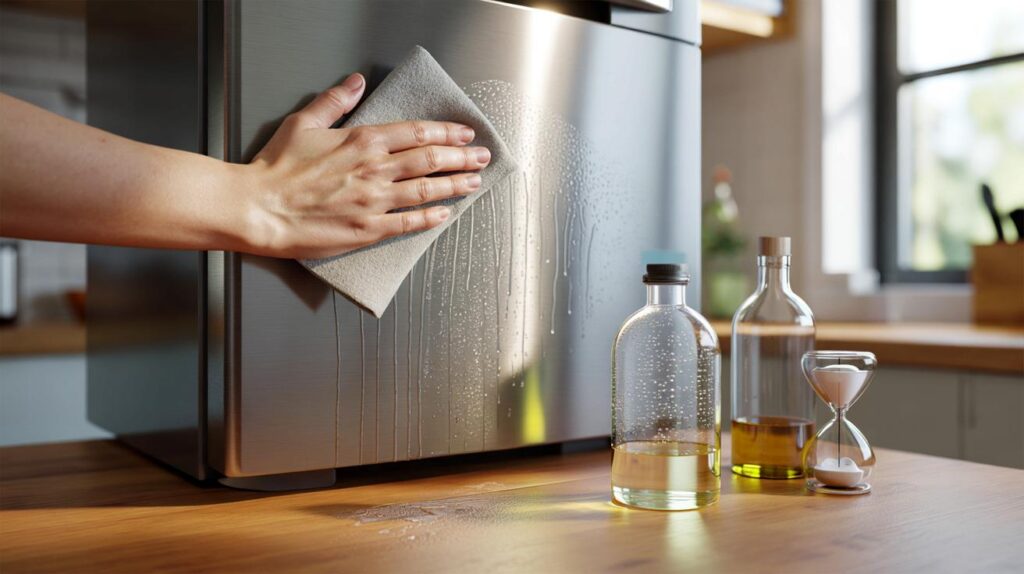
A quiet shift is sweeping British kitchens as families bypass pricey bottles and turn to humbler tools for gleaming appliances.
With prices creeping up on supermarket cleaning aisles, a pared‑back method is moving from relatives’ notebooks into everyday routines. Two cupboard staples, measured with kitchen precision, now promise a quick way to banish fingerprints, revive shine and cut household spend without harsh chemical fog.
Why home cooks are switching
Stainless steel looks premium until smudges, water marks and stray grease dull the surface. Many households reach for branded stainless cleaners, yet receipts add up. Several readers report spending between £18 and £42 a year on sprays. A simple mix—125 ml white vinegar and 125 ml olive oil in a 250 ml spray bottle—has resurfaced as a reliable alternative. It leans on acidity to lift residue and a light oil film to mask fine scratches and resist fresh prints.
Two common pantry measures—125 ml vinegar + 125 ml olive oil—clear prints in about 3 minutes and leave a discreet protective sheen.
What the science says
Vinegar’s weak acetic acid loosens mineral deposits and breaks down light grease. Stainless steel is an alloy with a chromium oxide layer that resists rust; acidity at household strength does not harm it when wiped promptly. Olive oil sits in the grain, boosting reflectivity and smoothing the look of micro-abrasions. Because oil and water repel each other, the mixture separates: it must be shaken hard before each use to emulsify briefly.
How to do it safely
Exact measures and timing
- Measure 125 ml white vinegar and 125 ml olive oil into a clean 250 ml spray bottle; add a funnel if needed.
- Shake for 30 seconds to create a temporary emulsion.
- Spray from about 15 cm. Cover the panel evenly without drenching seams or electrics.
- Wait 2–3 minutes for everyday marks; up to 10 minutes for stubborn fingerprints.
- Wipe along the grain with a clean microfibre. Buff a final pass with a drop of pure oil on a dry cloth for extra resistance.
Always wipe with the grain. Cross‑grain strokes can highlight lines and leave faint swirls that catch the light.
Does it beat shop-bought sprays?
| Option | Typical quantity used per clean | Estimated cost per clean | Notes |
|---|---|---|---|
| DIY mix (125 ml + 125 ml) | 10–20 ml | £0.06–£0.12 | Assumes olive oil £6/L and white vinegar £0.60/L |
| Stainless cleaner spray | 10–20 ml | £0.20–£0.60 | Assumes £3–£9 per 500 ml bottle |
On weekly use, the home mix can trim a few pounds over a year for a typical household, and more in busy kitchens. The result is similar: a brighter panel, fewer visible streaks and less time chasing fingerprints.
Where it works—and where it doesn’t
- Appliances: fridge doors, dishwashers, oven fascias and stainless trim respond well.
- Sinks: fine, but rinse and dry thoroughly; leftover oil can catch crumbs.
- Cooker hoods: use sparingly and keep oil away from filters; buff until residue-free.
- Don’ts: do not spray onto natural stone, concrete worktops or grout lines; vinegar can etch or weaken sealers.
- Coated steel: some “fingerprint-proof” finishes carry clear coats; test a tiny, hidden patch first.
Keep liquids away from switches, displays and door seals. Spray onto the cloth first when working near electrics.
Expert techniques that sharpen results
Use the right cloth
A tight-weave microfibre lifts residue without scratching. Paper towels can shed lint that smears the finish. Reserve one cloth for the vinegar pass and another for the oil buff; mixing them reduces effectiveness.
Handle stubborn spots
For stuck-on specks, dab the area with the vinegar side, wait 60 seconds and loosen with a soft, damp cloth. If needed, sprinkle no more than 1 tablespoon of bicarbonate of soda onto the cloth, not the steel, and work gently with the grain. Rinse the cloth and rebuff with a drop of oil. Avoid gritty powders and scouring pads.
Set a realistic cadence
High-touch zones like fridge handles may need a quick wipe daily. Full-panel polishing once a week suits most households. A light, regular routine prevents the need for heavy scrubbing later.
What people notice first
Smell fades quickly. Vinegar evaporates in minutes, leaving only a clean, neutral trace. The thin oil layer reduces fresh prints for a few days, especially on brushed steel, and softens the look of hairline scuffs. Mirrors shine is not the aim; a uniform, low-gloss clarity looks modern and hides handling better under daylight.
Questions you’re asking right now
Will oil turn rancid?
Not if the film is thin and wiped dry. A final buff until the cloth glides leaves little residue. If a surface feels tacky, you used too much—go again with a vinegar‑damp cloth and dry buff.
Can I swap ingredients?
Sunflower or rapeseed oil work in a pinch, though they may feel slightly heavier. Cider vinegar can replace white vinegar but has a faint aroma at first. Do not use bleach or ammonia with this method; they can pit or mar steel and clash with vinegar.
What about warranty advice?
Most appliance manuals allow mild detergent and soft cloths. This mix remains gentle, but brands differ. If you have a special coating, always patch‑test behind a handle or along a bottom edge.
Quick checklist before you start
- Shake the bottle every time; the mix separates in minutes.
- Work top to bottom to catch drips.
- Wipe with the grain; buff with a dry cloth at the end.
- Keep liquids off seals, hinges and electrics.
- Store the bottle capped and label it clearly.
Why this old fix fits a modern moment
Households are trimming small, regular costs first. Repurposing two common ingredients reduces plastic, avoids propellants and keeps routines simple. For parents and pet owners, using food‑safe components brings peace of mind around little hands and paws. The habit also cuts cupboard clutter: one bottle for the job beats a row of niche sprays.
For readers who enjoy tinkering, try a side‑by‑side test. Tape a vertical line down your fridge door. Clean one side with your usual spray, the other with the 125 ml + 125 ml mix. Note drying time, streaks under daylight and how quickly prints return over 72 hours. The simple experiment shows whether the tweak suits your home, your water hardness and your appliance finish.
If you care for commercial kitchens or large households, scale the recipe to a litre bottle and decant as needed. Train the family to wipe handles along the grain, not across. Small habits, repeated often, keep steel looking sharp and save minutes on deep cleans later in the week.



Just tried the 125 ml + 125 ml mix on my fridge—3 minutes and it actully worked. Who knew vinegar + olive oil would beat the fancy spray?