
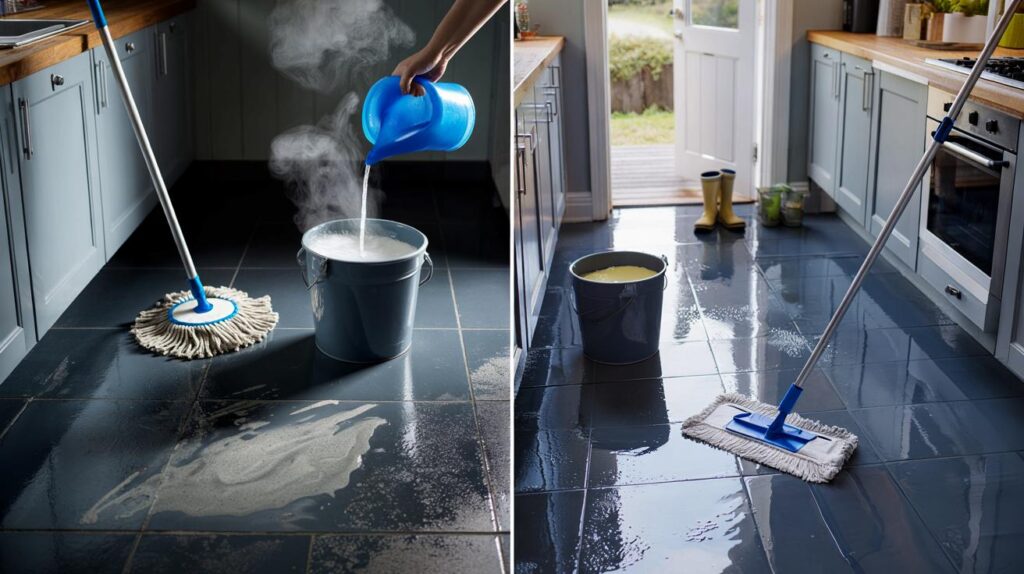
As rain and mud return, household floors take a beating and budgets creak. Shiny tiles seem strangely harder to keep bright.
A new season means more grit underfoot, more mopping, and more frustration when the kitchen or hallway still looks streaky. Many households reach for hotter water and a bigger glug of cleaner. That instinct feels right. It is the very thing that’s dimming the shine and nudging up bills.
The daily habit that leaves your tiles dull
Most homes equate “more product and hotter water” with better cleaning. The opposite happens on hard floors. Extra detergent rarely rinses away fully. Each mop leaves behind a whisper-thin film. Dust clings to that residue, traffic grinds it in, and the surface turns matte. Very hot water accelerates the problem by evaporating quickly, drying the product on the tile rather than lifting it into the mop.
Too much detergent and very hot water create a grey, sticky film that traps dirt and kills the shine.
Why it builds up
Floor cleaners use surfactants to loosen grime. Used sparingly, they suspend dirt so the mop can carry it off. Overdosed, they outstay their welcome. A few molecules remain after every pass. Multiply that by dozens of autumn mops and the floor looks tired even when freshly cleaned.
Why hot water makes it worse
Scalding water feels powerful, yet it evaporates before the mop can lift residue. Minerals from very hard water add to the hazy film, especially on dark, glazed tiles that show every streak. The hotter the bucket, the faster the drying, the more residue you see under morning light.
How much this mistake costs you by spring
The financial hit hides in plain sight: overdosed liquids, extra hot buckets, “rescue” products, and premature grout care. A simple, conservative example for a three-person home that mops three times a week shows how costs climb.
| Item | Assumption | Annual waste |
|---|---|---|
| Overdosed floor cleaner | +30 ml per mop, 3 mops/week, £6/L | ≈ £28 |
| Heating very hot mop water | 0.29 kWh per bucket at 30p/kWh, 3/week | ≈ £13.60 |
| Extra rinse cycles (also hot) | Second hot bucket used each time | ≈ £13.60 |
| Film removers bought to fix dullness | Two bottles a year | ≈ £12 |
| Premature grout re-seal | One extra kit due to chemical stress | ≈ £20 |
| Additional mop heads | Two extra replacements | ≈ £8 |
| Total (illustrative) | ≈ £95 |
The time cost is real too. Many households spend about 90 minutes a week on floors in wet months. Over a year, that nears 72 hours. If the finish still looks dull after all that effort, the cleaning routine, not the tiles, needs a rethink.
Practical fixes that bring back the sheen
You don’t need specialist potions or marathon cleaning days. A few small switches restore clarity and tame costs.
- Measure, don’t guess: follow the capful dosage on the bottle for a 5 L bucket.
- Use warm, not hot: aim for hand‑warm water to slow evaporation and improve lift.
- Two‑bucket method: one for detergent, one for clean rinse. Wring thoroughly between passes.
- Refresh the water when it turns murky; dirty solution just spreads residue.
- Microfibre mop heads grip fine dust better than cotton loops and rinse cleaner.
- Keep entry mats deep and clean: knock off grit before it reaches the tile.
Dose low, keep water warm, and rinse the mop head often. That simple trio lifts residue and revives colour.
What not to use
White vinegar can help dissolve a detergent film on ceramic or porcelain, but it can etch marble, limestone, and some cement tiles. If you have natural stone, use a pH‑neutral stone cleaner only. Steam mops can force moisture into micro‑cracks or weak grout; use them sparingly on sealed, compatible surfaces.
A weekend reset to clear the haze
If the floor already looks flat and streaky, run a one‑off reset. Work in small sections and test first on an inconspicuous area.
- For ceramic or porcelain: add 1 cup (250 ml) of white vinegar to 5 L of warm water. Mop lightly, then follow with a second bucket of plain warm water to rinse. Dry with a clean microfibre cloth.
- For natural stone: skip vinegar. Use a pH‑neutral stone cleaner at label dosage. Rinse with warm water and dry immediately.
- Grout refresh: scrub joints with a soft brush and a mild, pH‑neutral solution. Avoid bleach unless tackling mould, and rinse thoroughly.
Why moderation works better than muscle
The chemistry, simplified
Surfactants need the right concentration to break soil bonds. Above that sweet spot, they cling to the surface instead of carrying dirt away. Warm water keeps them mobile long enough for the mop to collect them. Excess heat dries them where they sit.
Indoor air and safety benefits
Lower dosing cuts odour build‑up and reduces the slippery feel that residue leaves behind on glossy tiles. That matters in busy hallways and kitchens where spills and sprinting children mix poorly with slick films.
Extra context you can use
Product labels assume soft or moderately hard water. If you live in a hard‑water postcode, try a fraction less detergent and prioritise the second rinse. If streaks persist, the issue may be water minerals rather than dirt; a quick wipe‑dry afterwards prevents spots on dark tiles.
If you want to quantify savings at home, keep a tally over four weeks: number of mops, ml of cleaner used, and whether you heated the bucket. Multiply to a yearly figure and match against your tariff. A small kitchen that switches from scalding water and guesswork dosing to warm water and measured caps can cut product use by 30–50% and trim energy for bucket‑heating to near zero.
For landlords and tenants, a residue‑free routine also protects deposits. Film build‑up exaggerates wear and makes even new tiles look tired during inspections. A measured clean and a quick dry buff with microfibre leave the surface clear under bright light and camera flash.



Just measured the capfuls and switched to hand‑warm water—streaks vanished after one mop. My hallway actually shines again, cheers for the clear advice! 🙂
Headline says £92, but your table totals about £95. Rounding, or did I miss a line item?