
Bathrooms are steamy again, bills are rising, and humble shower curtains face their toughest season in years. Mould creeps in as routines slip.
As the damp sets in, many households reach for the washing machine to blitz soap scum and odours. That quick fix often does the opposite. One common habit quietly strips waterproofing, encourages musty smells and shortens a curtain’s life by months.
Why the washing machine ruins the curtain faster than you think
A spin cycle looks convenient. It isn’t kind to coated textiles. Most shower curtains rely on a thin hydrophobic layer—often polyurethane or acrylic—to shed water. Detergents and friction attack that film. Warm water swells fibres. High-speed spins rub the surface. After a few washes, water no longer beads; it clings.
In practice, three things do the damage. First, alkaline detergents lift oils and the very finish that keeps splashes out. Second, the drum scours the surface at hundreds of rotations per minute, causing micro-abrasion. Third, retained moisture lingers in creases, which fuels that familiar black or orange staining at the hem.
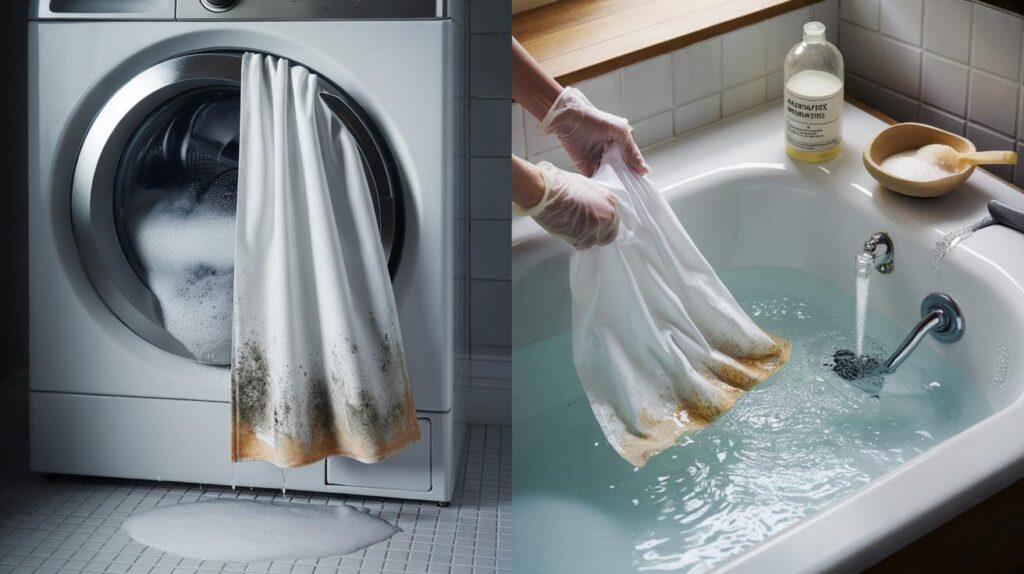
Skip the laundry cycle. Detergent and drum friction erode the waterproof layer, then stains appear faster and smells linger longer.
You’ll notice tell-tale signs. The curtain turns tacky. It starts to curl. Water seeps through, dotting the floor. A sour odour follows. Replace-and-repeat becomes a habit, not a solution.
The no-detergent care routine: vinegar first, bicarbonate second
You can clean deeply without powder, pods or fabric softener. A two-step soak-and-spot method keeps waterproofing intact while dislodging soap film, limescale and hidden biofilm.
What to use and how much
- 1 litre of white vinegar (household strength, 6–8%)
- 2–3 tablespoons of bicarbonate of soda
- 3–5 litres of lukewarm water (around 35–40°C)
- A soft sponge or a gentle brush
- Rubber gloves if your skin is sensitive
Step-by-step procedure
The mantra is simple: vinegar soak first to break the film and smells, bicarbonate paste second to lift what’s left—never both at once.
Don’t mix vinegar and bicarbonate in the same bath. They neutralise each other and fizz away cleaning power. You’ll work harder for a weaker result.
Which fabric, which risks: what the label doesn’t spell out
Not all curtains behave the same. Some tolerate occasional machine rinses. Coated textiles and PEVA benefit most from hands-on care.
| Material | Machine-safe? | Risk to waterproofing | Best care |
|---|---|---|---|
| PEVA/PVC | No | High: surface scuffs and sticks | Vinegar soak + bicarbonate spot clean |
| Polyester with PU coating | Rarely | Medium–high: coating thins with detergent | Hand clean monthly; avoid powder |
| Fabric with separate liner | Sometimes (liner no) | Low on fabric, high on liner | Wash fabric; hand clean liner |
| Nylon | No | Medium: heat and friction cause curl | Lukewarm soak; slow dry |
Moisture control beats mould: daily habits that take 60 seconds
Clean once a month. Maintain daily. Small moves keep spores from taking hold and soap film from hardening.
- After each shower, pull the curtain fully open so air circulates end to end.
- Wipe the bottom 20 cm with a microfibre cloth; this is where water pools and stains start.
- Run the extractor fan for 15 minutes or crack a window for the same time.
- Lift the hem clear of the bath edge; don’t leave it sitting in water.
- Rinse off visible soap streaks with warm water before they dry.
- Slide the rings along the rail twice to prevent binding and trapped moisture.
These habits extend a curtain’s life from months to well over a year for many homes. They also protect grout, paint and timber from excess humidity.
When to replace, and how to buy one that lasts longer
Sometimes a curtain has done its duty. Replace if the coating feels sticky after cleaning, if mould spots return within days, or if seams crack. Aim for a heavier hem that hangs straight, as weight helps water shed. Look for PEVA without strong plastic odour, or polyester with a PU finish if you prefer a fabric look.
Expect to pay £8–£25. A simple upgrade pays back: a weighted hem (50–80 g), rust-resistant rings and a removable liner each add longevity. Skip bleach-based routines; they weaken fibres and can pit metal fixtures.
Common pitfalls that sabotage the clean
- Hot water above 40°C warps some plastics; keep the soak lukewarm.
- Abrasive pads leave dull patches that grab dirt; use soft tools only.
- Fragranced fabric softeners leave residue; they trap moisture and odours.
- Leaving the curtain bunched encourages crease mould; dry it fully extended.
Extra context: costs, timings and a quick mix guide
How much solution do you need? A standard bath uses about 4 litres of soak for one curtain. A 1:4 mix (1 litre vinegar to 4 litres water) creates a strong yet safe bath that loosens limescale and soap scum without stripping coatings. One bag of bicarbonate of soda (500 g) covers spot cleaning for a year in most homes.
Time it. The entire routine—unhook, soak, spot, rinse, rehanging—takes around 45 minutes of clock time, with under 15 minutes of hands-on work. That monthly habit defeats the cycle of machine washing, coating failure and early replacement. It also cuts slip risks from puddles that form when a tired curtain starts to weep.
If your water is hard, adjust the plan
Hard water cements soap film to plastic. Add five minutes to the vinegar soak and wipe the rail and rings at the same time; mineral dust from the rail often transfers to the top seam and seeds new streaks. In very hard-water areas, consider a quick post-shower rinse of the curtain with deionised water from a spray bottle to reduce spotting.
For renters, a removable fabric-and-liner set offers flexibility. Wash the fabric outer when it picks up bathroom scents. Hand-clean the liner by the vinegar-then-bicarbonate rule. Keep a spare liner in the cupboard so you can swap and dry at leisure without leaving the bath exposed.



Brilliant guide—had no idea the drum scours the coating. Vinegar-first then bicarb makes sense. Thanks!