
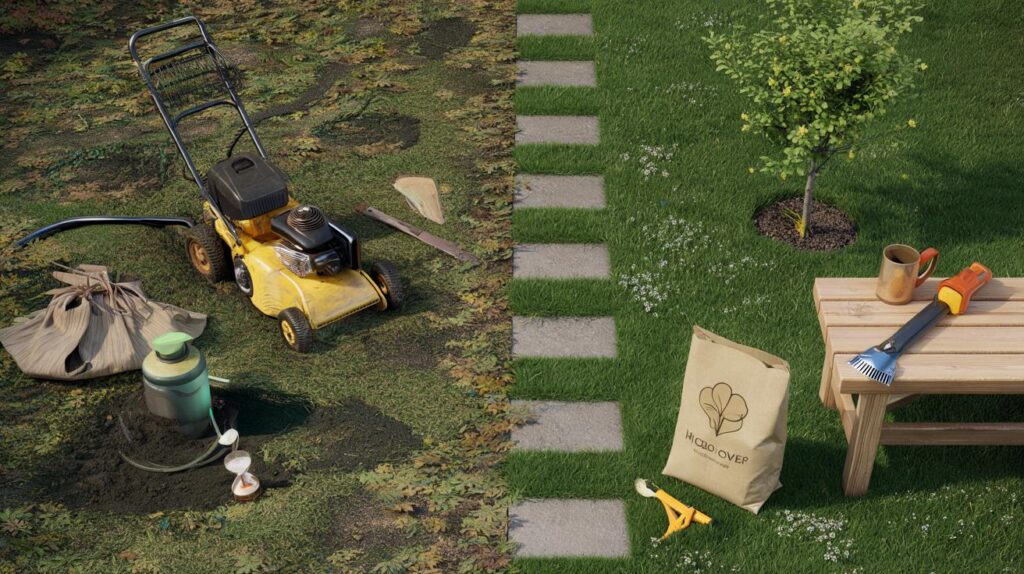
Wet leaves, bald patches and short days return, along with the chores that swallow your weekends and your water meter’s patience.
Across the country, designers and maintenance crews report a shift: householders are swapping thirsty grass for micro‑clover, a compact, soft groundcover that stays green, needs little cutting and copes with erratic rain. The change promises calmer weekends and a garden that holds up when summers bite.
Why micro‑clover is winning over professionals
Traditional lawns struggle in autumn. Leaves smother blades, muddy soil compacts underfoot and late cuts risk scalping. Micro‑clover shrugs off these pressures. Its small leaflets form a dense, forgiving carpet that covers thin patches quickly and bounces back after footfall.
In dry spells, clover keeps its colour far longer than ryegrass. It also feeds the soil. As a legume, it fixes atmospheric nitrogen and shares it with neighbouring plants, so borders and orchard strips look brighter without routine fertiliser. Fewer inputs mean fewer bills and less storage of chemicals in sheds.
Two light trims a year, no fertiliser, and seed at just 10–15 g per square metre: the maintenance maths looks very different.
There is another gain: life. Clover flowers bring pollinators, and the cool, low canopy shelters beetles and other small allies that tidy decaying leaves. Many landscapers now recommend a micro‑clover‑led mix where a tidy, resilient sward matters more than show‑bench stripes.
The numbers that matter
Householders want clarity before switching. Here is a snapshot that contractors use in quotes and site visits.
| Feature | Conventional lawn | Micro‑clover |
|---|---|---|
| Mowing per year | 16–22 cuts in a typical season | 2–4 light trims |
| Water use in dry weeks | Regular irrigation often needed | Usually none once established |
| Fertiliser | 2–3 applications/year | Not required |
| Seed rate | 25–35 g/m² lawn seed | 10–15 g/m² micro‑clover |
| Upfront seed cost | ~£0.60–£1.20/m² | ~£1.00–£1.50/m² |
| Establishment window | Spring and early autumn | Late summer to autumn; in mild areas into early November |
| Weed pressure | Gaps often invite invasion | Dense cover suppresses many weeds |
| Wildlife value | Limited | High for pollinators |
For many households, the swap trades 30–50 hours of annual mowing and tidying for minutes of trimming and occasional edging.
How to make the switch without tears
Pick the right week
Sow when soil stays above 10°C and rain looks likely. Late August to October suits most gardens. In southern and coastal areas, early November still works if ground remains warm.
Prepare the surface well
Success depends on clean, lightly worked topsoil. Remove the thatch and weeds, then create a fine, firm tilth 2–3 cm deep. Rake level so seed contacts soil evenly.
Sow and settle
- Broadcast 10–15 g of micro‑clover seed per square metre with a hand spreader for even coverage.
- Lightly rake, then press seed into the surface using a roller or a flat board underfoot.
- Water only if the week turns dry; keep the surface just moist for 10–14 days.
- Keep traffic low for six to eight weeks. Use boards for crossing if needed.
First trim when the stand reaches 8–10 cm; snip to 5–6 cm. This encourages horizontal growth and a tighter weave before winter.
Month by month: what to expect
Autumn: seedlings thicken rapidly and occupy bare patches left by old turf. Leaves that land on clover lift easily with a light rake or blower as stems spring back after sweeping.
Winter: colour holds in most regions, with a slight bronze tint in severe cold. No feeding is needed. Avoid heavy, repeated footfall on saturated ground to prevent compaction.
Spring: the sward wakes early. Trim once to keep it level and to check daisies or opportunistic annuals. Edge paths for a crisp line.
Summer: foliage stays green through dry spells on ordinary soils. A second light trim keeps the carpet neat. Where flowers appear, you can mow before peak bloom to moderate bee activity near play zones.
Watch‑outs and workarounds
- Bee activity rises when clover flowers. Near play equipment, time trims before warm weekends.
- Deep shade slows clover. In north‑facing or under dense trees, mix 20–40% fine fescue for cover.
- High‑impact sport scuffs any surface. Use stepping stones for desire lines and add reinforcement mesh on narrow gateways.
- New dogs and small puppies may mark patches. Quick rinses and a slightly higher cut help recovery.
- Clothes can pick up green rub when damp. Keep early‑morning play to hard surfaces until dew lifts.
Design ideas that make small spaces sing
Micro‑clover frames paths and terraces neatly. In tiny gardens, set it between sawn stone slabs to create a soft, modern grid. On banks, seed in sweeping arcs and spot‑plant tufting grasses for movement. Around fruit trees, a clover circle suppresses weeds and reduces hoeing to almost nothing.
For a richer look, some landscapers install a mosaic: clover fields punctuated with thyme pads, gravel pockets and tall containers. The mix adds texture while keeping maintenance low.
A quick time and cost check for your plot
Run a back‑of‑envelope test on a 200 m² garden. A typical grass lawn needs about 18 cuts from April to October. At 45 minutes per cut, that’s 13.5 hours, plus edging, raking leaves and watering in hot spells. Many households touch 40–50 hours by year’s end. Micro‑clover often trims to two short cuts of 20 minutes each, modest edging, and little or no irrigation. Over five years, the reduced mowing alone can free more than 150 hours, even before counting fuel, repairs and fertiliser.
Seed for a 200 m² switch at £1.30/m² lands near £260. Many families recoup that in one or two summers through lower watering and fewer cuts.
Extra detail for keen gardeners
Blends work. A common professional recipe is 60–80% micro‑clover with 20–40% fine fescues. The fescue threads through shaded corners while clover drives fertility and cover. Overseed light gaps each spring at 5 g/m². Avoid broadleaf herbicides; spot‑hand‑weed the odd dandelion after rain when roots lift cleanly.
Soil gains accumulate. As clover sheds roots and leaves, organic matter rises and structure improves. Worms return, drainage steadies and bare winter soil almost disappears. For households chasing both neatness and resilience, that combination is why more designers now open consultations with a simple question: shall we make the lawn easier this year?



Swapped to micro‑clover last fall and my weekends are back 🙂 Two light trims and that’s it. Bees showed up, so I cut before playdates near the patio. Paid roughly £1.30/m² and honestly it’s been worth every penny 😀
That £1.30/m² upfront feels steep. How long until it pays for itself if I still have to edge paths and spot‑weed daisies now and then?