
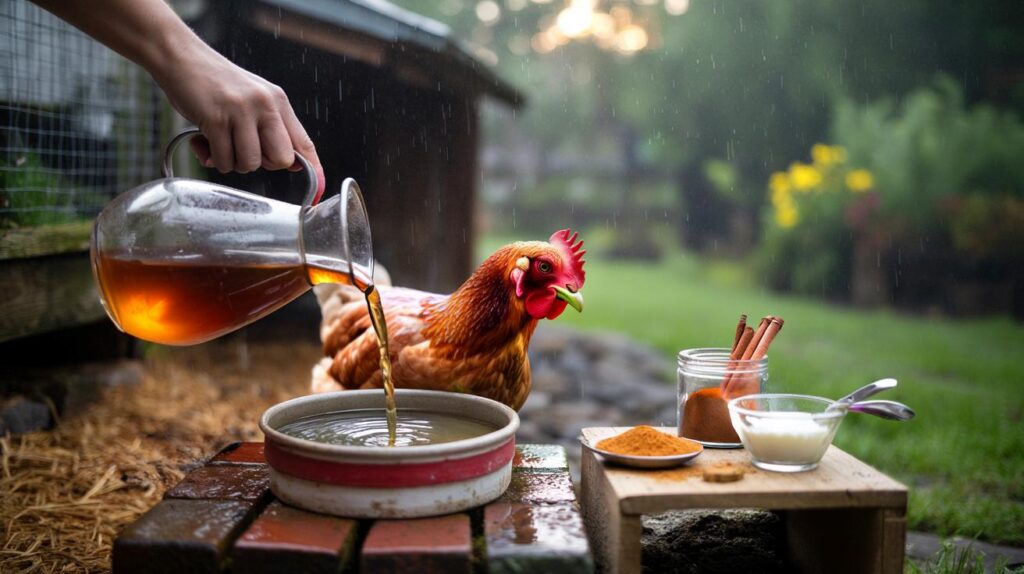
Weeks of rain have left runs soaked and tempers frayed. A forgotten pantry habit is back on the lips of keepers.
Across wet coops from Cornwall to Calais, backyard owners report a familiar nuisance: watery droppings and droopy hens. As threads light up on poultry forums, one low-cost fix is spreading again, lifted from grandmother’s notebooks and given a modern, measured twist.
What sparked the cinnamon talk this week
Persistent downpours can stress a flock. Damp bedding breeds bacteria. Feed goes musty. Birds drink more and peck at mud. Gut upsets follow. Keepers want a quick, gentle response that does not wipe out the feed budget or require a rush to the surgery for mild cases. That is where the cinnamon water routine returns, not as a cure-all, but as a short, practical intervention while you reset hygiene and watch for red flags.
The method at a glance
Use 1 teaspoon (about 3 g) of ground cinnamon per 1 litre of warm water at roughly 40°C. Infuse 10 minutes. Cool before serving.
- Ground cinnamon: 1 teaspoon (3 g) per litre of water
- Warm water: about 40°C; comfortable to the touch
- Optional: 1 tablespoon of plain yoghurt per litre
- Clean glass or ceramic jug, wooden spoon, and the usual drinker
Step-by-step mixing
- Heat the water until warm, not hot. Aim for finger-warm, never steaming.
- Whisk in the cinnamon. The liquid turns amber within seconds.
- Let it sit for 10 minutes to release aroma and active compounds.
- Strain if sediment worries you. Cool to room temperature.
- Pour into a scrubbed drinker and offer as the only water source for the day.
How often to give it
Offer the infusion for up to two days, replacing with fresh batches morning and afternoon if the drinker runs low. Watch droppings and behaviour after each drink. Most keepers who favour this approach use it two to three times a week in very damp spells, not every day. Resume plain water once droppings firm and birds perk up.
If droppings remain watery after 24–48 hours, stop the mix and contact a poultry vet. Prolonged diarrhoea risks dehydration.
Why cinnamon could help
Cinnamon contains cinnamaldehyde and related phenolics. These compounds show antibacterial and anti-inflammatory effects in laboratory tests. Poultry studies using cinnamon or its essential oil have reported modest shifts in gut flora and improved feed efficiency. A warm infusion may calm irritated guts and encourage drinking. The optional spoon of plain yoghurt adds live cultures that can support a balanced microbiome after a blip. The aroma also masks off-notes in water that some birds reject after heavy rain.
Evidence in poultry
Trials vary in dose and form, from powdered spice to essential oils in feed. Results often show small benefits for gut health markers and pathogen load. This points to cinnamon as supportive care, not a substitute for targeted treatments. Suspected coccidiosis, severe bacterial infections, or parasites need diagnosis and specific medicines. Treat cinnamon as a bridge while you clean housing, dry litter, and monitor birds.
Risks and red flags
- Do not use essential oils neat; they can irritate the mouth and crop.
- Avoid for chicks under four weeks unless a vet approves.
- Blood in droppings, hunching, or extreme lethargy could mean coccidiosis.
- Foul-smelling, green diarrhoea and no appetite point to infection.
- Rapid weight loss, purple combs, or refusal to drink require urgent care.
- Never sweeten the drink. Sugar can worsen gut upsets.
Clean water must remain the priority. Dehydration kills faster than a mild tummy bug.
Alternatives from the herb rack
No cinnamon to hand? Keepers often reach for thyme. A teaspoon of dried thyme per litre, brewed and cooled, brings a similar aromatic push with gentle antimicrobial action. Some use a splash of apple cider vinegar in clean water for short stints, though it does not suit metal drinkers. Oregano tea appears in many coops, yet the taste can put birds off. Activated charcoal has fans for occasional use, but it can bind medicines, so do not mix it with treatments.
Results people report within a day
When the upset is mild and weather-driven, many owners say droppings firm overnight and birds regain energy. The amber drink seems to nudge the gut back to rhythm while housing dries and fresh feed goes in. That pattern fits a common-sense story: reduce opportunistic bugs, keep fluids moving, and lower irritation.
Typical outcome: firmer droppings within 24 hours, normal faeces and behaviour within 48 hours, then return to plain water.
Costs and quantities
| Flock size | Water to prepare | Cinnamon | Yoghurt (optional) |
|---|---|---|---|
| 2–3 hens | 0.5 litre | 1.5 g (½ tsp) | ½ tbsp |
| 4–6 hens | 1 litre | 3 g (1 tsp) | 1 tbsp |
| 8–10 hens | 1.5 litres | 4.5 g (1½ tsp) | 1½ tbsp |
A 48-hour plan you can follow
- Morning, day 1: mix the infusion and offer it as the only drink.
- Midday: replace wet bedding; lift feeders; scrub perches and drinkers.
- Evening: check crops, combs, and droppings; remove damp feed.
- Morning, day 2: fresh infusion; scatter a small amount of dry mash.
- Afternoon: observe flock movement and pecking order; note any stragglers.
- Evening: if droppings look formed, switch back to fresh plain water.
Keeping runs dry after the rain
Prevention starts underfoot. Add deep, dry bedding in housing. Raise drinkers on bricks to stop scratching litter into the bowl. Site feeders under cover. Improve drainage with coarse sand or woodchips in high-traffic areas. Store feed in sealed bins. Air the coop on dry days. These small tweaks reduce the chance of gut flare-ups each time the weather turns.
Extra pointers that help owners act with confidence
Not all soft droppings indicate illness. Chickens pass caecal droppings several times a day; these are brown, sticky, and normal. Diarrhoea looks watery, often with splatter, and tends to come with messy vent feathers and an irritable, hunched stance. Track the difference before you intervene. Keep a notebook. Note colour, consistency, and frequency across the flock for two days. Patterns tell the story faster than guesswork.
Budget matters. At supermarket prices, 3 g of cinnamon costs pennies per litre. That makes this approach attractive for large backyard flocks. Pair it with strict hygiene and clear stop rules. If birds fail to improve, escalate. Cinnamon belongs in the pantry of practical keepers, not as a magic fix, but as one more measured tool when rain and mud unsettle the gut.



Worked for me—24 hours and firmer poops. Thanks!