
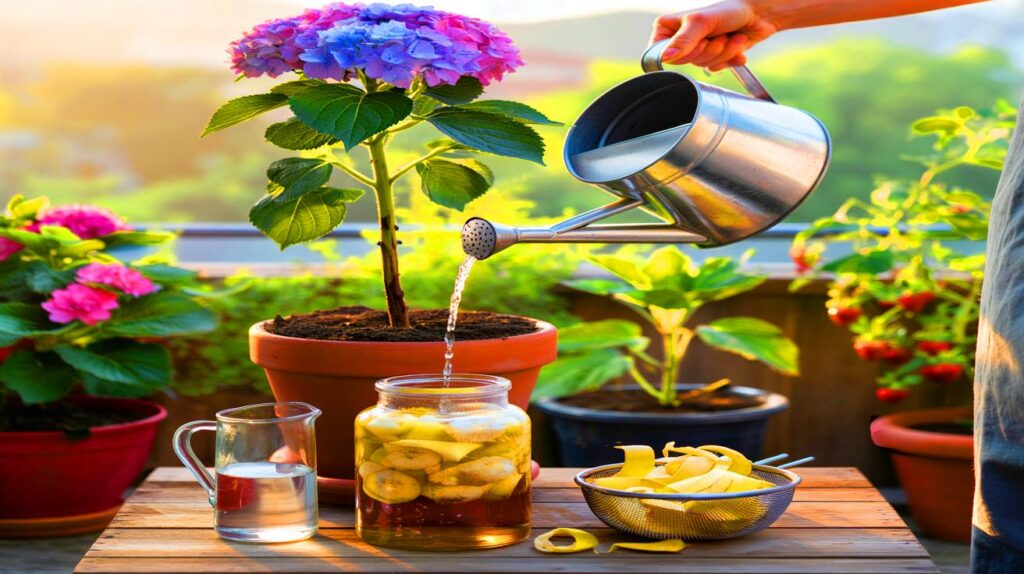
As fertiliser bills bite and green habits spread, an unlikely kitchen pairing is quietly seducing balcony growers and allotmenteers.
Across chat groups and community plots, people are swapping pricey bottles for a jar of vinegar, banana skins and two days of patience. The promise is simple: a home-brew liquid feed with real minerals, a predictable routine and results you can see in the leaves and the blooms.
Why gardeners are reaching for banana peels and vinegar
Households want cheaper, cleaner plant care. Banana skins carry potassium, phosphorus and magnesium in useful amounts. Vinegar speeds the release of those minerals by gently breaking down the skin. The result is a small-batch, low-cost fertiliser that suits pots, raised beds and tiny terraces.
Growers report sturdier stems, better flower set and greener foliage. The method fits a weekly watering rhythm, so busy people can keep feeding consistent. It also turns food scraps into value, which trims waste and cuts dependence on synthetic products.
Use a 48-hour soak and a 1:1 dilution with water. Feed weekly for acid-loving plants, fortnightly for neutral soils.
What the mix actually does in soil
Potassium helps plants manage water, stiffens stems and improves overall resilience. Phosphorus supports roots and flower initiation. Magnesium sits at the heart of chlorophyll, so it directly affects leaf colour and photosynthesis. Banana peel contains all three, in modest but meaningful amounts.
Vinegar, mainly acetic acid, brings two actions. It accelerates the breakdown of the peel, so minerals move into the liquid faster. It also nudges the soil solution towards the acidic side after you water. That shift suits hydrangeas, azaleas, camellias and strawberries. In chalky soils, the effect fades quickly as lime buffers the acidity.
Dilution matters. Undiluted vinegar can scorch roots and irritate leaves. Always water the soil, not the foliage.
The nutrient trio you’re tapping
- Potassium (K): supports water balance, disease tolerance and sturdy growth.
- Phosphorus (P): drives root development and flower formation.
- Magnesium (Mg): boosts chlorophyll production for richer green leaves.
How to make the feed at home
Step 1: Prepare the peels
Keep banana skins from unsprayed fruit if you can. Rinse, then cut them into small pieces to increase surface area. Use a clean glass jar or food-grade plastic container.
Step 2: Add the vinegar
Cover the pieces fully with white vinegar or apple cider vinegar. Seal the jar and leave it at room temperature away from direct sun.
Step 3: Wait 48 hours
Shake once a day. The liquid usually turns light amber as the peel gives up minerals. You don’t need a longer soak for everyday feeding.
Step 4: Strain and dilute
Strain out the peel. Mix the infused vinegar with an equal volume of water (1:1). Keep the strained solids for the compost heap or bury them shallowly around non-root crops.
Rule of thumb: 100 ml vinegar infusion + 100 ml water treats a 20–25 cm pot. Scale up for larger containers.
How and when to apply
Water the soil with the diluted feed once a week during active growth. Aim for moist, not saturated, compost. Keep the liquid off leaves and flowers to prevent spotting. In hot spells, feed early morning or late evening to reduce stress.
Try a patch test first. Pick one plant, feed once, then watch for seven days. Look for steady growth, firm stems and consistent leaf colour. If tips brown or leaves curl, increase dilution and extend the interval between feeds.
The plants that benefit most
| Plant | Typical soil preference | Suggested frequency |
|---|---|---|
| Hydrangea | Slightly acidic (pH 5.5–6.5) | Weekly during bloom period |
| Azalea and rhododendron | Acidic (pH 4.5–6.0) | Weekly in spring, then fortnightly |
| Camellia | Acidic (pH 5.0–6.5) | Fortnightly outside flowering |
| Strawberry | Slightly acidic (pH 5.5–6.5) | Weekly through fruit set |
| Tomato and pepper | Slightly acidic to neutral (pH 6.0–7.0) | Weekly at low dose during flowering |
Quick checks before you feed
- Soil type: chalky soils buffer acid; expect a milder effect and slower change in pH.
- Container size: small pots change faster; use a weaker mix to protect roots.
- Plant stage: seedlings prefer gentler feeds; halve the strength for young plants.
- Weather: reduce feeding in heatwaves or during drought stress.
- Hygiene: rinse the jar between batches to deter fruit flies.
What this method cannot replace
This liquid feed brings light, regular nutrition. It does not add bulk organic matter or long-term structure. For that, gardeners still rely on compost, leafmould or well-rotted manure. Many combine the banana-vinegar feed with a monthly mulch to keep moisture and soil life in balance.
Micronutrients vary with fruit origin and ripeness, so results differ. Commercial products offer standardised analysis. Home brews trade precision for price and flexibility. The balance suits small spaces and ornamental pots, where a gentle, weekly routine often beats a heavy dose once a month.
Risks and how to avoid them
Root scorch comes from acidity or overfeeding. Stick to 1:1 dilution, or 1:2 for young plants. Keep the liquid off foliage. In neutral or lime-rich soils, cut the schedule to once every two weeks to avoid drifting too acidic near the root zone.
Odour and flies can appear if solids sit too long or jars stay unwashed. Strain cleanly, cap the jar, and refrigerate the diluted mix for up to three days if you must store it. Use fresh batches for best consistency.
Test your potting mix with simple paper strips. Most ornamentals stay happiest between pH 5.8 and 6.8.
Extra ways to extend the benefits
A two-ingredient tweak can widen the nutrient range. Drop a teaspoon of unsulphured molasses into a litre of diluted feed to support microbial activity in the root zone. Skip this in cool, wet spells, as pots can turn sour if oxygen stays low.
For people managing larger beds, alternate weeks with a standard compost tea or a seaweed extract at label rates. You add trace elements without pushing acidity too far. That rhythm keeps flowers setting while roots stay lively.
A simple plan you can try this weekend
- Friday evening: chop two banana peels, cover with 250 ml vinegar, seal and shake.
- Sunday evening: strain, add 250 ml water, shake and label.
- Monday morning: water three 20 cm pots with roughly 150 ml each, soil only.
- Next Monday: repeat if leaves look turgid and new growth is steady.
People who garden in flats or rented homes often need low-cost, low-clutter routines. A jar, two peels and vinegar meet that brief. The method shines with acid lovers and fruiting pots. If your beds sit on chalk, keep the schedule lighter and watch pH. Over a month, you can judge the gains in blossom count, leaf colour and stem strength without buying anything beyond your weekly shop.
If you want to go deeper, track three numbers in a notebook: feed dates, dilution ratios and visual results. After four weeks, adjust one variable at a time. That small habit turns a viral tip into a personal programme that fits your soil, your containers and the plants you love to grow.



Tried the 48-hour soak + 1:1 last week on my azaleas—noticebly greener leaves already. Love that I can compost the strained bits too. Thanks for a clear, no-fuss guide!
Isn’t repeated vinegar use going to knock back beneficial microbes or earthworms over time? I garden on loam around pH 6.8; worried about acid swings and root burn even at 1:1. Any soil test data?