
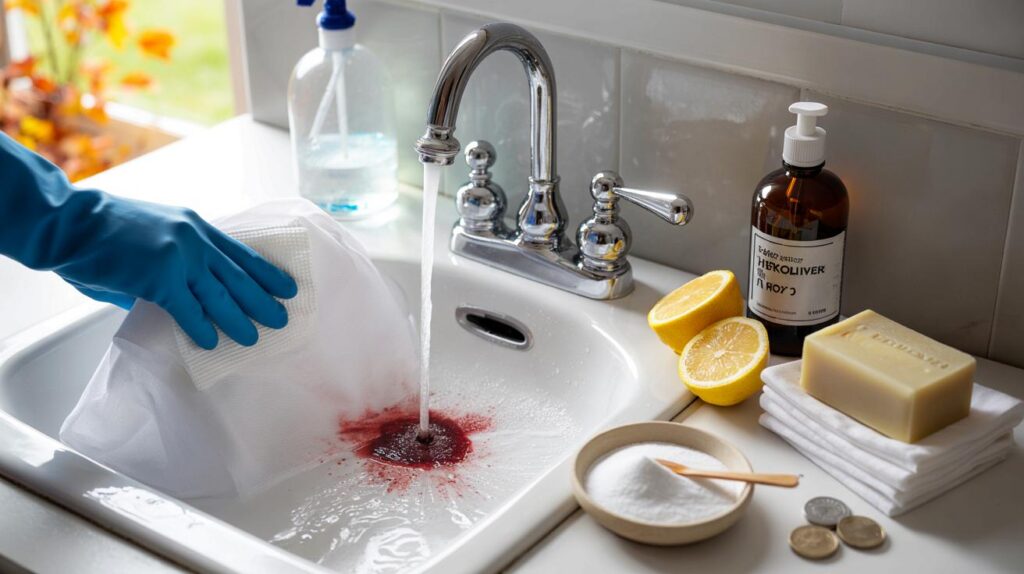
Autumn brings busy kitchens, scrapes on pavements and muddy pitches. Laundry bills rise while favourite fabrics face riskier days.
Households across the country are turning to gentler methods as energy prices bite and wardrobes last longer. Quick action, cold water and a few cupboard staples now set the tone for smarter stain control.
Why blood stains cling and why speed helps
Blood contains proteins that bind to fibres. Heat makes those proteins set. Time makes that bond stronger. That is why a fresh mark responds quickly, while a dried one resists. You win minutes, not hours, so act fast.
Move within five minutes. Rinse with cold water only. Blot, don’t scrub. Keep heat away until the mark fully vanishes.
Work from the back of the fabric so the flow pushes the stain out, not deeper in. Use running cold water, not a basin at first. Let the stream carry away loosened residue. Switch to a soak only after the visible red fades.
The cold-water rule that saves clothes
Cold water stops proteins from cooking into the weave. It removes a surprising amount before any product touches the fabric. It also protects colours and elastic fibres.
- Rinse the reverse of the stain under a tap for 60 to 90 seconds.
- Blot with white kitchen roll to check progress without colour transfer.
- Soak in fresh cold water for 10 to 15 minutes if the tint remains.
- Repeat the rinse-and-blot cycle until discharge slows.
What if the mark has dried
Rehydrate first. Lay the spot face down on a clean towel. Dab the back with a cloth soaked in cold saline (1 teaspoon table salt per 250 ml cold water). Leave five minutes. Rinse again. Only then bring in a helper product.
Four low-cost helpers you already own
Several gentle agents lift blood effectively without harsh bleach. Choose one based on fabric colour and age of the stain. Start with the mildest and scale up only if needed.
| Method | Best for | How to use | Wait time | Risk |
|---|---|---|---|---|
| Marseille soap (savon de Marseille) | Cotton, linen, durable colours | Wet with cold water, rub soap lightly on the mark, foam, rinse | 3–5 minutes | Low; test on very dark dyes |
| Lemon juice | Light colours, fresh or slightly set stains | Apply juice, gently blot, rinse cold, repeat once only | 5–10 minutes | Possible lightening on bright colours |
| 3% hydrogen peroxide | White or very pale fabrics | Drop onto stain, fizz, dab with cloth, rinse well | 2–3 minutes | Can bleach; patch test first |
| Percarbonate of soda | Old, stubborn marks on washable whites | Mix to a paste with a little cool water, apply, wait, rinse | 30 minutes | Not for wool, silk or acetate |
Keep hydrogen peroxide at 3% strength and reserve it for white or very pale fabrics. Rinse thoroughly after the fizz stops.
Protect the fibres: common mistakes that ruin fabric
Hot water locks blood into the weave. Boiling worsens the bond. Vigorous scrubbing roughens fibres and lifts dye unevenly. Strong chlorine bleach weakens elastic and damages prints. A tumble dryer bakes any trace left behind.
- Never start with hot or warm water.
- Avoid harsh bleach on protein stains.
- Blot rather than rub, especially on knits and silks.
- Air-dry flat or on a hanger until fully clear.
- Check under bright light before any heat cycle.
Ready-for-anything kit for autumn mishaps
Keep a compact stain kit where accidents happen: the bathroom, hallway or boot of the car. Small items save garments and time.
- Marseille soap bar, 100 g: about £2, long-lasting and gentle.
- 3% hydrogen peroxide, 200 ml: about £1–£2, opaque bottle.
- Percarbonate of soda, 500 g: about £3–£4, scoop included.
- Lemon or bottled juice: 30p–£1, quick brightener for lights.
- White microfibre cloths and kitchen roll: avoid colour transfer.
- Spray bottle filled with cold water for pitch-side or travel.
From duvets to trainers: tricky surfaces handled
Mattresses and upholstery
Lift fresh spots with cold-water blotting only. Apply a little Marseille soap foam on a cloth, not directly on the fabric. Dab, then blot with plain cold water. Dry with a fan. Avoid soaking the filling.
Carpets and rugs
Spritz cold water and tamp with a white cloth. Add a teaspoon of Marseille soap flakes in 250 ml cold water if needed. Work from the edge inward. Rinse by blotting with plain water. Finish with a dry towel press.
Trainers and sports kits
Rinse immediately after games. Use lemon for white mesh and Marseille soap for coloured synthetics. Remove insoles before treatment. Air-dry away from radiators to protect glue.
Health and safety notes
Patch test hidden seams for 60 seconds before any treatment. Wear gloves if your skin reacts to lemon or peroxide. Keep chemicals away from children and pets. Store peroxide in an opaque container and replace once opened for three months. Do not mix peroxide with vinegar or chlorine bleach. Fumes and reactions can occur in closed spaces.
When a professional helps
Seek a cleaner for antique silk, tailored suits or any dry-clean-only label. Point out the stain and its age. Ask for a protein-specific pretreatment. Decline heat pressing until the mark fully clears.
Two real-world playbooks you can copy
White cotton sheet, fresh mark, 10 minutes spare
- Rinse the back under cold water for two minutes.
- Blot; if pink remains, drip 3% peroxide and watch it fizz.
- Blot again and rinse thoroughly.
- Air-dry on a rack. Total cost: pennies. Energy use: minimal.
Navy T-shirt, dried spot, no bleach allowed
- Rehydrate with cold saline on the reverse for five minutes.
- Work Marseille soap into a light lather. Dab, wait two minutes.
- Rinse cold, repeat once. If needed, a single lemon dab on the residue.
- Shade-dry to protect colour. Heat only after a close inspection.
If any tint remains, skip the dryer. Heat makes the mark permanent and wastes every effort you’ve made.
Extra context that saves money and fabric
Protein-based stains respond best to cool, oxygen-rich methods. That means cold water to prevent setting, plus mild oxidisers to lift pigment. Percarbonate releases oxygen as it dissolves, which is why the paste works on old marks. Lemon lowers pH, loosening the hold on light fabrics. Marseille soap emulsifies the residue so water can carry it away.
Sunlight can brighten whites after treatment, yet it can also fade prints. Limit sun exposure to 20 minutes for coloured items. Combine only one active method at a time. Layering lemon and peroxide can over-bleach. Keep your kit simple, act quickly and reserve heat for the very end. That approach protects fibres, trims bills and keeps more clothes in circulation rather than in the bin.



Tried the cold-water rule on my son’s rugby kit and it actually worked—before I even reached for soap. Cheers for the step-by-step! Rinseing fast was key.