
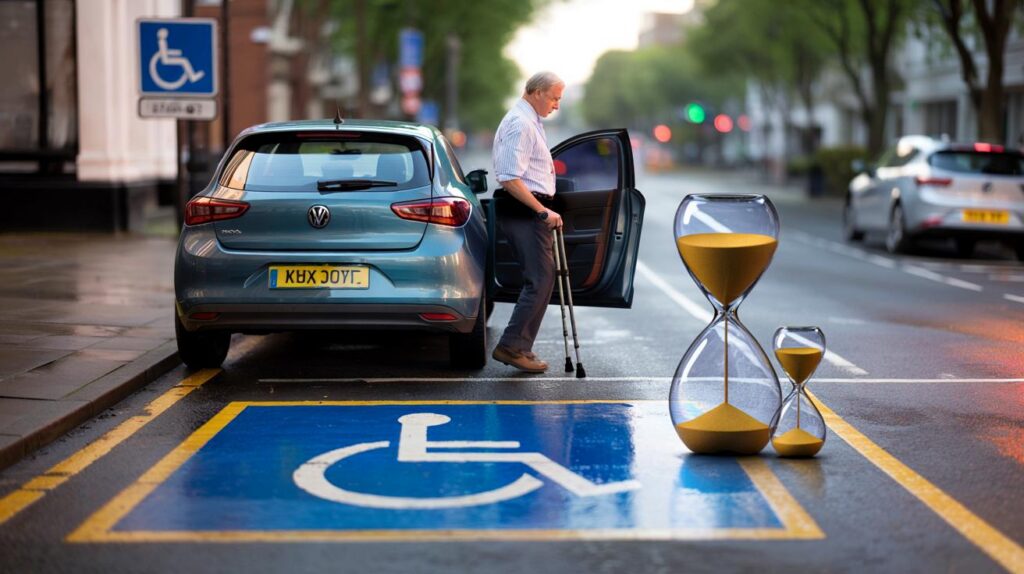
A growing debate could spare disabled drivers months of hassle, fees and forms. The row now turns on timing and trust.
Ministers face pressure to let some Personal Independence Payment claimants keep a Blue Badge for as long as their mobility award lasts. The proposal points to ten-year permits for people on light-touch PIP reviews, rather than today’s three-year cycle.
What prompted the fresh push
Liberal Democrat MP Marie Goldman wants councils to issue a Blue Badge for the same period as an indefinite mobility award on PIP. Many light-touch awards run for around ten years, reflecting conditions that are unlikely to change. Aligning the permit with the benefit would cut repeat form-filling and reduce costs for households managing disability.
Blue Badges currently run for up to three years and local authorities handle applications. More than 3.2 million people across the UK hold one, including around 271,966 in Scotland. The permit helps badge holders park closer to services and, in many areas, free of charge.
What the government says
Roads Minister Lilian Greenwood has signalled caution. She argues the three-year review gives councils a chance to check ongoing eligibility and keep records accurate. It also ensures the printed badge remains legible and up to date.
For now, badges still renew on a three-year cycle. Councils can process cases quickly where a condition is stable, and may choose not to reassess.
The minister also says once a council captures a person’s details on its system, renewals should get faster and feel less burdensome. That will matter to households that plan ahead to avoid gaps in eligibility.
What this means for you right now
The application or renewal can take up to 12 weeks. In many areas it moves much faster, often around 10 working days once a complete online application reaches the council and the Department for Transport issues the permit. Timing varies by local capacity and how quickly you provide evidence.
- Pay the local fee promptly to avoid delays.
- Attach clear, current evidence that supports eligibility.
- Respond quickly if the council asks for more information.
- Apply early, especially if you may need a mobility assessment.
| Nation | Standard fee | Usual badge length | Notes |
|---|---|---|---|
| England | £10 | Up to 3 years | Price set locally; processing times vary. |
| Scotland | £20 | Up to 3 years | Over 270,000 holders; local councils issue badges. |
| Wales | Free | Up to 3 years | No issue fee, but checks still apply. |
Set a reminder to renew at least 10 weeks before your badge expires. That reduces the risk of a gap in parking concessions.
Who qualifies and who might still qualify
Rules differ slightly across the UK. In Scotland, you qualify automatically if you meet certain criteria tied to disability benefits or sight impairment. Similar gateways exist in England and Wales. Always check with your local authority.
Common automatic routes in Scotland
- Registered as severely sight impaired, or a child confirmed eligible by a visual impairment team.
- Higher rate mobility component of Disability Living Allowance.
- PIP with at least 8 points for moving around, or 12 points for planning and following a journey.
- Adult Disability Payment at enhanced mobility (or equivalent points thresholds).
- Child Disability Payment at higher rate mobility.
- War Pensioners’ Mobility Supplement.
- Armed Forces Compensation Scheme tariff 1–8 with a permanent, substantial disability.
If you do not qualify automatically
You might still get a badge on clinical or practical grounds. Councils look at how your condition affects safe, effective travel over time.
- A substantial disability lasting at least 12 months that means you cannot walk at all, or are virtually unable to walk.
- Severe disability in both arms that makes parking meters unusable, and you drive regularly.
- Caring for a child under three who must stay close to a vehicle for treatment, or uses bulky medical equipment.
- A mental health condition that causes a lack of awareness of traffic danger when making journeys.
In Scotland, people who lack awareness of traffic risk should contact the council’s Blue Badge team for a paper form rather than apply online. Other councils may offer similar routes on request.
Where you can park and how to use your badge
- On-street meters and pay-and-display bays, often free of charge.
- Signed disabled bays close to key services and amenities.
- Single or double yellow lines where no loading restriction applies, usually for a limited time.
Always follow local signs and time limits. Do not block junctions, crossings or loading zones. In England and Wales, use the parking clock that comes with your badge; set the dial to your arrival time so wardens can check how long you have been parked.
How to apply and what to prepare
Apply through your local council. Many areas offer an online form. The council makes the decision and sets the local fee.
- A recent digital head-and-shoulders photo.
- Proof of identity, such as a passport, birth certificate or driving licence.
- Proof of address, for example a Council Tax bill or official letter, or consent to check the electoral register.
- Benefit evidence if you receive disability payments.
- Your National Insurance number.
- Current badge details if you are renewing.
Keep scanned copies of your documents. You can reuse them at renewal and cut down the time it takes to apply.
If a council turns you down, ask for a reconsideration and provide any details that may have been missed. You can reapply if your condition changes or new evidence becomes available.
Why the ten-year idea matters
Light-touch PIP mobility awards reflect long-term or progressive conditions. Matching a badge to that timescale could reduce stress for families, save repeated £10–£20 outlays, and ease council workloads. People would avoid re-submitting the same medical history every few years, which especially helps those with fatigue, pain or cognitive challenges.
There are trade-offs. A three-year cycle keeps photos clear, addresses current, and eligibility checks live. It can deter misuse and flag changes in circumstances. Ministers point to this as the reason to hold the line. That said, councils already have discretion to move quickly for stable conditions and, in some cases, to skip a fresh assessment.
For now, act on what you can control. Apply early. Pay the fee promptly. Supply clear evidence. If your condition is unlikely to change, say so in plain terms and explain how it affects your day-to-day mobility. Many applicants report smoother renewals once their data sits on the system.
If the ten-year model gains traction, expect guidance on how councils would keep records current, perhaps with light-touch checks or digital photo updates. Any change would need to protect against misuse while cutting needless bureaucracy for the people who rely on the scheme most.



Ten years please, not three. Definately overdue.
My Blue Badge seems to expire faster than my milk. Okay, not quite—but the three‑year merry‑go‑round is getting old. A 10‑year badge would save time, cash, and sanity for a lot of us.