
You’re six months out, the venue is booked, the group chat is chaos, and your mirror is… unpredictable. One week you glow, the next you’re googling “how to hide a chin spot in daylight”. Wedding planning brings spreadsheets, tastings and emotions that ricochet off the skin: late emails, salty canapés, flaky sleep, a bottomless prosecco here and there. The noise is loud, the advice louder. Quick fixes are tempting, but skin doesn’t sprint. It rehearses, adapts, settles. A good plan doesn’t punish. It protects your nervous system, feeds your barrier, and builds small habits that snowball. Breathe. We’re counting down in human time, not Instagram time.
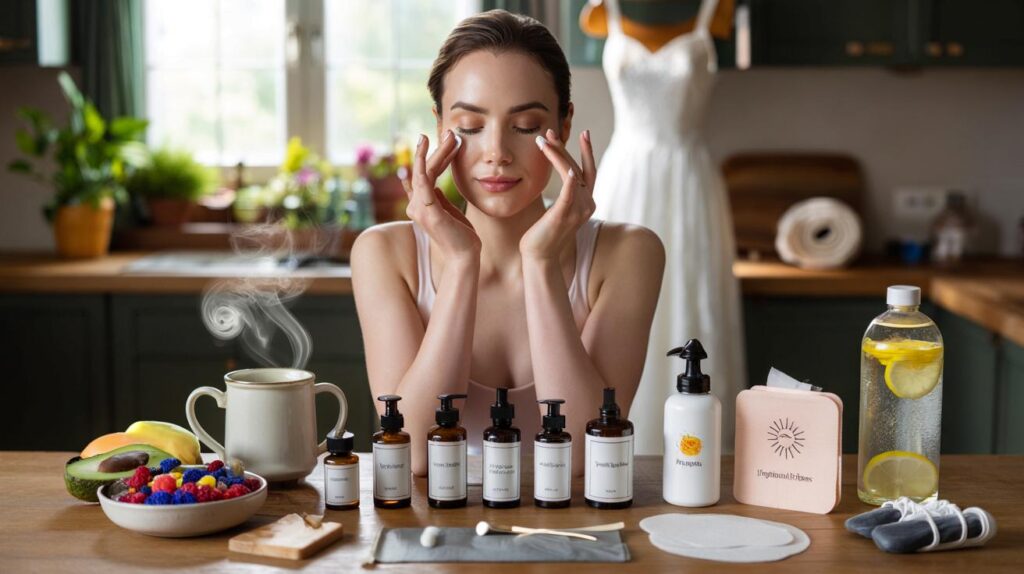
The kettle clicks in a chilly kitchen. She rubs serum into her cheekbones with ring fingers, watching the steam curl above the cup like a timeline. On the table: a scribbled list—photographer deposit, final numbers, his suit fitting—then, underlined twice, “No new products after 4 weeks”. Her phone buzzes, a message from her planner: “Cake tasting moved to Thursday.” She smiles, then catches the new freckle by her lip in the window reflection. It feels like a small milestone. Everyday life doesn’t pause just because you’re about to walk down an aisle. Somewhere between emails and eye cream, a plan clicks. One rule decides everything.
Months 6–4: Lay the groundwork for real, lasting glow
Start early enough to be boring. Skin runs on cycles, not miracles. The average renewal rhythm is roughly 28 days, and it slows with stress and age. Six months gives you time to introduce actives, find your skin’s baseline, and build the boring bits that actually change texture: sleep, protein, water, SPF. Book a skin consultation if you can—dermatologist, GP, or a reputable facialist—and map what to add and what to park. Create a “cut-off calendar” for experiments: new actives stop by eight weeks out, new treatments by six. From now on, everything is gentle, gradual, testable. **SPF is non-negotiable.**
Think of Amelia, 31, from Leeds. She started at six months with a stripped-back routine: cleanser, hydrating serum, moisturiser, SPF. Once her skin stopped yo-yoing, she introduced azelaic acid every other night for redness. After three weeks, she added a pea-sized retinoid twice weekly. By month five, she noticed smoother sides of the nose and fewer under-the-skin bumps. She tracked sleep too—aimed for seven hours, no heroics—and shifted wine tastings to earlier in the week. Skin changes are rarely fireworks; they’re quiet wins. Hair grows about a centimetre a month, nails around three millimetres. Bodies don’t read calendars, they read patterns.
Here’s the logic. You want collagen, an even tone, and a calm barrier on the day. Retinoids and peptides influence texture, but their effects are slow-burn and can be cranky at the start. Antioxidants buffer urban life—think vitamin C in the morning for environmental stress, niacinamide for pores and resilience. A simple omega-rich moisturiser supports the barrier when life gets spicy. Food helps mood helps skin: a palm-sized serving of protein at each meal stabilises energy, while colourful plants bring polyphenols that quietly reduce dullness over weeks. Your nervous system writes on your face. Keep it company. *Your skin is not a project; it’s a relationship.*
Months 3–1: Polish, protect, and stress‑proof without drama
Move into maintenance with a weekly template. Mornings: cleanse, antioxidant serum, light moisturiser, SPF 30–50. Evenings: cleanse, hydrate, then rotate actives—retinoid two or three nights, one gentle exfoliation night with lactic or mandelic acid, and rest nights focused on barrier repair. Patch-test everything on the jawline for a week. Book anything more intense—laser, peels—no later than three months out. Gentle bespoke facials can sit at weeks 12, 8 and 4 if your skin tolerates them. Keep a water bottle near your desk, schedule short walks, and guard your bedtime like it’s a vendor contract. **Sleep is your free facial.**
Common slips happen when nerves spike. People stack actives after a late night, then wonder why their barrier throws a tantrum. Don’t chase glow with scrubs; feed it with consistency. If you’re tempted to crash diet, pause—rapid changes can flatten your energy and trigger breakouts. Test your wedding makeup at least a month out, wearing it for a full day to see how your skin behaves after coffee, lunch, laughter, tears. If you’re tweezing or waxing brows, do it five to seven days before, not the night prior. Let’s be honest: nobody does that every day. Little boundaries will save you big fixes.
As one London skin specialist told me,
“Treat your wedding like a marathon taper. Do the work early, then land softly.”
Think about packing a calm-skin kit for the final fortnight and the day itself. Keep it simple and soothing. Power comes from knowing you’re prepared, not from doing more.
- Hydrocolloid patches for surprise spots
- Mini fragrance‑free moisturiser and lip balm
- Tinted mineral SPF and a clean sponge
- Blotting papers, cotton buds, micellar water
- Antihistamine tablets if your doctor says they’re safe for you
- Rescue snacks: salted nuts, a banana, water
Final week and day‑of: Hold the line and protect your peace
This is the week of light hands and early nights. Keep your routine identical to what worked last month: cleanse, hydrate, moisturise, SPF. Pause exfoliants three or four days before the ceremony. Keep retinoids only if your skin is fully at ease with them; drop to once or twice if needed. Nails happen three to four days out, tan at least 48 hours out, hair colour a week ahead. The most underrated move is breakfast with protein and salt on the morning—eggs on toast, smoked salmon, tofu and avocado. We’ve all had that moment when nerves steal your appetite and your face goes flat by noon. Eat. Sip water. Smile from your gut.
| Point clé | Détail | Intérêt pour le lecteur |
|---|---|---|
| Start six months out | Use skin cycles to introduce actives, test treatments, and set cut‑off dates | Reduces risk of last‑minute reactions and builds predictable results |
| Keep a weekly template | Rotate retinoid and gentle exfoliation nights, prioritise barrier rest | Makes consistency doable on busy weeks |
| Protect the final fortnight | No new products, pause strong acids, pack a calm‑skin kit | Stability equals glow and peace of mind |
FAQ :
- Can I start later than six months?If you’re three months out, focus on gentle consistency: cleanse, hydrate, moisturise, SPF, plus a mild exfoliant once weekly. Skip new in‑clinic treatments and stick with products your skin already knows.
- Is a facial safe in the week of the wedding?Only if it’s a treatment you’ve already tolerated well. Aim for a very gentle, no‑extraction facial five to seven days out, or skip entirely and do a hydrating mask at home.
- How do I calm a pimple the day before?Use a hydrocolloid patch overnight and a dab of benzoyl peroxide or azelaic acid on clean skin. Avoid squeezing. In makeup, colour‑correct with a tiny amount of green or peach, then build coverage in thin layers.
- What about retinol if I’m trying to conceive?Speak to your healthcare provider and consider pausing retinoids and high‑dose vitamin A. Swap for pregnancy‑friendly options like bakuchiol, azelaic acid, and niacinamide, and lean hard on SPF.
- What SPF sits best under makeup?Lightweight gel or fluid formulas, ideally mineral‑tinted if you’re prone to shine. Let it set for five minutes before foundation. Reapply with a mist or sponge and tinted SPF if you’ll be outdoors.



Loved the “Sleep is your free facial” reminder—printing it on my fridge 🙂 Starting my cut‑off calendar today and banning new products at T‑4 weeks. Thank you for the sanity!
Do we really need a full six months? I’ve done 8 weeks before and saw results. Feels a bit over‑engineered, tho definitly safer. What’s the main risk if I start later besides irritation?