
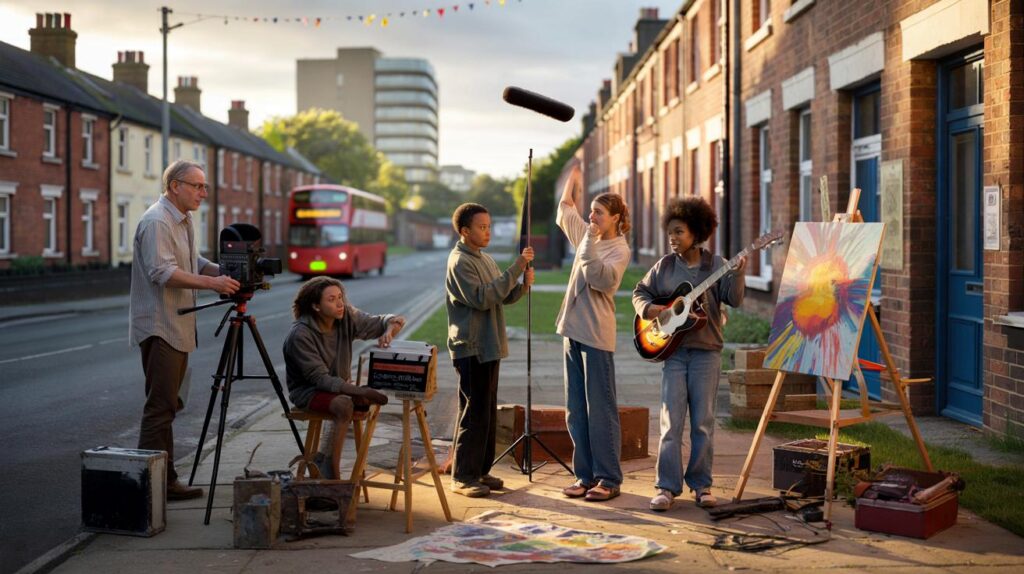
Across Britain, new voices are rising in film, music and books, shifting power, pride and pay towards overlooked neighbourhoods.
The mood is changing. Stars are using spotlights to open doors, not close ranks. The result is a burst of working‑class creativity that asks tougher questions and offers better answers than the loudest culture‑warriors.
From tears at the Emmys to action at home
Stephen Graham’s heartfelt awards speech resonated because it mixed gratitude with graft. He spoke about growing up in Kirkby and being lifted by people who believed in him. That humility is not just stagecraft. It mirrors a quiet shift across Britain’s arts, where working‑class talent isn’t treated as an exception but as a reservoir of ideas, audiences and revenue.
A generation from estates and terraces is collecting awards, commissions and long queues at the box office.
The trend is visible across galleries, theatres and broadcast schedules. It is also measurable. Programmes and prizes that ignored certain postcodes a decade ago now scout them. What feels new is the tone: less misery memoir, more wit, solidarity and clear‑eyed realism about money and power.
The new map of working‑class creativity
London’s Two Temple Place set the pace with Lives Less Ordinary, a show foregrounding humour and resilience rather than stereotypes of decline. On stage, Beth Steel’s Till the Stars Come Down sold out at the National Theatre while James Graham’s Dear England kept crowds talking about identity and belonging. In Salford, a modern retelling of Greek myths cast 25 local teenagers alongside pros in Gods of Salford, proving that talent pipelines work when they are paid and public.
Books and prizes
Literature is catching up. The Booker shortlist features writers from working‑class backgrounds, including Benjamin Wood’s Seascraper and Natasha Brown’s Universality. Brown’s novel interrogates privilege, ambition and the price of fitting in. Similar themes are landing abroad too, from Claire Baglin’s On the Clock to Lee Cole’s Fulfillment, both locked into the rhythms of low‑paid work.
Stage and screen
On television, Sophie Willan’s Alma’s Not Normal turned lived experience in Bolton into acclaimed comedy‑drama, collecting Royal Television Society trophies and a Bafta. The lesson is simple. When audiences recognise their streets, they stay for the stories.
Music’s messy argument
Music remains a battleground. Oasis’s reunion stirred a raw argument about class, crowds and who gets to party in city centres. Liam Gallagher’s on‑stage blast at Edinburgh officials riled some and thrilled many. The facts were fuzzy; the feeling was crystal. Meanwhile Stormzy’s route is quieter and surgical: scholarships for Black students at Cambridge through his #Merky Foundation with HSBC UK, and a £10m pledge over ten years for racial justice.
| Sector | Example | What changed | Impact |
|---|---|---|---|
| Galleries | Lives Less Ordinary, Two Temple Place | Curated working‑class voices on their terms | Drew new visitors; reframed the narrative around humour and grit |
| Theatre | Gods of Salford | 25 local young people cast with pros | Proof that paid access grows skills and audiences |
| Television | Alma’s Not Normal | Autobiographical realism with bite | Multiple awards; mainstream visibility for care‑experienced stories |
| Books | Universality; Seascraper | Working‑class authors placed on major lists | Signals a broader canon and stronger sales potential |
Only 8 per cent of TV workers come from working‑class backgrounds, yet targeted programmes show the dial can move fast.
Why this surge arrived now
The share of working‑class people in the arts has roughly halved since the 1970s. Fees rose. Free time shrank. Unpaid internships multiplied. The result was predictable: a thinner pool of experience on screen and on the page. The current correction began when established names chose to build ladders, not moats.
Shane Meadows and Stephen Graham proved audiences want stories anchored in ordinary streets. This Is England launched Vicky McClure. Graham has passed chances forward, backing Jodie Comer and new faces like Owen Cooper. Michael Sheen co‑founded A Writing Chance with New Writing North, a scheme that helped produce Tom Newlands, whose Only Here, Only Now became one of 2024’s talked‑about novels. Kit de Waal’s 2019 anthology Common People gave dozens of writers a first platform and permission to set the agenda.
James Graham went further, challenging television’s class gap in his McTaggart lecture. He argued for equity of opportunity as a matter of quality control, not charity. The industry cannot afford to reject its sharpest observers.
What has actually changed
- Paid routes in: more funded apprenticeships and bursaries to replace unpaid “work experience”.
- Talent spotting beyond London: festivals and scouts in Salford, Kirkby, Bolton and the North East.
- Editorial power shifts: commissioners and juries adding lived‑experience voices, not just panel diversity by postcode.
- Audience focus: risk‑taking backed by data on who buys tickets and streams shows.
The narrative fight: beyond Tommy Robinsons
Here is the rub. Figures like Tommy Robinson try to fix “the working class” as white, angry and permanently aggrieved. That caricature erases millions. The live work tells a truer story: Alina Akbar’s photography, Ishy Din’s plays, and Stephen Graham’s roles show a working‑class Britain that is plural, pragmatic and restless for better.
Working‑class Britain is Black, brown and white; Polish and Pakistani; Scouse, Geordie and Mancunian — and creative.
Politicians from several parties still reach for the flat cap myth. Cultural projects now push back with detail. The best of them reject both snobbery and cynicism. They swap swagger for solidarity. As Graham said while thanking family and friends, some jobs get done only together. That ethic is the point.
What you can do next
- Buy early for regional shows and exhibitions; advance sales guide future investment.
- Ask your local venue how many paid placements it funds each year; ask them to publish the number.
- Support bursaries that cover travel and childcare; those costs shut out talent fastest.
- Join a library reading group that picks debut authors; those choices move the needle on prizes.
- If you hire, drop degree filters for creative roles and trial skills‑first auditions or blind script reads.
Extra context to keep in mind
“Class” is a moving target. Income matters, but so do housing security, education routes and care duties. A single parent on a zero‑hours contract in a high‑rent city faces different creative barriers than a retired steelworker in a paid‑off terrace. Good policy sees the difference and funds both access and time.
Tokenism is a real risk. One season of gritty stories will not fix a pipeline. A practical rule of thumb helps: ask every project to publish two numbers each year — access spend and marketing spend. If access is less than a tenth of marketing, the mix is wrong. Flip that ratio for three years and you will feel the change on stage and on set.
You can run a quick budget test. If a regional network diverted just 1 per cent of a £100m content pot to paid training, that is £1m. At £5,000 per trainee for six months, 200 people get a foothold. If half stay, a single year seeds 100 careers. Repeat for three years and you build a class‑wide cohort.
This wave is not about saintly poverty or pious lectures. It is about craft, cash and credit. You see it when Oasis fights city hall and when Stormzy funds a degree. You see it when a National Theatre hit shares billing with voices from Bolton and Salford. You hear it when a Kirkby kid thanks the mates who kept him steady. That is the culture worth backing when the noisiest faces demand a fight.



Finally, a piece that treats working‑class culture as creativity, not a caricature. Stephen Graham’s graft > empty culture-war noise. More of this, plz.
Isn’t this just swapping one hero for another? What does “shape your kids’ world” actually mean beyond a headline—funded apprenticeships, or just vibes?