
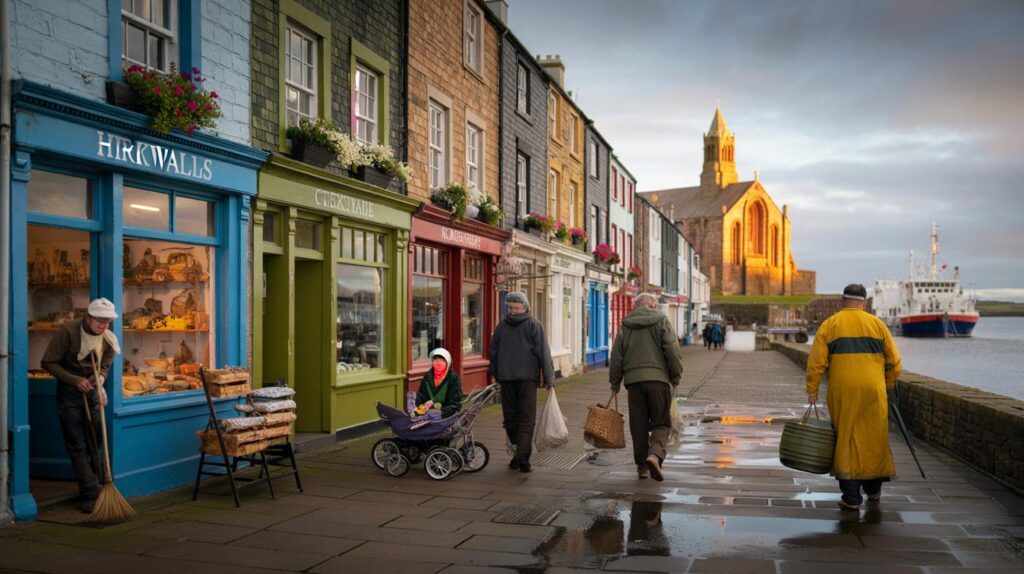
An island main street at the ocean’s edge keeps trading, glowing with colour, craft and a whisper of Norse grit.
In Orkney’s capital, Kirkwall, locals credit a compact high street for keeping the town’s pulse steady. A public vote in 2019 crowned it Scotland’s most beautiful. Six years on, the accolade still pulls people off ferries and cruise ships to see what the fuss is about.
A vote that became a promise
Kirkwall’s high street topped a national poll in 2019, taking 21% of the vote. That figure mattered to residents. It recognised a town centre shaped by people who trade, volunteer and keep their buildings smart. Shopkeepers still sweep doorways early. Window displays change with the weather and the ferry timetable. Visitors feel the welcome.
Named Scotland’s most beautiful high street in 2019, with 21% of a public vote that rewarded community effort.
The pride has teeth. Kirkwall’s Business Improvement District pulled partners together long before the award. The aim was simple: clean streets, lively shopfronts, practical signage and steady footfall. Traders talk about mutual help rather than rivalry. That culture kept units occupied and choices broad when other towns lost ground.
Numbers behind the charm
- About 50 independent businesses operate around the high street and harbour.
- Roughly a third of the archipelago’s population lives in Kirkwall.
- The main street runs south from a colourful harbour lined with places to eat and stay.
- Cruise calls, NorthLink ferries and day boats feed regular footfall into town.
Around 50 independent enterprises trade within easy walking distance of the harbour, from butchers to galleries.
Heritage you can walk in minutes
Kirkwall’s name comes from the Old Norse “Kirkjuvagr”, the church on the bay. The church in question dominates the skyline. Saint Magnus Cathedral, built in glowing red and yellow sandstone, anchors the town both visually and emotionally. The building grew over centuries. Craftspeople added detail as fortunes rose and fell.
Saint Magnus Cathedral took around 300 years to complete. Its sandstone glows warm in low island light.
Families break up the day with time in the Orkney Museum nearby. The collection stretches from Neolithic finds to modern stories of fishing, farming and wartime. That range gives visitors context. The high street feels different when you’ve seen artefacts pulled from fields and shores just beyond the town.
Not every stop is historic. Cafés supply strong coffee and shelter. Small galleries show local makers who work with sea-washed glass, Wood of local origin and wool that still carries the salt air. The scale stays human. You can cross the street in seconds, then vanish down a lane and find quiet within a minute.
Shops that still know your name
Independent retail here is practical, not nostalgic theatre. William Shearer stands out. The shop has served residents for around 170 years. It combines supermarket staples, hardware, a garden section and—unusually for a town centre—a gun room. That mix reflects island life. People need seeds, oilskins, baking flour and a new boiler valve without a long wait.
Traders measure success by repeat faces rather than slick slogans. They open early when a ship berths and keep hours that fit ferry timetables. Many businesses have family ties across generations. Some are relative newcomers, like a gin distillery opened in 2018, that add fresh energy to the offer.
A harbour that feeds the street
Kirkwall’s harbour shapes the day. Fishing crews, islanders and visitors share the quayside. Over time, the harbour pushed out into deeper water and left the old Peerie Sea behind. Work in 1811 marked one leap. Projects in the late 1990s and in 2003 added capacity at Hatston and improved access for cruise vessels.
Harbour upgrades in 1811, the late 1990s and 2003 at Hatston built the modern gateway that supplies town-centre footfall.
Today, NorthLink ferries connect Kirkwall with Aberdeen and Lerwick. Cruise ships anchor plans for guided walks and quick coffees. The waterfront is no museum set. It works, and the high street benefits from that steady flow.
Spirits with a story
Whisky and gin sit within a short walk of the main drag. Scapa Distillery dates from 1885 and opened its doors to visitors in 2015, with many of its current buildings dating from 1959. A newer name, Orkney Distillery, began producing gin in 2018. Both operations bring jobs and year-round interest that supports nearby cafés and shops.
| Year | High street and harbour milestones |
|---|---|
| 1811 | Major harbour works reshape access and trade routes |
| 1885 | Scapa Distillery founded on the shore of Scapa Bay |
| 1959 | Most current Scapa buildings constructed |
| 1990s | Further harbour improvements support modern shipping |
| 2003 | Hatston deep-water facilities expand capacity |
| 2015 | Scapa opens to visitors |
| 2018 | Orkney Distillery opens in town |
| 2019 | Public vote names Kirkwall Scotland’s most beautiful high street |
How a small street stays resilient
Kirkwall’s set-up is simple. The street is compact and legible. People can get around without hassle. That helps parents with prams, older residents and anyone stepping ashore for a short window. Shopfronts are varied, so browsers can move from practical goods to gifts in a few metres. The mix protects the town from fashion swings. Essential services sit next to treats.
Community backing closes the loop. When residents choose local butchers and hardware stores, money stays in the town. Owners reinvest in signs, paintwork and apprentices. Events, from small markets to cathedral concerts, add rhythm without gridlock. There is risk, of course. A sudden drop in cruise calls or ferry disruption can dent takings for a week. Weather can empty the street by lunchtime. Traders plan for that. Stock is flexible. Orders track the shipping forecast.
Planning your own wander
Time is on your side here. Two hours gives you a coffee, a look inside Saint Magnus and a brisk circuit of the main street. Half a day adds the museum and a slow lunch. Wet weather brings you under shelter quickly, with galleries and shops within a few doors of each other. Dry days reward a short, breezy walk beyond the cathedral for views back to the harbour.
The high street is short, walkable and close to the quay, which suits families, older travellers and time‑pressed visitors.
- Morning idea: cathedral first, then a bakery stop, followed by independent shops.
- Afternoon idea: museum, gin tasting, then a harbour stroll before your sailing.
- With kids: pick the museum trail and a café with space, then run off energy by the water.
Context that widens the picture
Kirkwall’s Business Improvement District model brings traders, council teams and volunteers into one room. A BID collects a levy from businesses and spends it on agreed projects. In practice, that means better signage, tidy lanes, seasonal planting and small grants that plug gaps. The approach sets expectations. People know who to ask when a bin needs moving or a bench needs paint.
For visitors, the benefit sits in plain sight. Wayfinding is clear. Shops open when ships dock. Events align with travel. For residents, the gains are everyday. A high street with butchers, grocers and hardware saves time and fuel. A busy harbour underwrites jobs beyond retail. The distilleries tie local agriculture and tourism together, with tastings and tours during quieter months.
Thinking of combining a visit? The town pairs well with short trips to nearby bays and archaeological sites. Keep an eye on time if you sail the same day. Ferries run to Aberdeen and Lerwick from Kirkwall, so check schedules before you set out. If you have an hour to spare, sit on a bench near the harbour and watch the choreography that keeps this small street thriving.



Prettiest high street? Convince me with one bakery rec.