
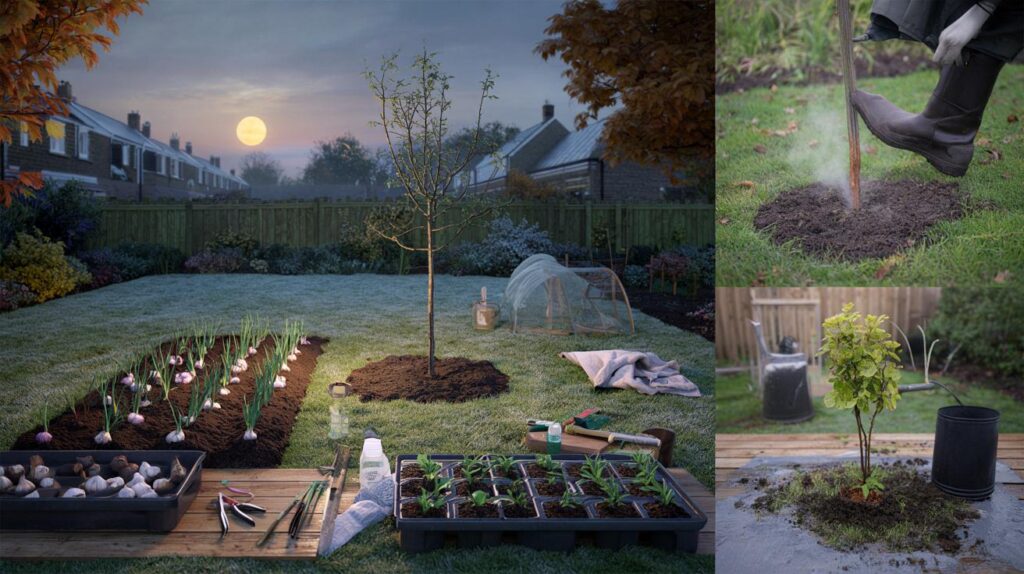
As nights draw in and frost lurks, a quiet lunar dip could tilt your garden’s odds for the year ahead.
Late october brings a short window many growers swear by: a descending moon that lines up with root-friendly work. Between 12 and 26 october 2025, the moon appears lower each evening, and gardeners from balcony pots to big plots are timing cuttings, pruning and planting to match.
Why a descending moon suddenly matters in late october
What the descending phase actually means
The descending moon is a fortnight when the moon’s path sinks a little lower on the horizon each day. Tradition links this phase with stronger action below ground. Gardeners use it to favour root growth, transplanting and soil work. This year’s key dates land from 12 to 26 october, a spell that sits neatly before the first sharp frosts in many regions.
12–26 october 2025: prioritise root work — transplants, hardwood cuttings, bare-root trees, divisions, soil preparation.
Whether you follow the moon by belief or habit, the timing fits something practical. Cooler soil still holds warmth, rainfall returns, and plants settle roots before winter bites. That combination limits transplant shock and sets up a clean burst of growth when light returns.
What this means for cuttings, pruning and planting
Focus the fortnight on work that asks roots to respond. Take hardwood cuttings while stems are firm. Set bare-root fruit trees while the ground is open. Plant garlic, shallots and overwintering onions so they root in before the cold. Tidy and shape with measured pruning where it suits the species. Each move channels energy downward, not into soft new shoots that winter will punish.
What to do between 12 and 26 october
Cuttings made simple: five plants that take fast
Hardwood cuttings and semi-ripe stems root reliably now if you keep moisture steady and cuts clean.
- Currants and gooseberries: cut pencil-thick shoots to 20–25 cm, heel in a slit trench or pots of gritty compost.
- Rosemary and sage: take 8–10 cm non-flowering tips, strip lower leaves, firm into a 50:50 mix of compost and sharp sand.
- Lavender: choose firm side-shoots, trim below a node, avoid waterlogging, keep bright and cool.
- Pelargoniums: take tip cuttings before hard frost, root under cover on a bright windowsill or in a cold frame.
- Roses: hardwood cuttings 20 cm long, one clean cut above a bud, one slanted cut at the top, bury two-thirds of the stem.
Keep it simple: sharp blades, clean pots, gritty medium, even moisture — and patience.
Pruning that helps, not harms
Prune for structure and light, not bravado. On apples and pears, remove dead, diseased or crossing wood, and take out congested shoots. Cut just above an outward-facing bud using disinfected secateurs. On old shrub roses, take out a third of the oldest stems at the base. For stone fruits such as cherries and plums, avoid heavy autumn cuts in damp climates; limit work to dead wood only to reduce disease risk.
With kiwifruit and vigorous climbers, pinch back whippy growth and tie in main leaders. Space cuts across several seasons if a plant needs a major rethink.
Planting for resilience before winter
This window suits crops and trees that prefer to root before the turn of the year. The ground still works in your favour if it isn’t waterlogged.
| Task | Ideal timing | Key tip |
|---|---|---|
| Garlic and shallots | Mid to late october | Plant into free-draining soil, point up, 15–20 cm apart, 3–4 cm deep. |
| Overwintering onions | Mid october | Firm sets so birds don’t lift them; net if pigeons visit. |
| Bare-root fruit trees | From leaf fall | Soak roots, set the graft above soil level, stake and tie. |
| Strawberries | Now, if plants are strong | Plant crowns at soil level, mulch, and space 40–45 cm. |
| Artichokes, winter brassicas | Early if soil is warm | Firm plants well; brassicas need solid ground against wind rock. |
Make it stick: timing, water, and protection
Work with the day, not against the weather
Plant early morning or late afternoon to sidestep midday swings. Skip days when the soil smears and clumps. Wait until surfaces drain after rain; you need a crumb you can crumble, not a paste that suffocates roots.
Set holes wider than deep. Loosen sides, dust the base with compost, and puddle plants in with water to remove air pockets.
Water even if it rains on planting day — the goal is to settle soil tight around roots.
Mulch, monitor, and keep tools clean
Mulch new plants with leaves, wood chip or coarse compost to lock in moisture and buffer cold snaps. In dry spells, give a slow soak each week. In mild, wet spells, watch for rot and slugs. Wipe blades with isopropyl alcohol between plants. File and hone secateurs so every cut is swift and clean.
When british weather flips the script
Rain, warmth or early frost: quick adjustments
Relentless rain? Hold off until the surface dries and your boot doesn’t lift a sticky slab. Sudden cold? Throw horticultural fleece over new beds, or pop cloches on rows of salads. Unseasonal warmth? Shade fresh cuttings at midday and check moisture twice daily.
If soil sticks to your spade like cake mix, step back; if it falls like crumbs, you’re good to go.
Seven mistakes that cost you plants
- Packing soil too hard around roots and excluding air.
- Planting bare-root trees too deep and burying the graft.
- Pruning stone fruits hard in damp, cool conditions.
- Letting cuttings sit in soggy compost without sharp grit.
- Skipping the stake on wind-exposed trees and loosening ties.
- Throwing nitrogen-rich feed at new plants in autumn.
- Ignoring weather windows and working waterlogged ground.
Extra gains: small trials, smarter planning, and measured risk
Run a quick backyard trial to see the difference
Set two identical lines of garlic: one planted during the descending phase, one a week later. Keep notes on emergence dates, winter losses, and bulb size at lift. Do the same with a pair of hardwood cuttings batches. You’ll get your own data, not hearsay, and you’ll tune timings for your soil and microclimate.
Plan ahead for bare-root season and tool care
Order bare-root fruit early as nurseries start shipping once leaves drop. Have stakes, ties, and mulch ready so trees don’t sit around. Refresh a bucket kit: alcohol wipes, a small file for blades, a hand fork, a narrow spade, and a watering can with a rose. Small habits save plants.
A note on lunar timing and plant science
Many growers report better rooting and fewer losses when they schedule root work in a descending phase. Others see the benefit as the season itself — soil warmth and steady moisture — more than the moon. Treat the fortnight as a planning prompt. Use the calendar to nudge action when conditions already favour roots, and you’ll still bank the gains.



Is there any peer-reviewed data showing a descending moon actually boosts rooting, or is it just that October conditions are kinder anyway?
Tried the 12–26 October window last year and my garlic was huge—doing it again for 2026, thanks for the clear checklist! 🙂