
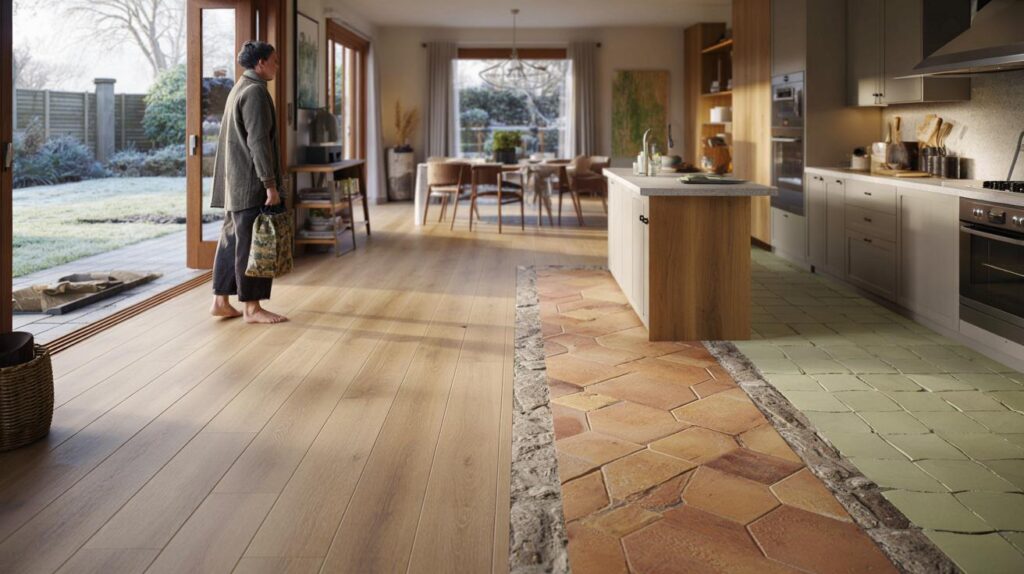
A once-ubiquitous floor choice now meets the cold reality of winter comfort, maintenance budgets and design fatigue at home.
Across showrooms and sites, designers say the tide is turning. Shoppers want texture they can feel, not a print they only see. As energy costs bite and homes chase calm, authentic materials are edging ahead of polished lookalikes.
The backlash against wood-look tiles
What changed in 2024–25 demand
Wood-effect porcelain boomed for a decade. It offered the look of timber with easy cleaning and solid durability. The market now signals fatigue. Too many homes share the same plank print, with repeating patterns that the eye catches in an instant. The effect can feel flat in larger rooms.
Comfort plays a role. Without underfloor heating, porcelain feels cold for much of the year. People heat less and later, so surfaces that stay warm underfoot gain appeal. Acoustics matter too. Hard tile amplifies footfall and echoes in open-plan spaces. Families want quieter rooms.
Cold underfoot, uniform visuals and visible repeats are pushing households back to materials with real grain and depth.
The technical and aesthetic drawbacks you can feel
Printed faces repeat more often than many expect. A box may hold eight to twelve designs, so a large room exposes duplication. Grout lines need ongoing care and can discolour in kitchens and hallways. The ultra-regular edges of rectified tiles risk a “too perfect” grid if the layout lacks variation.
Slip resistance varies. Smooth porcelain feels slick when wet, particularly in entrances. Chips on edges can draw the eye because the body colour often differs from the print. These small issues do not kill the category, yet they chip away at trust.
The materials experts are backing instead
Terracotta and travertine bring texture and warmth
Terracotta returns with confidence. Its earthy tones add instant warmth and character. Handmade tomettes and slim bricks offer a tactile surface that softens modern rooms. Once sealed correctly, maintenance is straightforward, and the patina improves with wear.
Travertine sits on many designers’ shortlists. Filled or unfilled, honed or brushed, it gives a soft, light-scattering surface that feels gentle underfoot. The stone works in hallways, kitchens and living rooms, delivering calm without looking staged. Sealing schedules are predictable, and minor marks blend into the natural variation.
Real material carries grain, pores and micro-shade shifts that digital prints struggle to mimic across a whole floor.
Blond parquet and engineered oak set the tone
Light oak floors remain the safest way to boost daylight. Blond boards bounce scarce winter light and keep rooms feeling open. Engineered oak with a 3–4 mm wear layer gives the look of solid timber with better stability. Glue-down installation pairs well with low-temperature underfloor heating.
Finishes steer maintenance. Matt lacquer resists spills and is easy to clean. Hardwax oils bring a softer sheen and allow local touch-ups. Brushed textures hide scuffs in busy homes. In small spaces, narrower planks emphasise length, while wider boards calm patterns.
Cork, linoleum and rubber widen the palette
Cork insulates sound and heat, making bedrooms and home offices quieter and cosier. Natural linoleum, made from linseed oil, wood flour and jute, is resilient and low-gloss, ideal for kitchens that need warmth without shine. Rubber tiles suit utility areas and playrooms thanks to grip and easy cleaning. These options carry strong sustainability stories and feel gentler underfoot than porcelain.
What it means for your budget in 2025
Upfront price is only one lever. Lifespan, re-finishing options, warmth, and acoustic comfort also move the value needle. The table below shows typical UK project ranges to help you frame a choice.
| Material | Supply £/m² | Installed £/m² | Warmth underfoot | Underfloor heating | Lifespan (years) | Maintenance |
|---|---|---|---|---|---|---|
| Porcelain wood-look tile | 20–45 | 50–90 | Cold without heat | Good | 25+ | Grout cleaning, occasional re-seal depending on grout |
| Terracotta | 40–80 | 80–140 | Warmer feel | Good (low-temp) | 50+ | Seal on install, periodic re-seal |
| Travertine | 35–70 | 80–150 | Moderate warmth | Good | 40+ | Seal on install, light care |
| Engineered oak (blond) | 35–65 | 70–120 | Warm | Good (glue-down) | 20–30 | Re-oil or re-sand when worn |
| Cork | 25–50 | 50–90 | Very warm | Good (low-temp) | 20–25 | Lacquer refresh as needed |
| Natural linoleum | 20–40 | 45–80 | Warm | Good | 20–30 | Occasional polish |
Budget shifts are real: many households gain both comfort and style by moving a portion of spend from tile labour to better materials.
How to choose without regret
Practical checks before you buy
- Order large samples and walk on them barefoot morning and night to test warmth and texture.
- Wet a sample and assess grip for kitchens, hallways and bathroom thresholds.
- Check repeat rate for printed tiles by asking how many unique faces appear per batch.
- Assess light bounce by placing samples near windows on a dull day.
- Tap-test for acoustics; softer floors reduce echo in open-plan rooms.
- Confirm subfloor needs: levelling, decoupling membranes, vapour barriers or acoustic underlays.
- Match finishes to lifestyle: matt lacquer for spill-prone areas, oil for easy spot repairs.
- Allow 8–12% waste for patterns and cuts; complex layouts need more.
- Ask for environmental product data and low-VOC adhesives and sealers.
- Plan underfloor heating temperatures; timber and cork prefer lower flow heat.
Layouts that add personality without chaos
Mixing materials works when zones are clear. Lay terracotta in an entrance and run blond engineered oak through living spaces to soften echoes. In kitchens, use travertine in the working area and cork in the dining nook for quiet comfort. A narrow stone border can resolve junctions neatly and protect edges.
Small bathrooms benefit from stone or porcelain mosaics for grip near the shower, with warm linoleum just outside. Bedrooms read calmer with one material wall to wall. Rugs then add seasonal texture without hiding a costly pattern.
Extra context that helps decisions stick
Comfort, energy and future-proofing
Surface temperature influences how warm a room feels at a given thermostat setting. Floors that hold or reflect less cold reduce the urge to overheat air. Pairing a warm-feel surface with a low-temperature heating programme can trim bills without sacrificing comfort. This is most noticeable in ground floors and north-facing rooms.
Refinishing options matter to long-term cost. Engineered oak can be sanded once or twice depending on the wear layer. Terracotta and travertine take repairs and patches well, then blend back after sealing. Printed porcelain is robust, yet visible chips are harder to disguise. Consider resale too. Buyers increasingly value real, repairable materials that age gracefully.
Moisture, risk and maintenance planning
Bathrooms and utilities need attention to slips and splashes. Aim for slip ratings suited to wet zones and keep sealers up to date. In kitchens, use entrance mats and regular cleaning to prevent grit from scratching softer floors. On concrete slabs, check moisture levels and specify vapour barriers where readings demand them. Good prep protects your investment more than any single finish choice.



I switched from wood-effect porcelain to cork in the bedrooms this year and the noise drop was instant. But does cork really hold up in a busy hallway? The article mentions lacquer refreshes—how often is that in real life with kids + a dog? Also curious whether the claimed £900 saving assumes DIY on prep or just swapping to lower labour on materials. The warmth is defintely real, but the budget calc feels a bit fuzzy.