
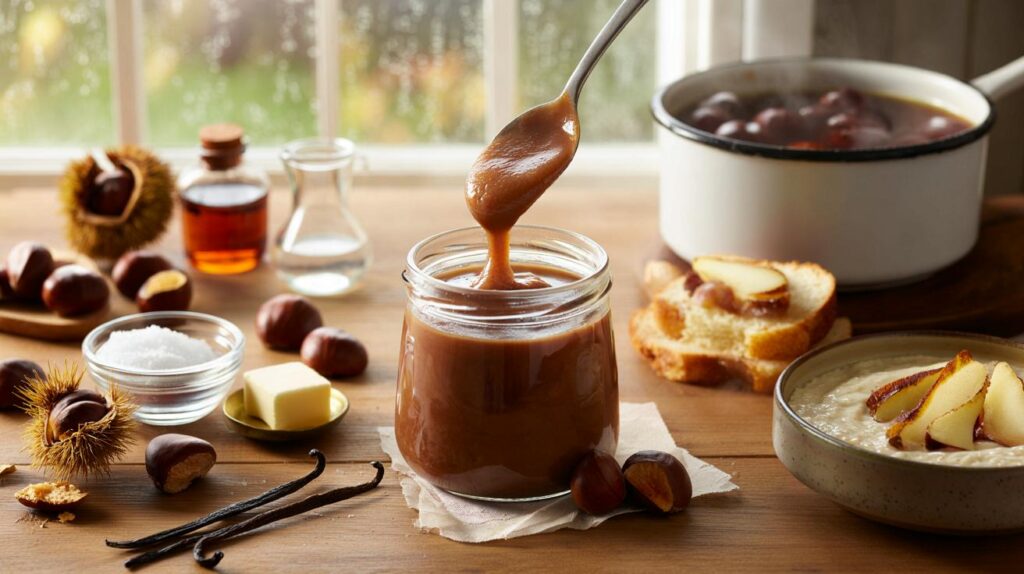
Cold evenings, tighter purses and a craving for comfort are colliding. A simple, velvet-smooth chestnut spread is quietly winning autumn.
Across kitchens up and down the country, home cooks are turning to a quick vanilla-laced chestnut cream that costs less than shop jars and needs only half an hour. The method is plain, the flavour deep, and the uses run from breakfast toast to dinner-party desserts.
Why chestnut cream is having a moment
Energy prices and food inflation keep nudging shoppers towards recipes with short cooking times and low waste. Chestnut cream fits that brief. It turns a handful of cupboard staples into a glossy spread with a clean ingredient list. Supermarket jars now sit between £2.80 and £4.50 for 250 g. Many readers say they use a whole pot in a weekend.
Make a 700–750 g batch in about 30 minutes and save up to 45% versus branded jars, with no additives.
There is a seasonal push too. Chestnuts flood markets from late October. Vacuum-packed nuts stay reliable until spring, so the spread remains feasible beyond the festive run.
The five-step method in real time
What you need
- 500 g cooked, peeled chestnuts (fresh, tinned or vacuum-packed)
- 200 g golden caster or light cane sugar
- 150 ml water
- 1 plump vanilla pod, split and scraped, or 2 tsp natural extract
- A good pinch of fine salt
From pan to jar in 30 minutes
If using fresh chestnuts, score a cross in the shells and boil for 20 minutes. Peel while warm to lift both shells. Vacuum-packed or tinned chestnuts skip this step.
Tip chestnuts into a saucepan with sugar, water and the split vanilla pod. Add the scraped seeds and salt. Bring to a gentle simmer.
Cook on low heat for around 20 minutes. Stir now and then. Aim for tender nuts and a lightly thickened syrup.
Fish out the pod. Blend the mixture while warm until perfectly smooth. Add a splash of water if you prefer it looser. Blend longer for an ultra-silky finish.
Scrape into warm jars. Press baking parchment or cling film directly on the surface to limit a skin.
Texture tricks
For extra gloss, beat in 1 tbsp unsalted butter or 1 tbsp hazelnut oil at the end. Keep the heat gentle to protect the pale colour and mellow flavour. Control thickness by adjusting water by teaspoons, not ladlefuls.
Sweet spot ratio: 500 g chestnuts, 200 g sugar, 150 ml water. Adjust by 25 ml water for a softer spread.
Cost, sugar and flavour: how it stacks up
| Measure | Homemade | Shop-bought jar |
|---|---|---|
| Typical cost per 100 g | £0.60–£0.80 | £1.10–£1.80 |
| Sugar content | ≈ 29% | 30–60% depending on brand |
| Ingredients | Chestnuts, sugar, water, vanilla, salt | May include glucose syrup or flavourings |
| Active time | 10 minutes | 0 minutes |
| Batch yield | 700–750 g | 250–330 g |
The lower sugar ratio appeals to families who spread it thickly on brioche or stir it into porridge. The flavour reads nutty and woodsy, with a rounded vanilla finish.
How to use it without getting bored
Weekday fixes
- Swirl 2 tsp into yoghurt with toasted oats.
- Spoon over hot porridge with sliced pears.
- Spread on warm brioche or crumpets with a scrape of salted butter.
- Fold into pancakes for a quick autumn stack.
Show-off puddings
Ripple through a baked cheesecake layer and bake as usual. Layer with whipped cream and crushed meringue for a five-minute Mont Blanc cheat. Stir into softened vanilla ice cream, then refreeze for a rippled tub. Add a spoon to a coffee tiramisu for a mellow, nutty drift.
Storage and safety
Fridge, freezer, jars
Refrigerate in clean jars for up to 7 days. Keep the surface covered to prevent a crust. Freeze in small tubs for 2–3 months and thaw overnight in the fridge. For longer storage, use sterilised jars and fill while hot. Seal and cool. Aim to consume within two weeks once opened.
Allergy and diet notes
Chestnuts come from trees but sit apart from common tree nuts like almonds. Some people with nut allergies also react to chestnuts. Seek tailored advice if in doubt. The base recipe is gluten-free and vegetarian. Use hazelnut oil instead of butter for a vegan version.
Variations you can measure, not guess
- Maple lift: replace 50 g of the sugar with 50 g maple syrup; simmer 5 minutes longer to thicken.
- Honeyed note: swap 40 g sugar for 40 g runny honey; add it after blending to protect aroma.
- Spiced: add 1 tsp ground cinnamon or 1/2 tsp mixed spice with the syrup.
- Festive splash: stir in 1 tbsp dark rum or 1 tbsp Armagnac after blending.
- Vanilla swap: use 2 tsp extract if you lack a pod; avoid essence, which tastes thin.
Keep total liquid close to 150–175 ml per 500 g chestnuts for a spreadable finish that holds its shape.
If you forage chestnuts
Pick only sweet chestnuts. Avoid horse chestnuts, which are not edible. Sweet chestnuts sit inside a dense, needle-sharp burr. Horse chestnuts sit in a smoother, sparsely spiked casing and are often called conkers. The base of an edible nut tapers; the conker looks rounded and glossy with a pale scar.
Score shells before boiling to reduce bursts. Peel while warm for easier skin removal. Discard any that float hard during boiling or look mouldy when cut.
Never eat horse chestnuts. When in doubt, leave it out.
Nutritional snapshot
Per 20 g spoon (homemade, 29% sugar): roughly 45–55 kcal, 10–12 g carbs, 6–7 g sugars, 0.6–0.8 g fibre, under 1 g fat, about 0.5 g protein. Chestnuts bring slow-release starch and trace minerals. The spread remains a sweet treat, so small portions make sense for daily use.
Questions readers keep asking
Can I use tinned chestnuts?
Yes. Rinse and drain. They blend smoothly and keep timings the same.
Can I cut the sugar further?
You can drop to 25% sugar by weight for a delicate, less jammy result. Texture becomes thicker and shelf life shortens. Freeze if you make a low-sugar batch.
What if I want it extra smooth?
Blend for 2–3 minutes, then pass through a fine sieve. Warm slightly to relax bubbles before jarring.
How many breakfasts does a batch cover?
At 20 g per slice, a 700 g batch spreads 35 slices. That is 4–5 family breakfasts for many households.



£12 a jar? I’ve been wasteing more than that on fancy jam.
Just made a batch with vac‑packed chestnuts and a real vanilla pod—blitzed for 3 minutes then pushed through a sieve. The gloss is unreal and the flavour’s so clean. Spread it on warm brioche with a scrape of salted butter and I’m sold. Thanks for the weeknight win! 🙂