
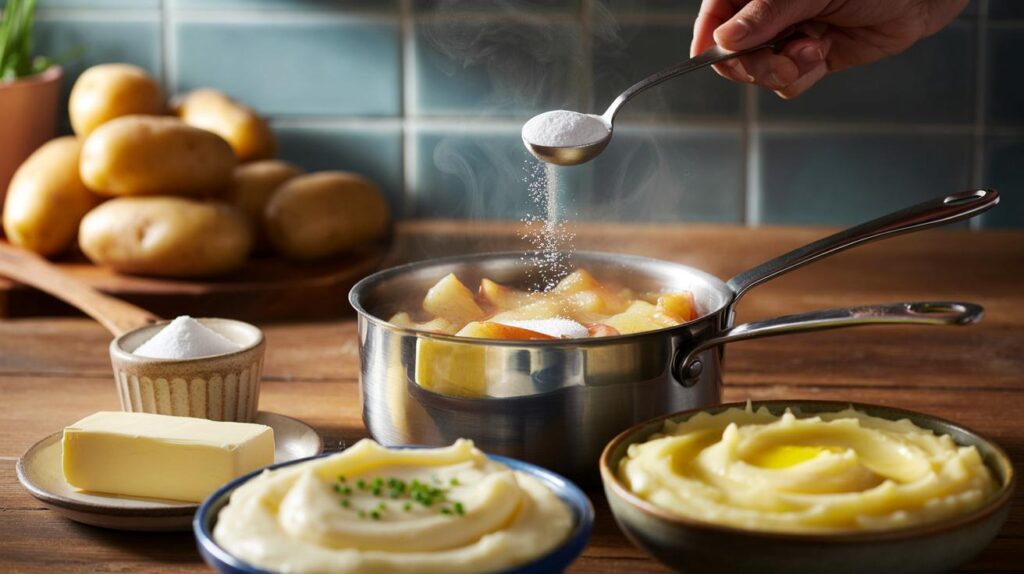
Autumn plates crave comforting mash, yet millions still chase fluffiness the wrong way. A tiny pantry tweak flips the script.
Across Britain, cooks reach for a knob of butter and a splash of milk, hoping for clouds on a plate. The result often tastes rich, yet sits heavy. This week’s quietly viral tip points to a different culprit and a different cure, using grams not globs to get you there.
Why butter struggles to make mash feel light
Butter brings flavour and sheen, but it also packs fat that weighs down starch. Mash thickens as the potato cells shed starch and bind together. Add lots of butter and you coat granules without letting them separate cleanly. The bowl turns dense. The spoon pulls rather than glides.
Chasing airiness with more dairy often backfires. The texture improves when you help the potato structure relax, not when you drown it. That calls for chemistry you already keep in your cupboard.
The 1–2g trick: bicarbonate of soda and the science behind it
A small pinch of food-grade bicarbonate of soda — roughly 1–2 g per kilogram of potatoes (about 1/4 to 1/2 teaspoon) — tilts the cooking water slightly alkaline. That shift softens pectin in the potato cell walls and helps starch disperse. Cells separate more easily, so the mash feels lighter without extra fat.
Add 1–2 g bicarbonate of soda per 1 kg potatoes to the cooking water. Keep the dose small to avoid a soapy taste.
You still season with salt and add hot liquid for creaminess, but you need less of it. The texture improves first; richness then becomes a choice, not a crutch.
Step-by-step method for airy mash
- Choose floury potatoes: Maris Piper or King Edward work reliably.
- Peel, cut into even chunks, and rinse to wash off surface starch.
- Cover with cold, well-salted water. Bring to a gentle simmer.
- When the water starts to steam, stir in 1–2 g bicarbonate per kilogram of potatoes.
- Cook until a knife slips through, 15–20 minutes after simmering begins.
- Drain well and let the steam escape for 2 minutes.
- Rice or mash by hand; never blitz in a food processor.
- Fold in 250–300 ml hot milk or stock, a little at a time, until fluffy.
- Add a small knob of butter only if you want extra richness. Season with pepper.
Start from cold water, mash while hot, and add hot liquid gradually. Temperature control keeps the texture light.
Choose the right spud and the right tool
Floury potatoes puff up as their dry matter breaks down, so they suit this method. Waxy varieties such as Charlotte hold shape and taste great in salads, but they resist fluffiness in mash. If you only have a mixed bag, blend two-thirds floury with one-third waxy to balance body and lift.
Tools matter. A ricer creates uniform grains that trap steam and feel silky. A hand masher works well if you press rather than smear. A blender or food processor ruptures cells too aggressively, releasing free starch. That gluey finish kills any lift you gain from the bicarbonate.
Flavour upgrades without the heaviness
You can build character without loading fat. Work with aromatics, gentle heat, and finishing touches that keep things lively.
- Infuse the milk: warm it with a bay leaf, a smashed garlic clove, or a strip of lemon zest.
- Stir through herbs: chives, parsley, or tarragon add freshness. Add at the end to keep colour bright.
- Swap the dairy: try 300 ml hot oat drink or unsweetened almond drink for a lighter bowl.
- Use white pepper or grated nutmeg for a quiet lift that doesn’t shout.
- Fold in 2 tablespoons crème fraîche or thick yoghurt for tang and silk without heaviness.
Cost, nutrition and risks: what you gain and what to watch
Bicarbonate of soda costs pennies and stretches across many recipes. You also use less butter and cream, which trims both cost and fat per serving. Keep doses tiny, though. Too much bicarbonate softens the potatoes into mush and leaves a soapy note.
| Approach | Likely texture | Approx. fat per portion | Main risk |
|---|---|---|---|
| Heavy butter, no bicarbonate | Rich, often dense | 7–12 g (based on 30–50 g butter for 4) | Gluey finish if overworked |
| Small bicarbonate dose + hot milk | Light, aerated, smooth | 3–6 g (milk only) | Soapy taste if dose is too high |
| Plant-based milk + bicarbonate | Light, clean flavour | 1–3 g | Thinness if you add liquid too fast |
What chefs know that home cooks forget
Professional kitchens control water, heat, and agitation. They batch potatoes by size so they cook evenly. They warm every liquid addition to keep starch gelled and receptive. They stop mashing the moment the grains look even, not shiny. You can borrow each habit at home.
Control three things for lift: water salinity, gentle simmer, and minimal agitation after ricing.
Troubleshooting common mash mistakes
If it turns gluey
Work in 1–2 tablespoons of hot stock at a time with a fork, lifting rather than pressing. The extra moisture can loosen the matrix. Next time, mash less and avoid machines.
If it tastes flat
Season in layers: salt the water generously; taste after ricing; then season again at the end. A small splash of reserved cooking water can brighten flavours. A spoon of crème fraîche adds tang without weight.
If it tastes alkaline
You likely added too much bicarbonate. Stir in a teaspoon of lemon juice or crème fraîche to nudge the balance back. Keep future doses under 1/2 teaspoon per kilogram.
Put it to the test tonight
Run a simple side-by-side to see the difference. Cook 1 kg potatoes in two pans. Add 1/4 teaspoon bicarbonate to one pan. Mash both with identical amounts of hot milk. Serve blind. Most people notice lighter spoonfuls and a cleaner finish from the bicarbonate batch.
Beyond potatoes: where the trick helps and where it doesn’t
A pinch of bicarbonate also softens dried pulses during soaking and simmering, shaving minutes off cooking time. It keeps textures tender in chickpeas for hummus. Skip it for green vegetables, though; alkalinity dulls flavour and damages vitamins in tender greens.
Useful extras for busy weeknights
Batch-cook mash and cool it fast on a shallow tray. Reheat gently with a splash of hot milk over a low hob. Leftovers turn into fish cakes or top a cottage pie. For gnocchi, reduce added liquid and skip the bicarbonate; you want a dry, cohesive dough that holds its shape.
Want numbers for planning? For four people, budget 1 kg floury potatoes, 250–300 ml hot milk or stock, 1–2 g bicarbonate, and a small knob of butter if you like. The method stays the same, and the texture stays on your side.



Bicarb in the cooking water sounds risky — won’t it taste soapy if I misjudge? 1–2 g per kg seems tiny; how do you measure that without a scale? A “pinch” varies alot.