
Street stalls glow, ovens warm up, and the scent of roasting fills pavements. Yet kitchens report bitter, rubbery chestnuts.
As autumn peaks, thousands of households repeat a tiny preparation slip that wrecks texture and taste. The fix takes minutes. It starts before the oven, long before the first crackle, and it ends while the nuts are still warm.
The mistake almost everyone makes
Most people score the shell the wrong way, then wait too long to peel. Both choices turn a seasonal treat into a chore. A shallow vertical slash traps the inner skin. Letting the nuts cool hardens the pellicle. The result is tough flesh and a bitter bite.
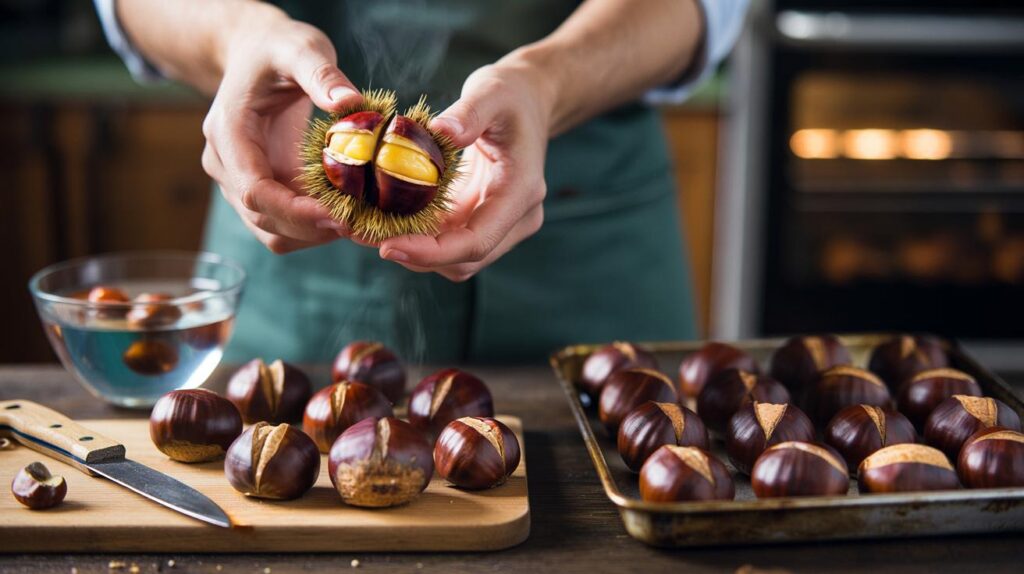
Make a wide horizontal cut across the rounded side, then peel while the chestnuts are still warm. Those two actions change everything.
The timing that decides flavour
Fresh chestnuts degrade fast. Delay invites mould and insect damage. Sort your haul the day you buy or pick it. Discard any nut with a puncture, a dull patch, or a musty smell. Firmness and heft signal life. Lightness hints at drying or pests.
A quick water test helps. Tip the nuts into a bowl of cold water. Remove any floaters. Keep the sinkers. The floaters often hide air pockets from internal spoilage.
How to score and soak for easy peeling
Cut direction matters
Use a small chef’s knife, not a flimsy paring knife. Place the nut flat side down. Hold it still. Draw a bold horizontal cut across the domed face. Aim for 2–3 centimetres wide. That slit allows steam to escape and the shell to open cleanly.
With practice, you can score 1 kg in under 7 minutes. The payoff is faster peeling and fewer broken kernels.
Soak to soften the pellicle
After scoring, submerge the nuts in cold water for at least 60 minutes. This softens the shell and loosens the inner skin. It also surfaces hidden duds as they float.
Short on time? A 20‑minute bath in hot water works. Drain well before roasting to avoid steaming the shells shut.
Cook for tenderness, not for waterlogging
Boiling swells the pellicle and mutes sweetness. Dry heat concentrates flavour and keeps the crumb creamy. Use the oven or an air fryer for consistent results.
Best starting point: 200°C for about 20 minutes, turning once. Peel while warm to avoid the inner skin gripping the flesh.
Spread the chestnuts in a single layer on a preheated tray or air fryer basket. No stacking. The cut faces up. Roast until the slits gape and the shells blacken at the edges. Wrap the hot nuts in a clean tea towel for five minutes. The brief steam loosens the pellicle. Peel immediately. Any cooling makes that inner skin cling.
Buying and storage that protect your batch
Choose chestnuts that feel heavy for their size. Look for a glossy shell without dents, holes or pale, dry patches. Avoid rattlers. They are often shrivelled inside.
Store fresh nuts in the fridge, in a ventilated paper bag or a towel, not plastic. Use them within 4–5 days. For longer keeping, cook and peel before freezing. Raw freezing splits shells and toughens the flesh after thawing.
A fast roadmap for flawless chestnuts
- Sort the same day and bin any with holes, mould or a sour smell.
- Score a wide horizontal slit across the rounded side.
- Soak 60 minutes in cold water, or 20 minutes in hot if rushed.
- Roast at 200°C for about 20 minutes, or use an air fryer in a single layer.
- Wrap for five minutes, then peel while still warm, including the inner skin.
- Eat at once, chill for 48 hours, or freeze only after cooking and peeling.
Which method suits you
| Method | Temperature and time | Pros | Pitfalls |
|---|---|---|---|
| Oven roast | 200°C, 18–22 minutes | Even heat, deep flavour, easy batches | Overbaking dries centres; peel fast |
| Air fryer | 185–190°C, 15–18 minutes | Quick, energy‑efficient, crisp shells | Do not stack; small baskets clog |
| Pan roast | Medium heat, 15–20 minutes with shaking | Campfire feel, blistered shells | Hot spots scorch; needs attention |
| Boiling | Simmer 20–25 minutes | Good for purée when peeled hot | Watery flavour, stubborn pellicle if cooled |
What to do with perfectly cooked chestnuts
Weeknight uses
Toss warm chestnuts with butter, salt and thyme for a quick side. Fold chopped chestnuts into mushroom stuffing. Blend with warm milk and nutmeg for a silky purée. Stir into Brussels sprouts with pancetta for crunch and sweetness.
Sweet ideas
Heat in syrup with vanilla for a simple dessert. Whip into chocolate mousse for body without flour. Mix with yoghurt and honey for breakfast. Freeze portions for fast festive baking.
Troubleshooting common fails
Shells won’t open: cuts are too small or shallow. Make them wider. Nuts turn rubbery: either overcooked or cooled before peeling. Adjust time and peel while warm. Bitter taste: pellicle left on. Remove the inner skin completely. Too many bad nuts: bought old stock. Use the float test at home and shop from high‑turnover stalls.
Heavy and glossy at purchase, soaked after scoring, roasted at 200°C, peeled warm within minutes. That sequence saves the batch.
Seasonal safety many people forget
Do not eat horse chestnuts, also called conkers. They look similar but are not edible. The edible sweet chestnut has a tasselled tip and a ruffled husk with many fine spines. Conkers sit in a fat, sparsely spined case and taste intensely bitter. If uncertain, buy from a trusted greengrocer or market vendor.
Allergic to tree nuts? Chestnuts are botanical seeds and many people tolerate them. Even so, seek medical advice if you have a history of food allergies. Mouldy nuts can harbour toxins, so discard any with a musty odour or blackened interiors.
Planning your shop and your prep
Recipe quantities can mislead. A kilo of whole chestnuts yields roughly 650–750 g once cooked and peeled, depending on size and freshness. Budget 200–250 g cooked kernels per person for a generous side. Score the night before, store chilled, then soak and roast just before serving.
For batch cooking, roast and peel, then freeze flat in small bags. Label with date and weight. Reheat gently in a pan with a splash of water and butter. The texture returns, and you avoid the annual scramble when queues snake around market braziers.



Isn’t boiling actually easier for peeling? I’ve always simmered for ~20 minutes and the skins slip right off if I work fast. If I’m making purée, does dry heat really matter, or is this “ruining chestnuts” claim a bit overcooked? Genuinely curious, not snark—definitley open to switching.
The horizontal cut advice is gold. I used to do tiny vertical nicks and ended up with bitter, rubbery bits. Did a 1 kg batch tonight: wide slash, 60‑minute soak, 200°C for 20, peel warm—zero broken kernels and no pellicle cling. Thank you for the float-test tip.